
Which Tag Gun Fastener Length Fits Your Merchandise?
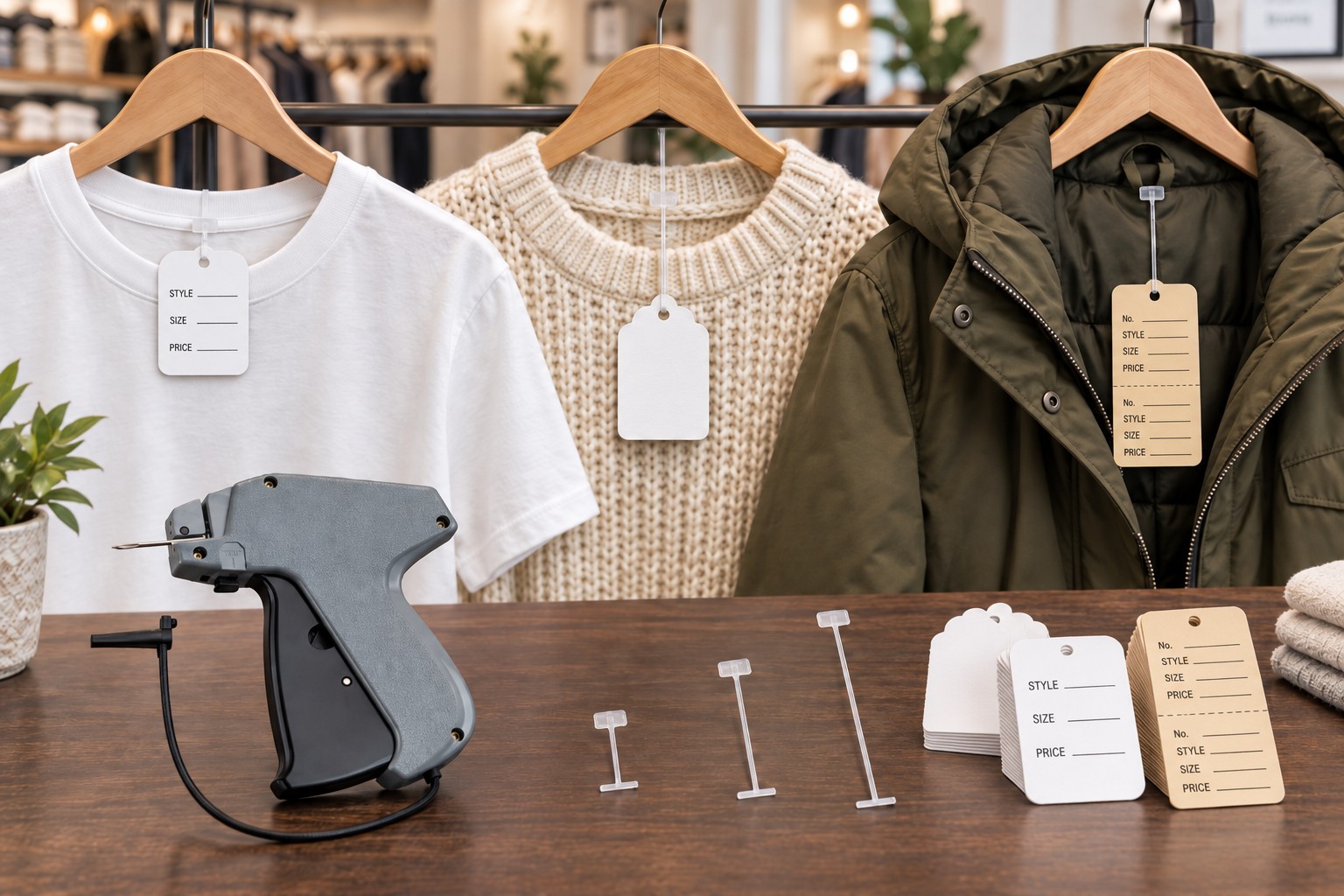
If you have ever attached a tag to a chunky sweater with a short fastener, you already know the frustration. The tag pulls tight, the tag wrinkles, and the price gets harder to read. Go too long on a thin cotton tee and the tag swings around, snags on hangers, and looks messy on the rack.
Choosing the right tagging gun fastener length is a small decision that affects how tidy your sales floor looks and how much time your team spends fixing tags. In my years helping independent retailers find the right pricing and tagging supplies, the mistake I see most often is a store buying one length and forcing it onto everything. This guide walks through how to match fasteners to the actual items you sell.
What a Fastener Length Actually Controls
A tagging Fastener is the small plastic piece that runs through your merchandise and holds the Price Tag in place. It has a bar (the T-bar) on one end and a paddle on the other, with a thin strand in between. The length refers to that strand, and it decides how far the tag sits from the fabric.
Here is the simple way to think about it:
- Too short: The tag pulls tight against dense fabric, tears at the punch hole, and can be hard to scan or read.
- Too long: The tag dangles, swings, tangles with neighboring garments, and looks sloppy on a full rack.
- Just right: The tag hangs flat and readable with a little slack, and it does not put stress on the material.
The goal is a tag that sits close enough to look neat but has enough room so the fabric is not straining against the strand.
Standard vs. Longer Fasteners
Most retailers work with a couple of common lengths. A Regular 1 inch Tagging Fastener handles the majority of everyday apparel, while a longer fastener is there for thick and bulky items. Our 3 inch regular tagging fasteners fit most tagging guns designed for regular fasteners and work well for attaching tags to apparel or sporting goods.
There is also a specialty option worth knowing about. Hook fasteners have a small hook at the paddle end so the tagged item can hang directly on a peg. Our 2 inch clear hook fasteners are the right choice when you want tagged merchandise to hang on peg hooks, which is handy for accessories and small packaged goods.
Always confirm your gun and needle are rated for the fastener type you plan to use. Regular Tagging Guns take regular fasteners, and SSW Fine Fabric Tagging Guns take a different, thinner barb. Check the product page and your gun's specs before you order in bulk.
Matching Fastener Length to Common Products
Below is a general guide based on fabric thickness and how the item is displayed. Fabric weight varies, so treat this as a starting point and test a few pieces from your own inventory.
|
Merchandise type |
Fabric or attachment point |
Fastener guidance |
|
Thin cotton tees, blouses |
Lightweight, tight weave |
Shorter fastener keeps the tag close and flat |
|
Knitwear, sweaters, fleece |
Thick, lofty material |
Longer fastener clears the bulk so the tag reads well |
|
Denim, workwear |
Heavy, dense weave |
Attach through a seam or care label with a standard length |
|
Winter coats, parkas |
Very thick, padded |
Longer fastener, placed through a loop or label |
|
Sporting goods, accessories |
Varies |
Standard length, or a hook fastener for peg display |
Thin Cotton vs. Knitwear
For thin cotton, a shorter fastener does the job. The material is easy to pierce, and a shorter strand keeps the tag from flopping around on the rack. Aim for the seam or the inside of the collar so the punch hole is hidden and the fabric face stays clean.
Knitwear is the opposite problem. A sweater is thick, and a short fastener forces the tag against the surface where it can pull and pucker. Reach for a longer fastener here. Our 3 inch regular fasteners give sweaters and fleece enough slack so the tag hangs freely without tugging on the knit.
Thick Winter Coats
Coats need the most room. When a customer picks up a parka, the tag should move with the garment instead of straining against the fill. Use a longer fastener and place it through a hanging loop, a zipper pull area, or the care label rather than punching straight through the shell.
One thing I remind newer retailers about: on padded outerwear, where you attach the fastener matters as much as the length. Feeding it through an existing loop protects the fabric and gives you a clean, professional look on the rack.
What a Mixed-Inventory Store Should Keep on Hand
If you sell a range of goods, you do not need a drawer full of every size. Most general apparel shops do well keeping two or three options ready:
- A standard length for the bulk of your apparel: tees, tops, pants, and everyday items.
- A longer length for sweaters, coats, and anything thick.
- Hook fasteners if you display tagged items on peg hooks or want packaged goods to hang.
Consignment and resale stores in particular benefit from stocking a longer option, since they handle unpredictable inventory that swings from thin blouses to heavy jackets in the same day. Buying a length that covers your thickest items and using placement to manage the thinner ones is a practical way to simplify.
A Few Habits That Keep Tags Looking Neat
Fastener length solves most problems, but a few work habits go a long way:
- Attach through a seam, loop, or care label whenever you can. It hides the hole and reduces the chance of tearing the fabric face.
- Do not force a delicate garment. For very fine or knit items, thread through the label rather than the material itself.
- Keep your gun's needle sharp and clean so it pierces without dragging or snagging.
- Pair fasteners with clear pricing. Legible tags matter as much as how they hang, so consider labeling and size labels and dividers to round out a tidy presentation.
When you match the fastener length to the fabric and attach it in a smart spot, tags sit flat, stay readable, and hold up through customers handling the merchandise. That small bit of attention keeps your racks looking organized and saves your team from re-tagging work later. If you are ever unsure which length suits an unusual item, grab one of each and test it on a sample before you commit to a full case.
Written by Kris Boettigheimer
Purchasing Assistant
Kris brings over 32 years of retail industry experience and more than 20 years at Store Supply Warehouse to every article he writes for storesupply.com. Since joining SSW in 2005, Kris has worked across multiple departments , including six years in Sales/Customer Service, where he helped independent retailers and small business owners find the right store fixtures, retail displays, and merchandising supplies to improve their store layouts and drive sales. For the past 15+ years in SSW's Purchasing Department, he has collaborated with suppliers, tracked market trends, and sourced products across all three Store Supply divisions. Today, Kris channels that hands-on experience into content that helps retailers enhance store presentation, discover new display solutions, and make smarter product decisions.