What Is a Bubble Mailer? A Home Seller's Packaging Guide
If you sell online from home, you have probably seen the word "bubble mailer" in a supplier catalog or a shipping app. You may also have seen "padded envelope," "poly mailer," and "bubble shipping bag" used in the same breath. It gets confusing fast, and the wrong choice can mean a damaged item and an unhappy buyer.
This guide walks through what a bubble mailer is, how it is built, what it protects well, and how it compares to a flat poly mailer.
What is a bubble mailer?
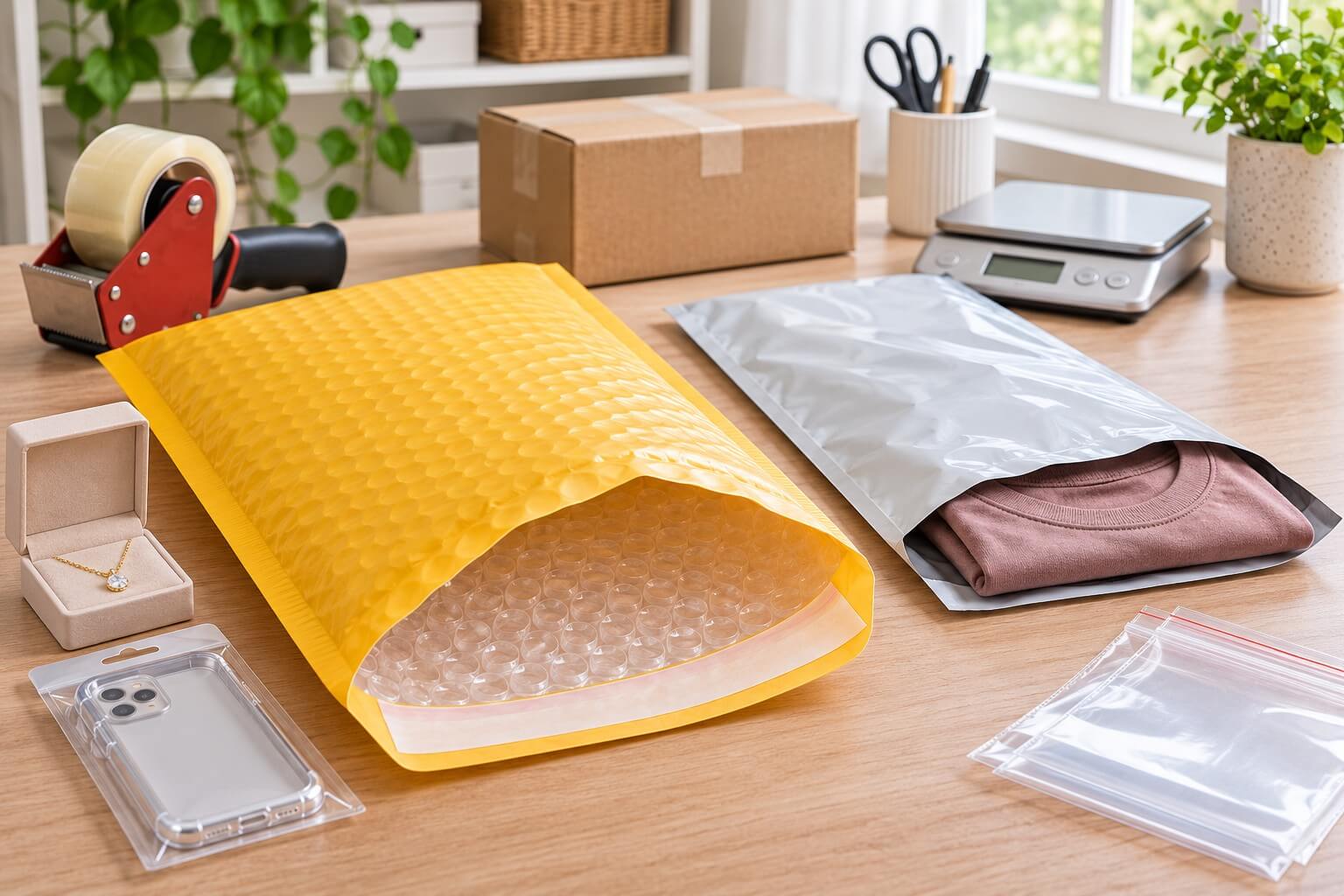
A Bubble Mailer is a lightweight shipping envelope with a cushioned lining built right into it. Think of a standard mailing envelope, then add a layer of air-filled bubble wrap on the inside. That padding is what sets it apart from a plain paper or plastic envelope.
People use a few names for the same thing: bubble mailer, padded envelope, and bubble shipping bag. For the most part, these all describe the same product, a mailer with cushioning inside. Learning these home seller packaging terms helps when you compare suppliers, because one listing may say "padded envelope" while another says "bubble mailer."
How a bubble mailer is built
Most bubble mailers share the same basic construction:
- Outer shell. The outside is usually a plastic poly film or a paper/kraft material. The poly type resists water better, while the paper type is easier to write on and recycle.
- Bubble lining. A layer of bubble wrap is bonded to the inside. This is the cushion that absorbs bumps and pressure during transit.
- Self-seal flap. Many have a peel-and-stick adhesive strip on the flap. You pull off the backing, fold the flap over, and press to close. No tape needed, though you can add tape for extra hold.
The result is a mailer that stays light (which helps with postage) while still giving your item a buffer against the drops and squeezes a package takes on its way across the country.
What does a bubble shipping bag protect best?
A bubble mailer is built for small, semi-durable items that need a little cushioning but do not need the full protection of a box.
Good candidates for a bubble shipping bag include:
- Jewelry and small accessories
- Phone cases, cables, and small electronics parts
- Paperback books, comics, and trading cards
- Cosmetics and small health or beauty items
- Craft supplies and small hardware
- Small apparel items like socks, scarves, or a folded T-shirt
When a bubble mailer is not the right call
Padding helps, but it is not armor. A bubble mailer flexes, so it does not protect against crushing the way a rigid box does. Skip the mailer and use a box for:
- Fragile items like glass, ceramics, or pottery
- Anything with sharp corners that could poke through the lining
- Heavy items that would strain the seal or tear the mailer
- Items that must arrive perfectly flat and uncreased without extra stiffening
A quick tip from experience: if you can press on the package and feel the item shift or flex more than a little, add a small cardboard insert or step up to a box. The few extra cents usually costs less than a replacement and a refund.
Bubble mailer vs. flat poly mailer
This is the question I get fairly often, so here is a side-by-side look. A flat Poly Mailers - Case of 100 is a thin plastic envelope with no padding inside. A bubble mailer has that cushioned lining.
|
Feature |
Bubble Mailer |
Flat Poly Mailer |
|
Padding |
Yes, bubble lining inside |
No padding |
|
Best for |
Small items that can take bumps or light pressure |
Soft, non-fragile items like apparel |
|
Water resistance |
Good with poly outer shell |
Good |
|
Weight |
Slightly heavier due to lining |
Very light |
|
Typical cost |
A bit more per unit |
Lower per unit |
The simple rule: if the item could be scratched, dinged, or cracked, use a bubble mailer. If the item is soft and cannot really be damaged by a bump, like a folded shirt, a flat poly mailer keeps your cost and weight down.
How to pick the right size
Size matters more than sellers expect. Too small, and you force the item in and stress the seal. Too big, and the item slides around, which defeats the cushioning.
Aim for a mailer that fits the item with a little room to fold or seal the flap, but not so much extra space that the item rattles. When in doubt, lay the item flat, measure length and width, and add a small margin. Always check the product page for exact dimensions before you order a case.
Packaging extras that pair well
A bubble mailer handles the outside, but a few small supplies round out your shipping station. For loose or very small pieces like jewelry or beads, slip the item into a resealable clear plastic bag first, then into the mailer. That keeps tiny parts together and adds a layer against moisture.
If you also sell in person or hand items to local buyers, it helps to keep an assortment of Plastic Merchandise Bags and Kraft Paper Bags on hand so you are ready either way.
For orders that need a little more structure than a mailer, a Shipping Box can be a better fit. You can browse those and other options in our full Packing and Shipping Supplies to match the right container to each product you sell.
A simple way to decide
When a new order comes in, ask yourself three quick questions: Can this item be scratched or cracked? Is it small and light? Does it fit flat with a little room to spare? If the answer to all three is yes, a bubble mailer is usually the right tool. If the item is fragile, heavy, or oddly shaped, reach for a box instead.
Build that habit and your packaging decisions get faster, your shipping costs stay in check, and your items arrive the way your buyers expect. That reputation for careful shipping is one of the quiet things that keeps repeat orders coming.