
Too Many Slatwall Accessories: The Cluttered Display Mistake to Avoid
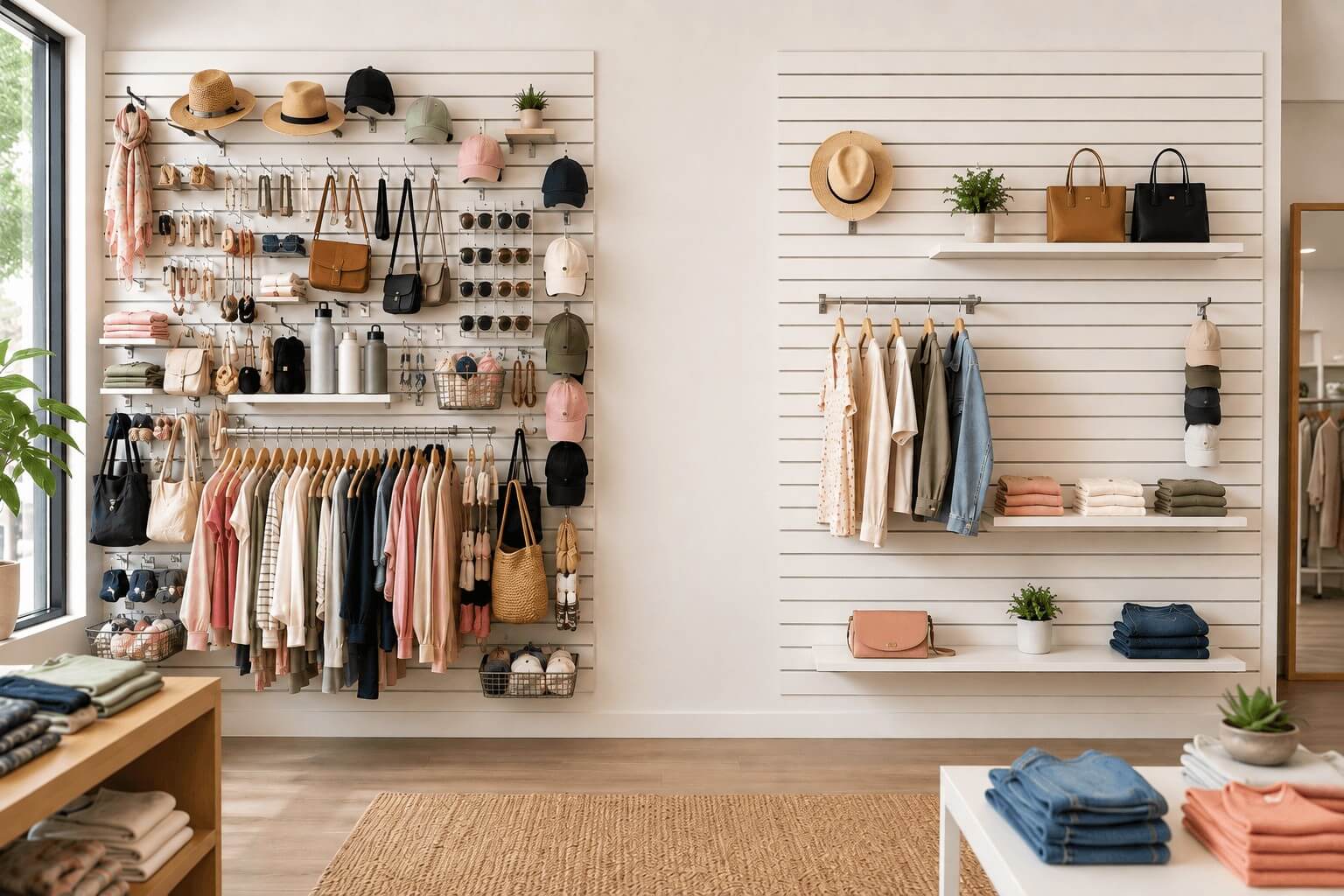
Walk into any struggling boutique and you'll likely see the same mistake: slatwall panels loaded with mismatched accessories that create visual chaos instead of driving sales. Store owners often believe more accessories mean more opportunities to display products, but the opposite is true.
Cluttered slatwall displays overwhelm customers, make your store look unprofessional, and actually reduce sales by making it harder for shoppers to focus on specific items. The key is strategic placement, not maximum coverage.
The Hidden Cost of Slatwall Clutter
When customers enter your store, their eyes should flow naturally from one product to the next. Overloaded Slatwall Panels create visual roadblocks that interrupt this natural shopping journey.
Research shows that customers make purchasing decisions within the first 90 seconds of seeing a product. If your slatwall accessories compete for attention instead of directing it, you're losing sales opportunities.
Common signs of slatwall overload include:
- Customers walking past displays without stopping
- Multiple accessories fighting for the same visual space
- Merchandise appearing cramped or difficult to see
- Staff struggling to restock or reorganize displays
Auditing Your Current Slatwall Setup
Start by photographing your current displays from a customer's perspective. Stand 10 feet away and take pictures of each slatwall section. This distance reveals what customers actually see when they first encounter your displays.
Look for these problem areas in your photos:
- Sections where you can't clearly identify individual products
- Areas where accessories block or overshadow merchandise
- Displays that lack a clear focal point
- Mismatched accessories that don't serve a unified purpose
The Three-Accessory Rule
For most boutique retail spaces, limit yourself to three types of accessories per 4-foot slatwall section. This might include 10 inch peg hooks for slatwall, 24 x 12 inch Laminated Melamine Shelves, and one Single Hat Display for Slatwall.
Each accessory should serve a specific merchandising purpose. Avoid mixing functional accessories like hooks with decorative elements that don't enhance product visibility.
Creating Consistent Visual Flow
Successful slatwall displays guide the customer's eye in a deliberate pattern. This requires planning your accessory placement before installing anything.
Start with anchor points - key products or displays that draw attention. These might feature specialized accessories like 6-ball waterfalls for slatwall that showcase featured items prominently.
Between anchor points, use simpler accessories that support the main displays without competing for attention. A 4 inch Peg Hook for Slatwall works well for this supporting role, providing clean lines that frame merchandise without distraction.
Color Coordination Strategy
Choose one primary finish for your slatwall accessories and stick with it throughout your store. Chrome, black, or white accessories each create different moods, but mixing them randomly destroys visual cohesion.
If you need visual variety, create distinct zones rather than mixing finishes randomly. For example, dedicate one wall section to chrome accessories and another to black, but don't alternate between them.
Strategic Accessory Selection
Each slatwall accessory should either display merchandise, provide information, or guide customer movement. Accessories that don't serve one of these purposes contribute to clutter.
For hanging merchandise, display hooks for slatwall offer clean presentation without bulk. They work particularly well for bags, lightweight accessories, and artwork.
When displaying folded items or creating visual breaks, 48 x 12 inch Laminated Melamine Shelves provide substantial display surface while maintaining an organized appearance.
Seasonal Rotation Planning
Plan for seasonal changes when selecting accessories. Choose versatile pieces that work across multiple seasons rather than specialized accessories that only suit specific holidays or themes.
This approach reduces storage needs and ensures consistent visual presentation year-round. It also prevents the accumulation of single-use accessories that contribute to clutter.
Practical Implementation Steps
Transform your slatwall displays systematically rather than attempting store-wide changes simultaneously. Focus on one section at a time to maintain business operations while improving your visual merchandising.
Start with your highest-traffic area. Remove all accessories and merchandise, then reinstall only essential pieces. This clean slate approach helps you see each accessory's actual contribution to the display.
Document your decisions with photos and notes. This creates a reference for staff training and helps maintain consistency as you update other sections.
Staff Training Considerations
Train your team to recognize and prevent accessory creep - the gradual accumulation of unnecessary display elements. Establish clear guidelines about what accessories belong in each area and why.
Regular team walks through the store help identify problem areas before they become cluttered. Make this part of opening or closing procedures to maintain display standards.
Measuring Display Effectiveness
Track customer behavior changes after implementing your new slatwall strategy. Notice whether customers spend more time in specific areas or handle merchandise more frequently.
Sales data provides concrete feedback about display effectiveness. Compare performance of cleaned-up sections with unchanged areas to quantify improvement.
Customer feedback also reveals display success. Listen for comments about store organization or ease of shopping. These observations often reflect the impact of your visual merchandising changes.
Long-term Maintenance
Schedule monthly reviews of your slatwall displays to prevent gradual clutter accumulation. During these reviews, remove any accessories that no longer serve clear purposes or have become redundant.
Consider photographing your displays monthly to track changes over time. This visual record helps identify patterns and prevents slow degradation of display standards.
Building Customer-Focused Displays
Remember that effective slatwall displays serve customers, not storage needs. Every accessory should make shopping easier or more enjoyable for your customers.
Test your displays from a customer perspective regularly. Can you quickly identify product prices, sizes, and features? If any element makes shopping more difficult, remove or relocate it.
The goal is creating displays that feel intentional and welcoming rather than overwhelming. When customers can easily navigate your store and find what they need, they're more likely to make purchases and return for future shopping.