
Ring Light vs. Window Light for Shooting Store Products
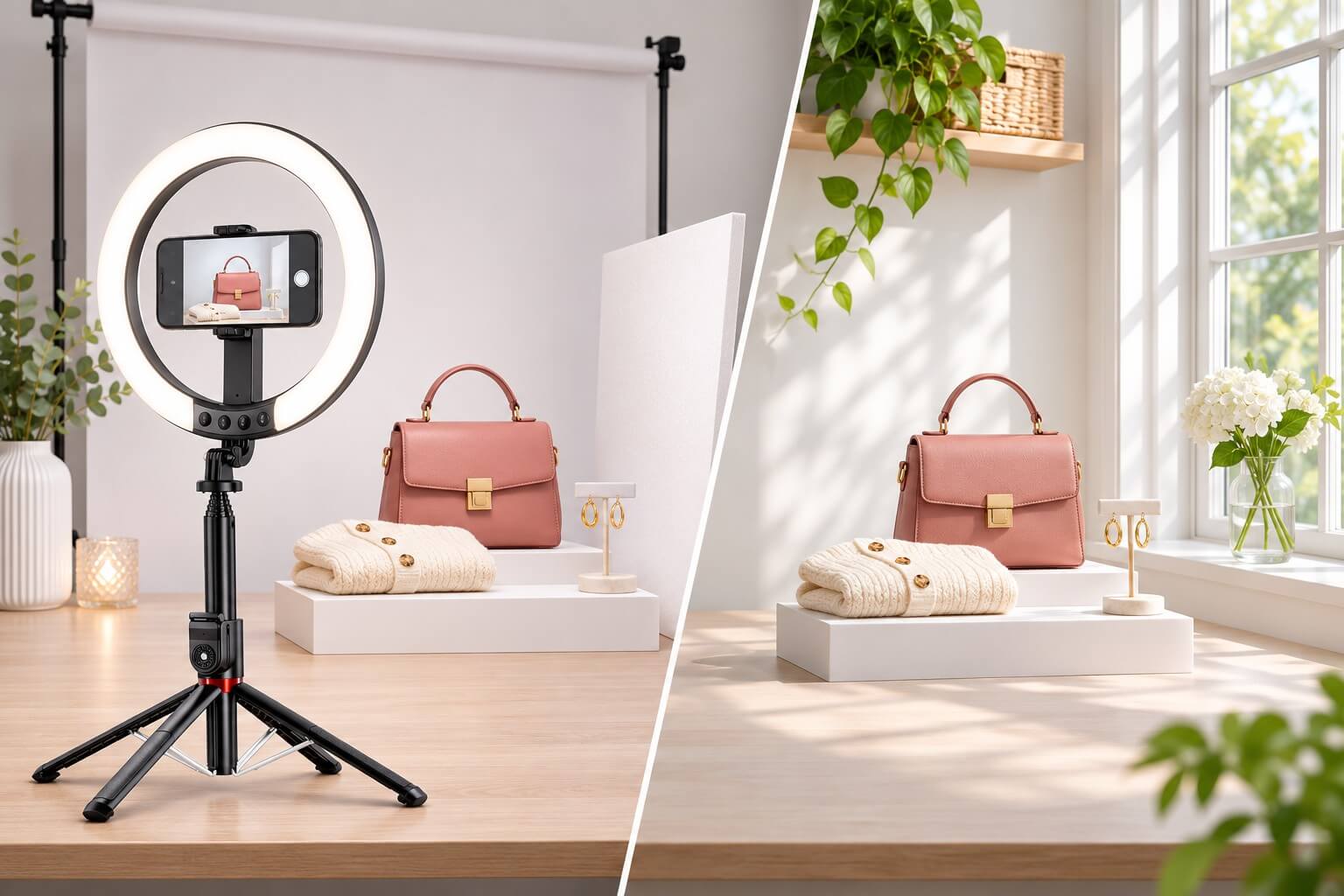
Good product photos sell product. Whether you post to your online store, email a sale, or build a social feed, the first thing a shopper judges is the picture. And the single biggest factor in a good picture is not the camera, it's the light.
Most independent retailers end up choosing between two tools they already have or can buy cheaply: a ring light or the light coming through a window. Both can give you clean, honest photos. They just shine in different situations. Here is how to decide which one fits the item in front of you.
What Each Light Actually Does
A Ring Light is a circular lamp you aim at your subject. You control it. Flip a switch and you get the same brightness every time, day or night.
Window light is natural daylight from the sun, usually filtered through a window. It is soft, wide, and free. The catch is that it changes all day long and with the weather, so no two shots an hour apart look the same.
In my years helping small retailers set up their first photo corner, the mistake I see most is treating light as an afterthought. People buy a nice phone, then shoot under a dim ceiling bulb and wonder why the product looks flat. The light source matters more than the gear holding it.
Which Lighting Shows True Product Color Better?
Color accuracy is where a lot of returns and unhappy customers come from. If the sweater looks navy online and arrives closer to black, the customer feels misled.
Window light wins for true color most of the time. Daylight contains the full range of the color spectrum, so colors look like they do in person. This is especially true for shots taken on a bright but overcast day, or next to a window that does not get direct sun.
A ring light can also show accurate color, but only if it has a high color rendering rating and you set the temperature correctly. If you go the ring light route, test it against a product you know well and check the result on a calibrated screen.
A quick rule for color
- Shooting apparel, fabric, or anything where the exact shade sells it: lean toward window light.
- Shooting at night or in a windowless stockroom: a good ring light with adjustable temperature is your friend.
- Whatever you choose, keep it consistent so your whole catalog matches.
Which Handles Shadows Better?
Soft, even light means soft shadows. Hard, direct light means sharp, distracting shadows.
Window light from a north-facing window, or any window on a cloudy day, is naturally soft and wraps around the product. That gives you gentle shadows that add shape without looking harsh. Direct sunlight through a window does the opposite: it creates strong shadows and bright hot spots. A thin white curtain or sheet over the window fixes that fast.
A ring light produces even, shadow-light results because the light surrounds the lens. That is why it became popular for faces and small items. For a single small product shot head-on, a ring light often gives the cleanest, flattest result with almost no visible shadow.
Which Handles Reflective Items Like Jewelry and Glass Better?
Reflective products are the hardest thing to photograph, and this is where the two lights really split.
A ring light reflects as a bright circle. On a shiny ring, a watch face, or a glass panel, you will often see a donut-shaped glare staring back at you. Sometimes that circular catchlight looks intentional and nice. On a flat reflective surface like a glass showcase or a watch crystal, it usually just looks like glare you cannot hide.
Window light spreads across a wider area, so the reflection is a soft, broad glow instead of a hard ring. For jewelry, glass, and polished metal, that soft wash is easier to work with. You can turn the item slightly until the reflection falls where you want it.
When I set up shots of fine jewelry, I almost always reach for diffused window light first and then block or bounce it with white card to control where the shine lands. A piece staged on a jewelry display photographs far better when the light is broad and soft rather than a single bright ring.
|
Situation |
Better Choice |
Why |
|
Apparel and fabric color |
Window light |
Full daylight spectrum shows true shades |
|
Small item, shot head-on |
Ring light |
Even light, almost no shadow |
|
Jewelry, glass, polished metal |
Window light |
Soft, broad reflection instead of a glare ring |
|
Night or windowless space |
Ring light |
Consistent light any time of day |
|
High volume, matching catalog |
Ring light |
Repeatable every single shot |
When Does Window Light Beat a Ring Light?
Window light pulls ahead when you care most about honest color and a natural look, and when you can shoot during daylight hours. It is also the cheaper path, since you already have the window. It is forgiving for larger items like bags, shoes, and folded apparel because it covers a wide area at once.
The trade-offs are real, though. Light changes through the day, so your morning and afternoon shots may not match. Direct sun creates harsh shadows. And on short winter days you may run out of usable light before you run out of products.
When the Ring Light Is the Smarter Pick
Choose a Ring Light when you need to shoot on a schedule that does not depend on the weather, when your space has no good window, or when you photograph many small items and want every shot to match. The consistency is the real selling point. A catalog where every product sits in the same light looks organized and trustworthy.
Ring lights work well on small staged setups too. Pair one with a set of display risers to lift and separate items, and you can build a tidy little studio on a counter.
A Simple Setup That Works With Either Light
You do not need a fancy studio. You need a clean, repeatable corner. Here is a setup that holds up whether you use a window or a ring light:
- Pick one background and stick with it. A plain white or neutral surface keeps attention on the product.
- Raise small items to eye level. A riser or a small display fixture stops you from shooting down at an awkward angle.
- Bounce light back in. A piece of white foam board on the shadow side fills in dark spots with either light source.
- Lock your spot. Mark where the camera, product, and light go so every shot matches.
- Shoot a test, then check it on a bigger screen. Phone screens hide color problems that a laptop reveals.
Can You Use Both?
Yes, and many retailers do. A common approach is to use window light as the main source for its soft, true color, then add a ring light or a bounce card to fill shadows on the darker side. That gives you the honesty of daylight with the control of a lamp. Just be careful not to mix a warm bulb with cool daylight, or you will get an odd color cast that is tricky to correct.
If you only have time to learn one, start with soft window light for its forgiving color and soft shadows, and add a ring light later once you start shooting at night or need every photo to match. The right light is the one you can set up the same way every single time, because consistency is what makes a store's photos look professional long before anyone notices the lighting at all.
Written by Kris Boettigheimer
Purchasing Assistant
Kris brings over 32 years of retail industry experience and more than 20 years at Store Supply Warehouse to every article he writes for storesupply.com. Since joining SSW in 2005, Kris has worked across multiple departments , including six years in Sales/Customer Service, where he helped independent retailers and small business owners find the right store fixtures, retail displays, and merchandising supplies to improve their store layouts and drive sales. For the past 15+ years in SSW's Purchasing Department, he has collaborated with suppliers, tracked market trends, and sourced products across all three Store Supply divisions. Today, Kris channels that hands-on experience into content that helps retailers enhance store presentation, discover new display solutions, and make smarter product decisions.