
Light Box vs. Ring Light for Your Store's Product Photos
If you sell online or post to social media, your photos are often the first thing a shopper sees. A clear, well lit image can do the selling for you. A dark, uneven, or glare filled one can cost you a sale before anyone reads a single word.
Two of the most common tools independent retailers reach for are the light box and the ring light. Both improve your pictures, but they solve different problems. This guide walks through how each one works, where each one shines, and how to pick the right one for the kind of products you sell.
I have spent more than two decades around retail product, and in my years helping small store owners set up displays and shoots, the mistake I see most often is buying a tool before matching it to the product. Let us fix that first.
What a Light Box Does
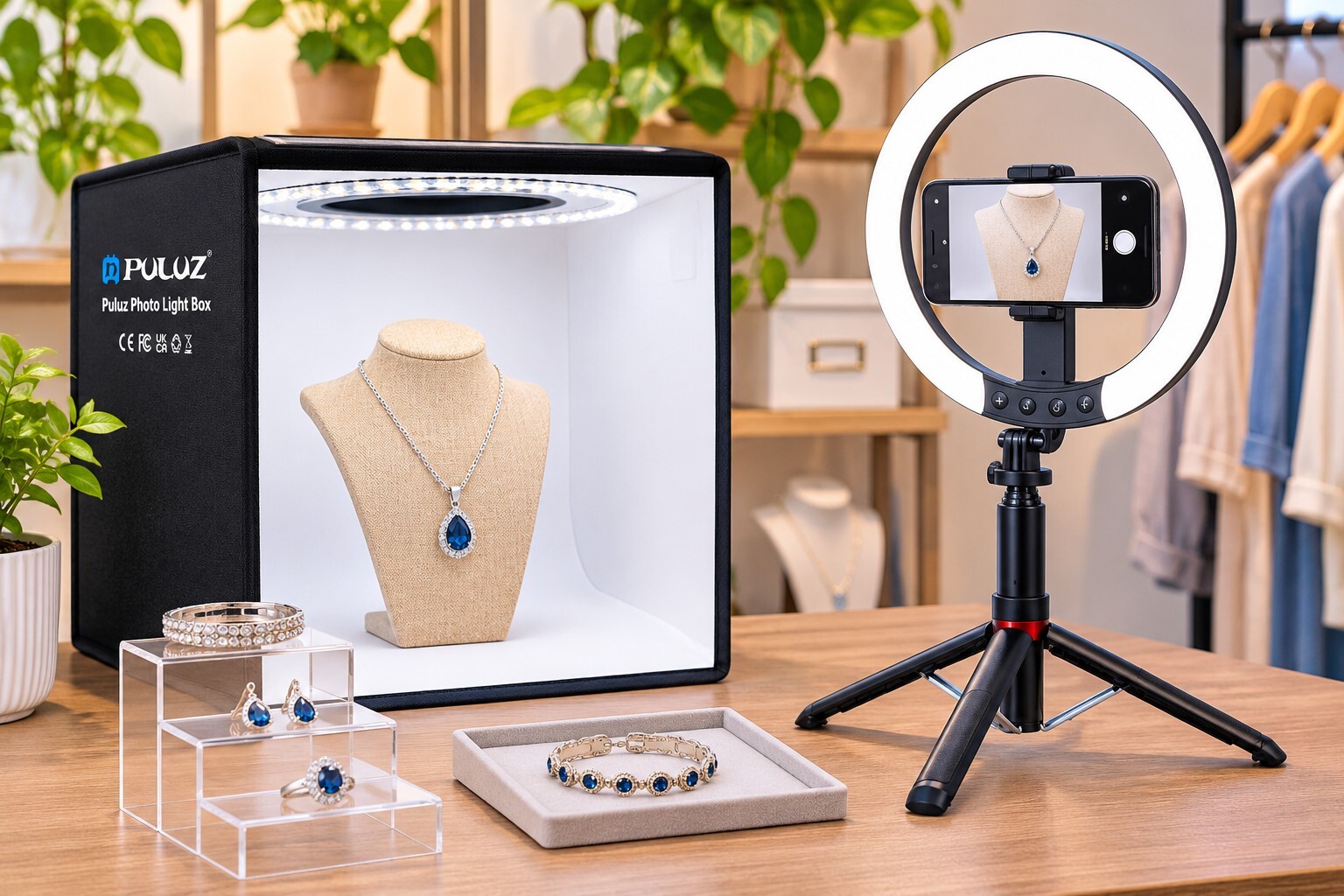
A Light Box (sometimes called a light tent or photo box) is an enclosed space with white or translucent walls. Light comes in from the sides, top, or both, and the soft walls scatter it around the product. The result is even, wraparound light with few harsh shadows.
Most light boxes come with a plain backdrop, usually white, that curves up behind the product. That curve removes the hard line where a table meets a wall, so your item appears to float on a clean background. For online listings, that clean look matters.
Light Box Strengths
- Even, soft lighting that reduces shadows on small items.
- A built in clean backdrop that keeps listings looking consistent.
- Glare control, because the light is diffused instead of pointed straight at the product.
- Repeatable results, since the enclosed space keeps your lighting the same shot after shot.
Light Box Limits
- The box size caps how large an item you can shoot. Larger items will not fit.
- It works for still product shots, not for video of yourself talking to the camera.
What a Ring Light Does
A Ring Light is a circular light that mounts on a stand, often with a spot in the center for a phone or camera. Because the light surrounds the lens, it throws light evenly onto whatever faces it, with that signature soft ring reflection you see in many social videos.
Ring lights are built for flexibility. You can point one at a product on a counter, at a model wearing an item, or at yourself for a live video or a reel. That makes them popular with retailers who do a lot of social content.
Ring Light Strengths
- Portable and quick to set up almost anywhere in the store.
- Good for people and video, including social posts, reels, and live sales.
- Works with larger items too large to fit inside a box.
- Adjustable brightness on many models, so you can tune the look.
Ring Light Limits
- It does not give you a clean backdrop. You supply that yourself.
- On shiny surfaces, the ring itself can show up as a reflection.
- Light comes from one direction, so you may get shadows a box would soften.
Light Box vs. Ring Light: Side by Side
|
Feature |
Light Box |
Ring Light |
|
Even lighting on small items |
Stronger |
Good, but more directional |
|
Clean built in background |
Yes |
No |
|
Glare control on glossy items |
Stronger |
Can add a ring reflection |
|
Video and live selling |
Not suited |
Stronger |
|
Large items |
Limited by box size |
Handles larger items |
Which Gives More Even Lighting for Small Products?
For small items photographed on a tabletop, a light box usually wins on evenness. The translucent walls wrap light around the product from several directions at once, so you avoid the deep shadow on one side that a single light source can create.
A ring light can still get you a clean small product shot, especially if you add a second light or bounce some light back with a piece of white foam board. But out of the box, the light box tends to deliver more even results for things like a single ring, a watch, or a small cosmetic jar.
Which Is Better for Jewelry and Glossy Items Without Glare?
Glossy surfaces are where the two tools really separate. Metal, gemstones, glass, and polished finishes act like little mirrors. They reflect whatever light source is in front of them.
With a ring light, that circular light can show up as a bright ring reflected right in the product. On a plain matte item it is not a problem, but on a diamond or a polished watch case it can be distracting.
A light box diffuses the light so there is no single bright source to reflect. That makes it the safer pick for jewelry and other shiny goods. If you sell fine jewelry, a light box is usually worth it.
However you shoot them, the surface under your pieces changes the final look. I have seen retailers go from flat, forgettable photos to clean, professional ones just by swapping a cluttered counter for a simple liner. A faux suede jewelry pad liner gives a soft, even background that photographs well and hides fingerprints and scratches on the surface below.
When Should You Choose a Light Box Over a Ring Light?
Reach for a light box when:
- You shoot mostly small items for online listings.
- You sell jewelry, watches, glass, or other glossy products.
- You want a consistent white background across every photo.
- You care more about clean still images than video.
Reach for a ring light when:
- You create a lot of social video, reels, or live sales.
- You photograph people wearing or holding products.
- Your items are too large for a box, like apparel on a form or a handbag.
Many retailers end up owning both. A light box handles the catalog style product shots, and a ring light covers video and anything too big for the box. They are not competitors so much as two tools for two jobs.
Small Props That Improve Either Setup
Good lighting is only part of the picture. A few simple props raise your photos no matter which light you use.
Risers and lifts. Flat products laid on a surface look flat in photos. Adding height and levels creates visual interest and lets you show more than one item cleanly. A set of clear acrylic nesting risers lifts pieces off the backdrop without stealing attention from the product.
Display stands. For items meant to be worn, a stand shows the piece the way a customer will use it. A faux suede necklace display keeps chains hanging naturally so they do not tangle or lie flat in the shot.
Backgrounds you can repeat. Consistency builds a professional look across your listings. Browse our Jewelry Displays for pads, trays, and stands that double as photo props and in store fixtures.
A Few Habits That Beat Any Gear
After years of looking at retail product photos, I can tell you the fundamentals matter more than the price of your light. Keep these in mind:
- Clean the product first. Dust and fingerprints show up far more in a photo than in person, especially on glossy items.
- Keep your camera steady. Even a small tripod or a stable surface sharpens your shots.
- Shoot the same way every time. Same distance, same background, same light. Consistency makes a storefront look put together.
- Fill the frame. Get close enough that the product is the clear subject, with a little breathing room around it.
Start with the lighting tool that matches what you actually sell and how you plan to use the photos. If most of your items are small and glossy, a light box will pay off fast. If your content leans toward video and larger products, a ring light earns its keep. Match the tool to the job, add a clean background and a riser or other display, and your product photos will start working as hard as you do.
Written by Kris Boettigheimer
Purchasing Assistant
Kris brings over 32 years of retail industry experience and more than 20 years at Store Supply Warehouse to every article he writes for storesupply.com. Since joining SSW in 2005, Kris has worked across multiple departments , including six years in Sales/Customer Service, where he helped independent retailers and small business owners find the right store fixtures, retail displays, and merchandising supplies to improve their store layouts and drive sales. For the past 15+ years in SSW's Purchasing Department, he has collaborated with suppliers, tracked market trends, and sourced products across all three Store Supply divisions. Today, Kris channels that hands-on experience into content that helps retailers enhance store presentation, discover new display solutions, and make smarter product decisions.