
How to Make One Fitting Room Feel Like a Full Suite
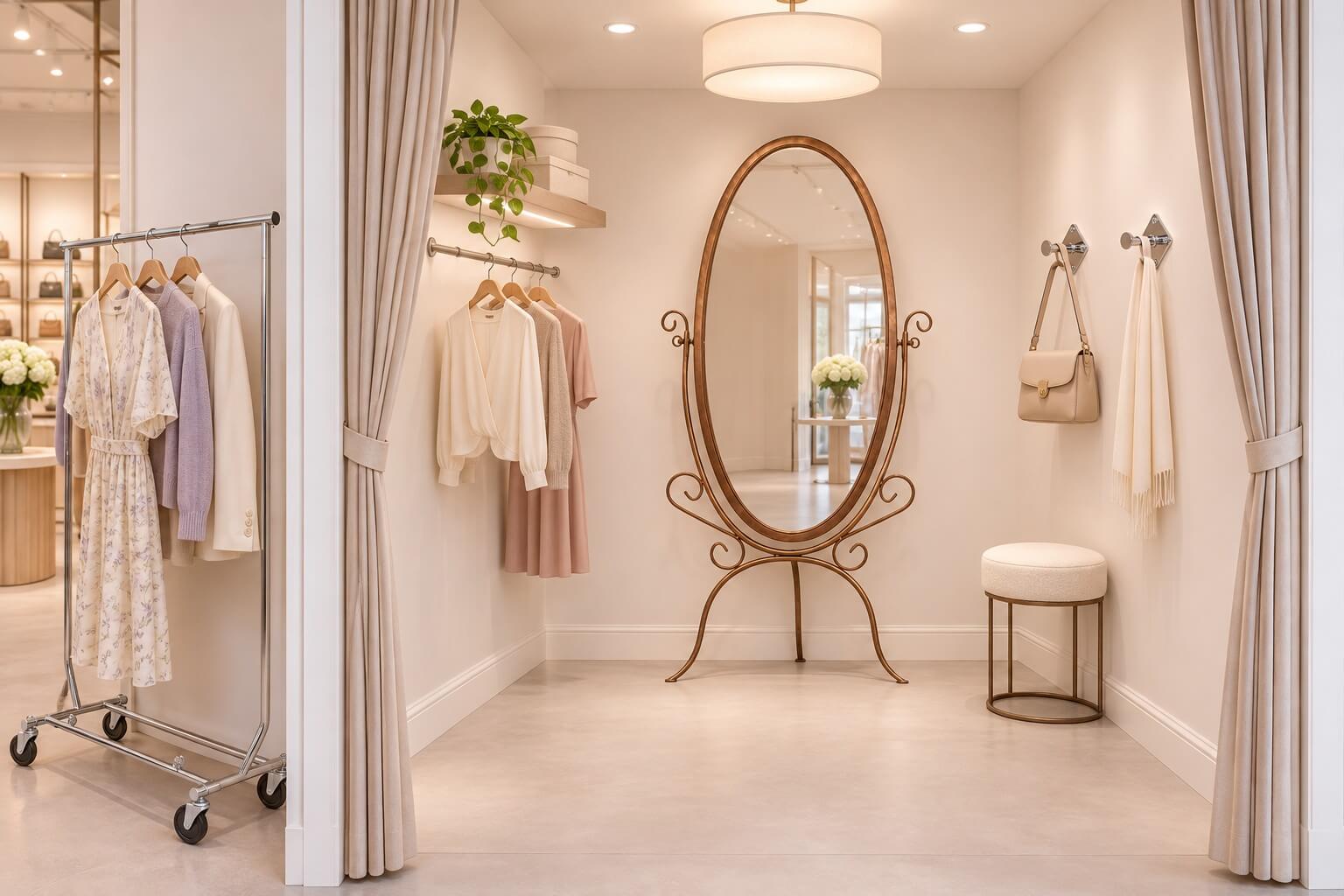
When you run a small shop, floor space is your tightest budget. Many boutiques I have worked with over the years have room for exactly one fitting room, and that single space carries a lot of weight. It is where the decision to buy actually happens.
The good news is that a small boutique fitting room can feel calm, private, and roomy without a remodel. It comes down to how you handle mirrors, seating, lighting, and flow. Here is how to make one dressing room work like a full suite.
Start With What Makes a Room Feel Small
Before you add anything, look at what is working against you. Cramped fitting rooms usually share the same problems: not enough light, a mirror in the wrong spot, clutter on the floor, and no clear place to set things down.
In my years helping independent retailers, the mistake I see most is treating the fitting room as an afterthought. Owners spend their attention on the sales floor and leave the try-on space bare or crowded with overstock. Customers feel that difference right away.
Fix these four issues and even a small room reads as thoughtful and comfortable. That comfort keeps people trying more items, which is the whole point.
Where Should the Mirror Go in a One-Room Setup?
Mirror placement does more to make a fitting room look bigger than any other single choice. In a one-room setup, place a Full-Length Mirror against the wall directly across from the door or entry point. That gives the eye somewhere to travel and doubles the visual depth of the space.
A few things I have learned about mirrors in tight rooms:
- Go full length. A mirror that stops at the waist forces customers to step back to see an outfit, and there is no room to step back. A floor-to-near-ceiling reflection removes that problem.
- Angle a second mirror if you can. A three-quarter view sells clothing. If the wall allows it, add a second mirror set at a slight angle so shoppers see the back of a garment without asking for help.
- Keep the frame simple. A clean, light frame reflects more and reads as larger than a heavy dark one.
How Do You Make a Single Fitting Room Feel Roomy?
Roomy is mostly a feeling, and you can build that feeling with light, color, and a few smart fixtures.
Get the Lighting Right
Lighting is the difference between a room people want to stay in and one they rush out of. Aim for soft, even light near the mirror rather than a single harsh overhead bulb that throws shadows on faces. Warm, flattering light makes both the customer and the clothing look their best, and that sells product.
Skip the tint of colored bulbs. Neutral, bright light shows true colors so a shopper is not surprised by the garment in daylight later.
Use Light Colors and Clear Sightlines
Light wall colors bounce light around and push the walls back visually. Keep the floor clear so the eye reaches the far wall without tripping over boxes or spare hangers.
Give Every Item a Home
Clutter shrinks a room fast. Give customers places to hang, hook, and set things down so garments never pile on the floor or the seat.
- Mount a 3 inch Chrome Fitting Room Hook or two for handbags and the customer's own coat.
- Add a short Hangrail or a few wall hooks for the items being tried on.
- Provide clean Clothes Hangers so returned items look neat, not wrinkled.
Stock the room with sturdy hangers and hangrails and a couple of well-placed hooks and pegs so nothing ends up on the floor.
Add Seating Without Eating the Floor
A place to sit signals that a customer is welcome to take their time, and it helps with shoes and boots. In a small room you do not need a bench that dominates the space. A slim stool or a compact seat tucked to one side does the job.
If floor space is truly tight, a small tiered surface can hold a folded item or a customer's bag while doubling as a low landing spot. Something like a display cube or riser can serve that purpose and pull double duty on the sales floor when you need it elsewhere.
Whatever you choose, keep it low profile and against a wall so the center of the room stays open. Open center floor is what makes a room read as larger.
How Do You Keep a Lone Fitting Room Moving Quickly?
One room means one customer at a time, so turnover matters. A slow fitting room becomes a line, and a line sends people out the door. A few habits keep things moving.
- Set a garment limit and post it kindly. A simple sign about item counts keeps any single visit from running long.
- Add a return hook or valet bar right outside the room. When customers hang unwanted items there instead of leaving them inside, the next person gets a clean room immediately.
- Keep a staff pass rhythm. Check the room between customers, straighten the hangers, and reset the seat. It takes seconds and makes the room feel cared for.
- Handle go-backs promptly. Do not let tried-on items stack up in the room. Move them to a nearby rack for restocking.
A small rolling rack parked just outside the door is a big help here. A collapsible clothing rack gives you a spot for go-backs and holds items a customer wants to keep considering, all without cluttering the room itself.
One more thing to pass on: quiet privacy sells. A door or curtain that actually closes and covers, plus a room free of overstock and clutter, tells a shopper you respect their comfort. That respect is what turns a tiny try-on into a sale, no matter how many rooms you have.
Written by Kris Boettigheimer
Purchasing Assistant
Kris brings over 32 years of retail industry experience and more than 20 years at Store Supply Warehouse to every article he writes for storesupply.com. Since joining SSW in 2005, Kris has worked across multiple departments , including six years in Sales/Customer Service, where he helped independent retailers and small business owners find the right store fixtures, retail displays, and merchandising supplies to improve their store layouts and drive sales. For the past 15+ years in SSW's Purchasing Department, he has collaborated with suppliers, tracked market trends, and sourced products across all three Store Supply divisions. Today, Kris channels that hands-on experience into content that helps retailers enhance store presentation, discover new display solutions, and make smarter product decisions.