
How to Display Bracelets So Shoppers Actually Try Them On
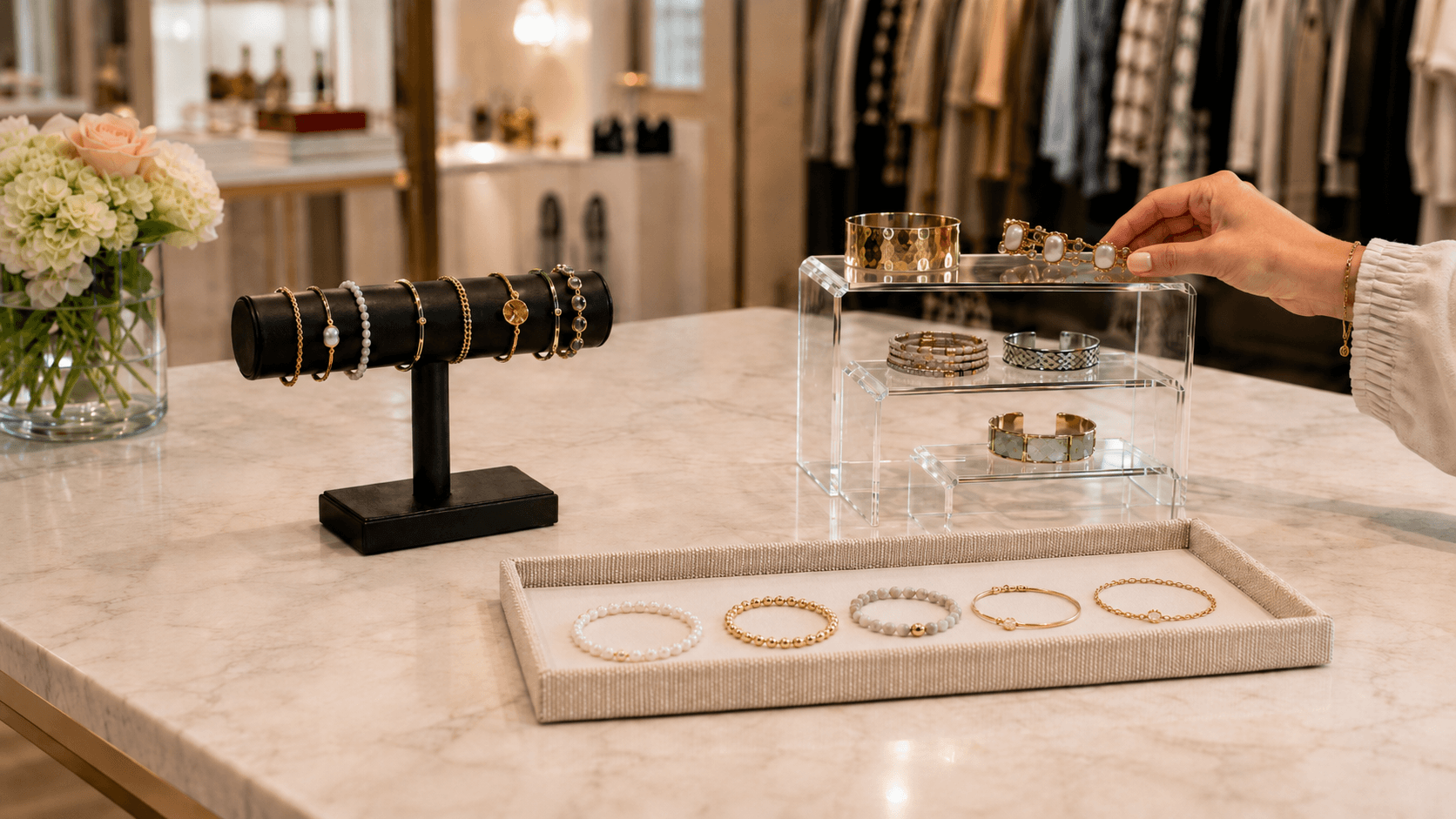
Bracelets sell when customers pick them up. A shopper who slides a bangle onto their wrist and turns it in the light is already halfway to the register. The problem is that many bracelet displays make trying on feel like a chore, so pieces stay behind glass and shoppers walk on.
In my years here at Store Supply Warehouse, one pattern is clear. The stores that move bracelets are the ones that make the "try it on" moment easy. Below are the fixtures and setups that get customers to reach out, along with how to keep your inventory secure while you do it.
Why Hands-On Beats Behind Glass
Jewelry is a touch purchase. A bracelet has to clear the wrist, sit at the right weight, and catch light the way the buyer imagined. None of that happens when the piece is locked in a case and the customer has to flag down help.
In my years helping boutiques and gift shops, the mistake I see most is treating every bracelet like a high-security item. Save the locked showcase for your finer pieces. For fashion bangles, cuffs, and stacking bracelets, open displays that invite handling almost always outsell the case.
That does not mean you give up control. It means you match the fixture to the price point and the shopping behavior you want.
Match the Fixture to the Bracelet
Bangles and cuffs behave differently, so they need different staging. Here is a quick way to think about it before you pick fixtures.
|
Bracelet type |
What it needs |
Fixture idea |
|
Bangles (rigid, slip over the wrist) |
A vertical post so pieces lift off easily |
T-bar stand or tiered display |
|
Cuffs (open-back, adjustable) |
A riser that holds the shape and shows the opening |
Acrylic riser Set or bracelet holder |
|
Beaded and cord bracelets |
A soft surface so they lie flat and untangled |
Faux suede pad or tray |
|
Watch-style and boxed pieces |
A stand or box that presents one piece at a time |
Watch stand or presentation box |
Bangles: Use a Post or Ramp
Bangles are made to slide, so give them a post to slide onto. A Small T-Bar Display lets a customer take the pieces off, try them, and put them back without unloading the whole stack. That single motion is what turns a browser into a buyer.
An 3-Tier Jewelry Display works the same way and adds height variation, which reads as a curated display rather than a pile. Keep the most colorful or seasonal bangles near the top of the post at eye level. That is the piece a customer reaches for first.
Cuffs: Use a Form That Holds the Shape
Cuffs need to show their opening and hold their curve. A Small Clear Acrylic Bracelet Holder does both. Set one statement cuff per form so the customer can see how it sits, then group your remaining stock nearby on a pad.
Acrylic risers are useful here because they build levels without stealing attention from the jewelry. Our nesting acrylic display risers come as a set of three, so you can create lifts and levels within one small footprint on a counter or in a window.
Beaded and Cord Bracelets: Keep Them Flat and Soft
Delicate strands tangle the second they hang. Lay them on a soft liner instead. A faux suede pad keeps beaded and cord pieces separated and easy to lift one at a time. The slate faux suede pad and tray liner works for a single feature piece or inside a tray for a small group.
Build a Try-On Zone, Not Just a Display
A display shows the product. A try-on zone invites action. The difference is a few small additions around the fixture.
- Put a mirror within arm's reach. A shopper will not walk across the store to check a bracelet. A Tilting Clear Acrylic Countertop Mirror right next to the display keeps customers in the moment.
- Set the height for reaching, not looking. Waist to chest height invites hands. Anything above eye level says "look, do not touch."
- Leave breathing room. A crowded pad looks like clearance. Space between pieces signals that each one matters.
- Add a small sign. A short card that says "Try me on" or "Stack three, save" gives permission and nudges the sale.
One thing I learned working with gift and boutique owners: the try-on zone works best near the counter. It gives you a natural sightline for security and puts the bracelets in the path of a customer who is already committed to buying.
Group by Story, Not Just by Size
Customers rarely buy one bracelet. They buy a look. Merchandise the way people wear the pieces.
- Stack sets. Group three or four thin bangles that layer well and price them as a set.
- Color families. Cluster warm tones together and cool tones together so a shopper can build a coordinated stack fast.
- Price tiers. Keep an accessible "grab and go" post of lower-priced pieces near a smaller display of your standout cuffs.
This kind of grouping is the heart of boutique bracelet merchandising. It turns a single-piece decision into a multi-piece sale without any hard selling.
Keep Bracelets Accessible but Secure
Open displays and loss prevention are not opposites. You just have to be deliberate about placement and stock levels.
- Keep the try-on display near a staffed counter. Visibility is your best deterrent for fashion jewelry.
- Stock the floor light and refill often. Put a few of each style out and keep backup stock behind the counter. Less on the post means less to lose and a display that always looks fresh.
- Move high-value pieces to glass. For anything that would hurt to lose, use a case. A ready-to-assemble jewelry display case lets you show fine bracelets clearly while keeping them locked.
- Tag and price where it shows. Clear pricing cuts down on questions and on price switching, and it keeps the try-on flow moving.
The goal is a two-tier setup: open fixtures for the pieces you want in customers' hands, and a case for the pieces that need protection. Most boutiques do best with both.
Finish the Sale With the Right Packaging
Once a bracelet is on the wrist and headed to the counter, the presentation should not stop. A boxed piece feels like a gift, which matters for the many bracelets bought as presents. A faux leather bracelet and watch box gives the customer something to present the purchase in, and it reinforces the value of what she just bought.
Small touches like this are what separate a quick sale from a customer who comes back. If you want to see how the pieces fit together, browse the full range of jewelry displays and boxes and build a set that matches your store's look.
Start with one clean try-on post, a mirror beside it, and a short sign. Watch how many more customers reach out over a single week. That reach is the sale beginning, and once you see it happen, you will keep finding ways to invite it.
Written by Kris Boettigheimer
Purchasing Assistant
Kris brings over 32 years of retail industry experience and more than 20 years at Store Supply Warehouse to every article he writes for storesupply.com. Since joining SSW in 2005, Kris has worked across multiple departments , including six years in Sales/Customer Service, where he helped independent retailers and small business owners find the right store fixtures, retail displays, and merchandising supplies to improve their store layouts and drive sales. For the past 15+ years in SSW's Purchasing Department, he has collaborated with suppliers, tracked market trends, and sourced products across all three Store Supply divisions. Today, Kris channels that hands-on experience into content that helps retailers enhance store presentation, discover new display solutions, and make smarter product decisions.