
Freestanding vs. Wall-Mounted Wire Grid: The Retailer's Trade-Off
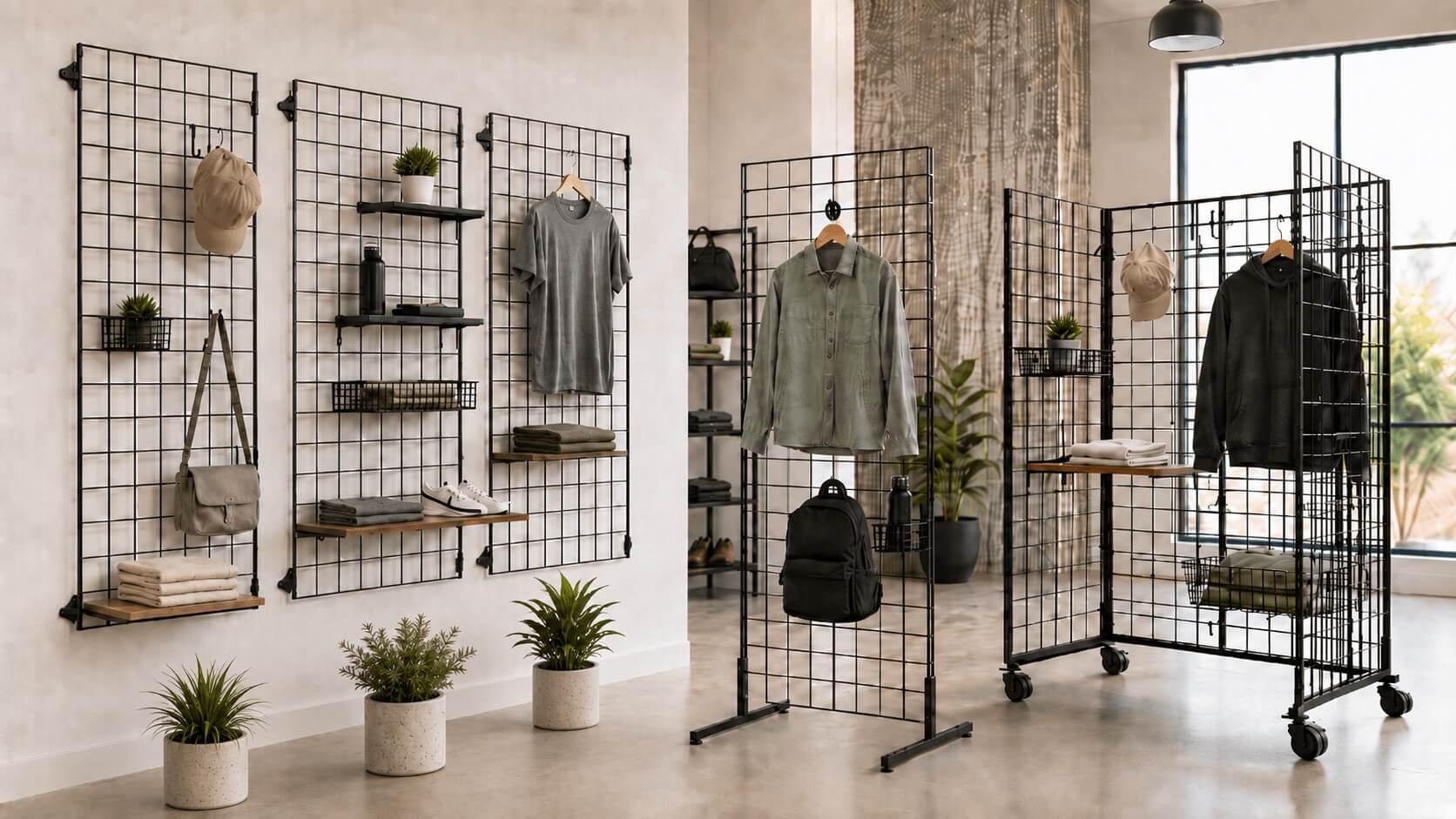
Wire grid panels offer retailers incredible flexibility for displaying merchandise, but choosing between freestanding and wall-mounted systems can make or break your store layout. This decision affects everything from your initial investment to daily operations and future expansion plans.
Many retailers face lease restrictions that prevent drilling into walls, while others need the ability to reconfigure their space frequently. Understanding the trade-offs between these two approaches helps you make an informed decision that supports your business goals.
Understanding Freestanding Wire Grid Systems
Freestanding wire grid displays create merchandise walls without requiring wall attachment. These systems use Wire Grid Display Legs, Wire Grid Panel Connectors, or a 2 x 4 Foot Grid Gondola Base with Casters to maintain stability while remaining completely portable.
The key advantage of freestanding systems lies in their independence from existing architecture. You can position these displays anywhere in your store, create room dividers, or build merchandise islands in open floor areas.
Stability Considerations for Freestanding Units
Freestanding wire grid requires careful attention to weight distribution and base support. Most systems rely on weighted bases or connecting multiple panels together to achieve adequate stability.
When selecting freestanding options, consider the weight of merchandise you'll display. Heavy items like coats or bags require more substantial base support than lightweight accessories. Some retailers add sandbags or water-filled bases for extra stability during busy shopping periods.
Wall-Mounted Gridwall Advantages
Wall-mounted Grid Wall Panels | Store Supply Warehouse attach directly to existing walls using Wall Mount Brackets for a clean professional appearance. These installations typically offer superior stability and can support heavier merchandise loads without additional floor support.
The streamlined appearance of wall-mounted systems appeals to retailers who want merchandise displays that blend seamlessly with their store design. Without floor bases, these systems also maximize available floor space for customer traffic and additional fixtures.
Installation Requirements and Limitations
Wall-mounted installations require drilling into walls and can create challenges for lease agreements. Many commercial leases prohibit structural modifications, making wall mounting impossible without landlord approval.
Even with permission, wall-mounted systems become permanent fixtures that can't easily relocate. This permanence works well for established stores with fixed layouts but limits flexibility for growing businesses or seasonal retailers.
Space and Footprint Analysis
Freestanding wire grid systems require floor space for their bases, typically adding 12-18 inches of depth to your display footprint. This additional space requirement can impact traffic flow in smaller stores or crowded areas.
Wall-mounted systems eliminate floor space requirements but limit your display area to existing wall surfaces. This restriction can force awkward merchandise arrangements or leave valuable floor space underutilized.
Traffic Flow Considerations
Consider how each system affects customer movement through your store. Freestanding displays can create natural traffic patterns and guide customers through different merchandise areas. However, their bases can also create trip hazards or narrow walkways if positioned poorly.
Wall-mounted systems keep walkways completely clear but may push all displays to the store perimeter, potentially creating dead zones in central floor areas.
Cost Comparison: Initial Investment and Long-Term Value
Freestanding systems typically require higher upfront investment due to additional hardware like bases, connectors, and stabilizing components.
However, freestanding systems offer better long-term value for retailers who move locations frequently or need flexible layouts. The ability to reconfigure or relocate these displays extends their useful life across multiple store iterations.
Hidden Costs and Ongoing Expenses
Wall-mounted installations may require professional installation, adding labor costs to your initial investment. Removal costs when relocating can also be significant, especially if wall repairs are necessary.
Freestanding systems may need periodic maintenance on bases and connectors, but these costs typically remain minimal compared to installation and removal fees for permanent mounting.
Retail Fixtures for Different Store Stages
New and temporary retailers benefit most from freestanding wire grid systems. Pop-up shops, seasonal retailers, and businesses in temporary locations need fixtures that can move without damaging rental properties.
Established retailers with permanent locations often prefer wall-mounted systems for their clean appearance and space efficiency. These businesses can absorb installation costs and benefit from the superior stability for high-value merchandise displays.
Matching Systems to Business Models
Consider your business model when choosing between systems. Fashion retailers who frequently change layouts benefit from freestanding flexibility, while jewelry stores displaying expensive items may prioritize the security and stability of wall-mounted systems.
Test market retailers or businesses validating new locations should choose portable options that can relocate if the location proves unsuccessful.
Maximizing Display Effectiveness
Both systems support extensive accessory options including 12 inch Shelf Brackets and 24 x 12 inch Laminated Melamine Shelves that expand merchandising capabilities. The key difference lies in how weight limits and stability affect your accessory choices.
Freestanding systems work well with lighter accessories and merchandise categories. Wall-mounted systems can support heavier shelving and high-density displays without stability concerns.
Creating Cohesive Store Aesthetics
Some retailers combine both systems strategically. Wall-mounted panels handle heavy or permanent displays while freestanding units create flexible zones for seasonal merchandise or promotional displays.
This hybrid approach maximizes both stability and flexibility while creating visual interest through varied display heights and configurations.
Making the Right Choice for Your Retail Space
Choose freestanding wire grid when you need maximum flexibility, can't drill into walls, or plan to relocate within two years. The higher initial cost pays dividends through portability and reconfiguration options.
Select wall-mounted gridwall for permanent locations where stability and clean aesthetics outweigh flexibility concerns. This choice works best for established retailers with fixed layouts and heavy merchandise requirements.
Consider your lease terms, merchandise weight, traffic patterns, and growth plans before making your final decision. The right choice supports both your immediate display needs and long-term business objectives.
Implementation Timeline and Planning
Freestanding systems can be implemented immediately without permits or landlord approvals. This speed advantage helps retailers respond quickly to market opportunities or seasonal changes.
Wall-mounted installations require planning time for approvals, professional installation scheduling, and potential store closure during installation. Factor these timeline considerations into your decision-making process.
Whether you choose freestanding flexibility or wall-mounted stability, wire grid systems provide the foundation for effective retail merchandising that adapts to your business needs and customer expectations.
Written by Kris Boettigheimer
Purchasing Assistant
Kris brings over 32 years of retail industry experience and more than 20 years at Store Supply Warehouse to every article he writes for storesupply.com. Since joining SSW in 2005, Kris has worked across multiple departments — including six years in Sales/Customer Service, where he helped independent retailers and small business owners find the right store fixtures, retail displays, and merchandising supplies to improve their store layouts and drive sales. For the past 15+ years in SSW's Purchasing Department, he has collaborated with suppliers, tracked market trends, and sourced products across all three Store Supply divisions. Today, Kris channels that hands-on experience into content that helps retailers enhance store presentation, discover new display solutions, and make smarter product decisions.