
What Is a Die-Cut Handle Bag? Plastic Bag Terms Explained
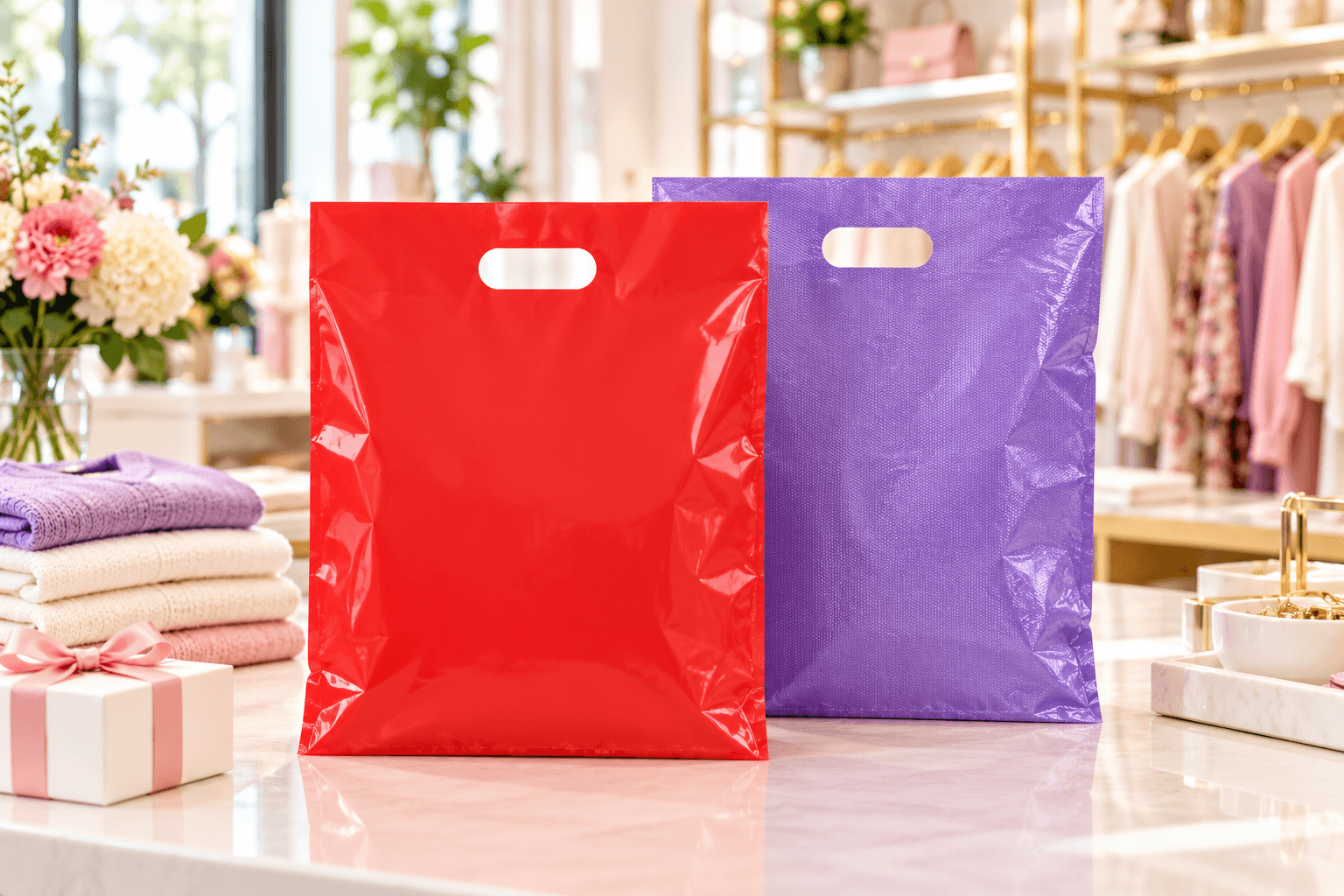
If you’ve ever visited a website and have been puzzled trying to figure out the difference between a die-cut handle and a soft-loop handle, you are not alone. The names get thrown around like everyone already knows them. They do not always match up from one vendor to the next either.
Let me walk you through the terms, so you can match a handle style that most benefits the items you sell.
What Does Die-Cut Handle Mean on a Plastic Bag?
A die-cut handle is a hole punched directly into the top of the bag. The customer slips their fingers through the opening to carry it. There is no separate strap, loop, or added piece. The handle is part of the bag itself, cut out during manufacturing with a shaped blade called a die.
Because the handle is built in, die-cut bags tend to be simple to store and quick to grab at a busy register. There is nothing to untangle and nothing extra to snag.
Plastic Bag Handle Types at a Glance
Retailers run into a handful of handle styles. Here is how the common ones compare.
|
Handle style |
What it looks like |
Good for |
|
|
Die-cut |
Hole punched into the top of the bag |
Quick counter use, light to medium items |
|
|
Soft-loop |
A flexible plastic loop welded to the bag top |
A softer grip, boutique feel |
|
|
T-shirt (tote) |
Two open loops with a gap, like a tank top |
Fast bagging, grocery-style checkout |
|
|
Drawtape |
Tape threaded through the top that pulls to close |
Closing and securing the bag |
|
Keep in mind that names vary between suppliers. When you are unsure, look at the picture and read the handle description on the product page rather than trusting the label alone.
How Is a Die-Cut Handle Different From a Soft-Loop Handle?
This is one of the most frequent questions I got on the phone. The short answer is how the handle is made and how it feels.
- Die-cut: The handle is a hole cut into the bag. It lies flat, adds no bulk, and is quick to grab. The edge can feel firmer against the hand.
- Soft-loop: A separate flexible loop is attached to the top of the bag. It gives a rounder, softer grip that many customers associate with a boutique or upscale purchase.
Neither one is better across the board. A die-cut handle works well when speed and simplicity matter. A soft-loop handle leans toward presentation and a more comfortable carry. In my years helping apparel and gift shops, the choice usually came down to the vibe of the store and how much the owner wanted the bag itself to feel like part of the experience.
What Kind of Merchandise Suits a Die-Cut Handle Bag?
Die-cut bags are a solid all-purpose choice for many independent stores. They shine in a few situations:
- Light to medium purchases: apparel, accessories, books, small home goods, and similar items.
- High-traffic counters: the flat handle is fast to open and fast to hand off.
- Stores that want a clean, branded look: the smooth top panel gives printing room for a logo or store name.
For heavier or bulkier loads, you may want a sturdier handle style or a different bag construction altogether. The Retail Shopping Bags bags we stock come in a range of sizes and thicknesses, so match the bag to the heaviest item a customer is likely to carry out.
A Quick Word on Bag Thickness and Material
Handle style is only half the decision. The other half is the plastic itself. Two terms come up often in merchandise bag terms: low density and high density.
In our line, Low Density bags have a glossy finish and run slightly thicker than the high density style. That extra thickness gives them a more substantial feel in the hand. High Density Plastic Merchandise Bags are lighter and often used where volume and cost matter most.
If you are outfitting a register, our Retail Shopping Bags section is a good place to compare handle styles and thicknesses side by side. For a softer, more decorative option, some retailers pair everyday plastic bags with paper shopping bags for special purchases or gift sales.
How to Choose for Your Counter
Here is the simple process I walk retailers through:
- Start with your heaviest common item. That tells you the strength and size you need.
- Match the handle to your pace. Busy counter: die-cut or T-shirt. Slower, gift-focused sale: soft-loop.
- Decide how much the bag represents your brand. More brand focus usually means a heavier bag with a softer handle.
- Buy a size range. Most stores need at least a small and a large so cashiers are not forcing items into the wrong bag.
One mistake I see over and over is a shop ordering a single bag size to save money, then stuffing everything from earrings to sweaters into it. Small items get lost, and large items strain the handles. A couple of sizes on hand solves both problems and usually costs less than the returns and reorders caused by torn bags.
Once you know the handle style and the thickness you want, ordering is straightforward. Read the product page for the exact dimensions and case count, order a size or two that cover your real sales mix, and your counter will move faster with fewer bags giving out on the way to the car.
Written by Kris Boettigheimer
Purchasing Assistant
Kris brings over 32 years of retail industry experience and more than 20 years at Store Supply Warehouse to every article he writes for storesupply.com. Since joining SSW in 2005, Kris has worked across multiple departments , including six years in Sales/Customer Service, where he helped independent retailers and small business owners find the right store fixtures, retail displays, and merchandising supplies to improve their store layouts and drive sales. For the past 15+ years in SSW's Purchasing Department, he has collaborated with suppliers, tracked market trends, and sourced products across all three Store Supply divisions. Today, Kris channels that hands-on experience into content that helps retailers enhance store presentation, discover new display solutions, and make smarter product decisions.