How to Write Counter Signage That Drives Gift Shop Impulse Buys
The counter is the last place a shopper stands before they leave your store. It is also one of the best places to add a few dollars to the sale. A small, well written sign near the register can turn a single purchase into a purchase plus a candle, a keychain, or a gift card.
In my time at Store Supply Warehouse, I learned that the sign itself matters as much as the product it points to. Below is how I would write and place your impulse buy signage so it actually works.
Why Counter Signs Drive Add-On Sales
By the time a customer reaches your register, they have already decided to buy. Their guard is down and their wallet is out. A short sign that suggests one more small item meets them at the exact moment they are most open to it.
Gift shop counter signs work because they lower the effort of deciding. The shopper does not have to hunt for the item or think hard about the price. The sign does the thinking for them, and the product is right there within reach.
What Makes a Good Impulse Item
Not every product belongs at the register. The best add-on items share a few traits:
- Low price, so the decision feels easy
- Small size, so it fits on the counter and in the bag
- Broad appeal, so most shoppers can picture using or gifting it
- A clear reason to grab it now (a gift, a treat, a stocking stuffer)
In my years helping gift shops, the mistake I see most often is crowding the counter with items that are too expensive or too bulky. Those belong on the sales floor. The register is for the quick yes.
How to Write Signage That Encourages Impulse Purchases
Good point of sale signage is short, specific, and easy to read from a step or two away. You are not writing a paragraph. You are writing a nudge.
Lead With the Benefit or the Offer
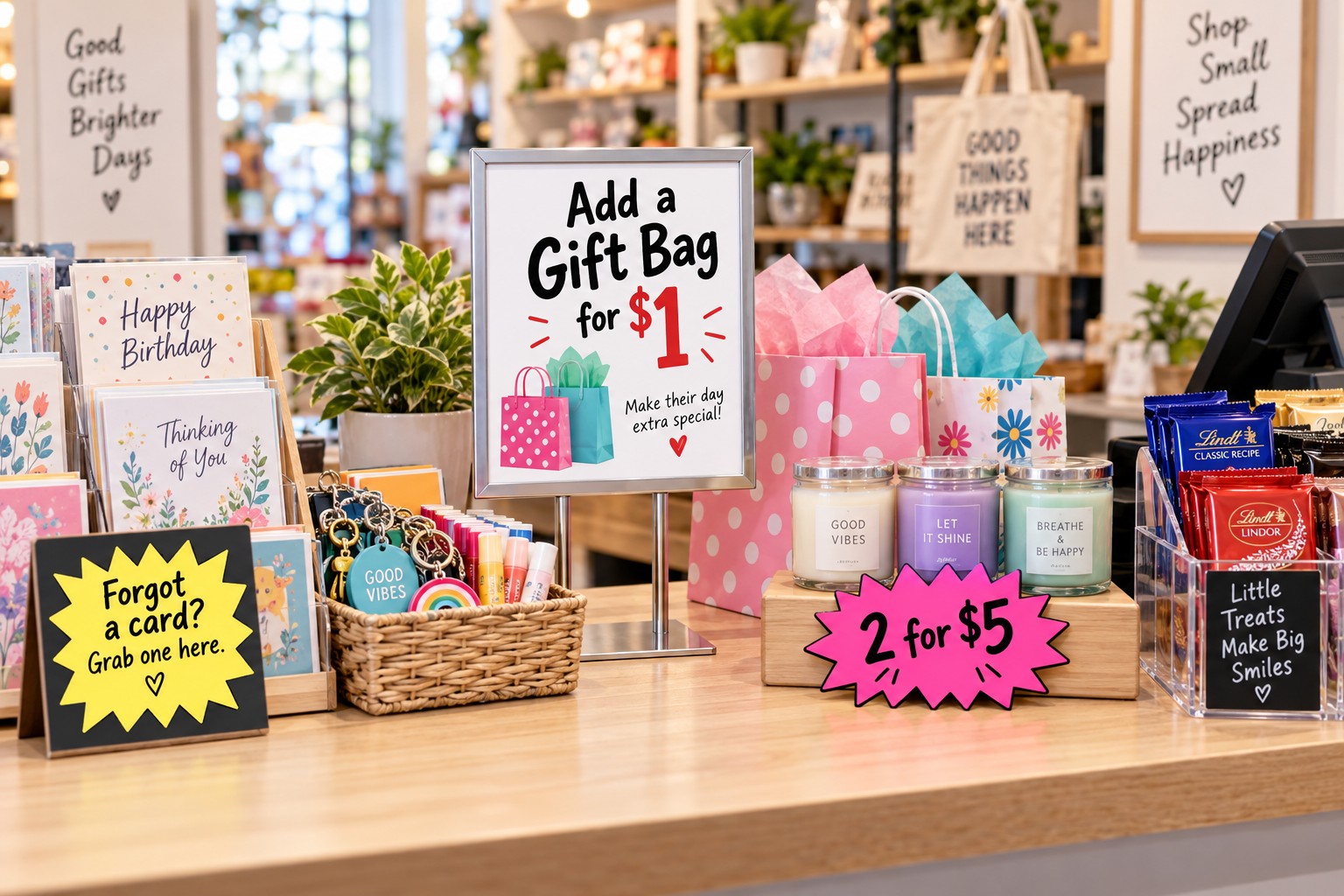
Tell the shopper what is in it for them right away. A line like "Add a gift box for $2" or "Grab a candle, they make easy gifts" gives a reason and a price in one breath.
Avoid vague headlines like "New Items" or "Check These Out." Those do not tell the shopper why they should care. Name the item and the payoff.
Use Numbers and Plain Prices
Shoppers respond to clear pricing. If the item is inexpensive, show the price. If you have a bundle, spell it out: "2 for $5" reads faster than a long explanation. Clear pricing also cuts down on questions at the counter, which keeps your line moving.
Write in the Customer's Voice
Read your sign out loud. If it sounds like a catalog, rewrite it so it sounds like something you would actually say to a customer. Friendly and direct beats formal every time.
A few examples that work well in gift shops:
- "Forgot a card? Grab one here."
- "Treat yourself. Chocolates by the register."
- "Need a gift bag? Add one for a dollar."
Give One Clear Action
Each sign should ask for one thing. If you try to promote three products on a single card, the shopper reads none of them. One item, one price, one reason. If you have several impulse products, make several small signs instead of one crowded one.
How Short Should a Persuasive Counter Sign Be?
As short as you can make it while still being clear. A good target is a headline the shopper can read in about two seconds, plus a price. Most strong counter signs come down to a handful of words.
Think of it this way: the customer is glancing, not reading. If your message does not land at a glance, it will not land at all. When in doubt, cut a word.
Where Should Impulse-Buy Signs Go Near the Register?
Placement is half the job. The sign and the product need to sit in the shopper's line of sight while they wait or pay.
At Eye Level and Within Reach
Put the sign next to the product, not across the store from it. If a shopper reads "Add a candle for $6" but cannot see or touch a candle, the moment passes. Keep the item and the sign together on the counter.
A tidy, well organized checkout helps here. A dedicated Store Service Counter gives you a defined surface for a small impulse display and keeps clutter out of the way. When the counter looks intentional, the sign looks like part of the store instead of an afterthought.
In the Waiting Zone
The spot where customers stand in line is prime real estate. People have idle time and idle eyes. A small Sign Card and a basket of low cost items in that zone catch shoppers before they even reach the register.
Near the Bagging Area
The moment you reach for a bag is a natural time to suggest an add-on. A sign near your gift packaging that reads "Gift wrap available, ask us" turns a routine step into an extra sale. It also reminds your own staff to offer it.
Pairing Signs With the Right Sign Holders
A great message on a curled, taped-up card sends the wrong signal. The Sign Holder is the frame, and it tells the customer your store pays attention to details.
For the register area, choose sized to your Sign Card so the sign stands upright and stays put. A clean holder keeps the message readable and lets you swap signs quickly when a promotion changes.
Match the Sign Style to the Message
Bright cards work well for urgency and sale messages. Our 7 x 5 inch fluorescent burst sign cards are made to draw the eye toward a promotion, which makes them a fit for "2 for $5" style offers at the counter. For a more understated gift shop look, a simple printed card in a clear holder keeps the focus on the product.
Whatever you choose, keep it consistent. When all your counter signs share the same holder and the same look, the checkout reads as organized rather than busy.
Test, Track, and Rotate
Retail add-on signs are not a set-and-forget project. Write a sign, place it, and watch what happens at the register for a week or two.
One habit I picked up on the sales floor: change your counter sign when it stops pulling. Shoppers, especially regulars, tune out a message they have seen too many times. Rotating the item or rewriting the line keeps the counter feeling fresh and gives repeat customers something new to notice.
Try one message at a time so you can tell what is working. If "Add a gift box for $2" moves boxes but "New arrivals" does nothing, you have your answer. Keep the winners, cut the losers, and keep the sign short. That simple loop is how a small counter sign quietly grows your average sale over the course of a season.
Written by Kris Boettigheimer
Purchasing Assistant
Kris brings over 32 years of retail industry experience and more than 20 years at Store Supply Warehouse to every article he writes for storesupply.com. Since joining SSW in 2005, Kris has worked across multiple departments , including six years in Sales/Customer Service, where he helped independent retailers and small business owners find the right store fixtures, retail displays, and merchandising supplies to improve their store layouts and drive sales. For the past 15+ years in SSW's Purchasing Department, he has collaborated with suppliers, tracked market trends, and sourced products across all three Store Supply divisions. Today, Kris channels that hands-on experience into content that helps retailers enhance store presentation, discover new display solutions, and make smarter product decisions.