
Buying Your First Tagging Gun: A New Boutique Owner's Guide
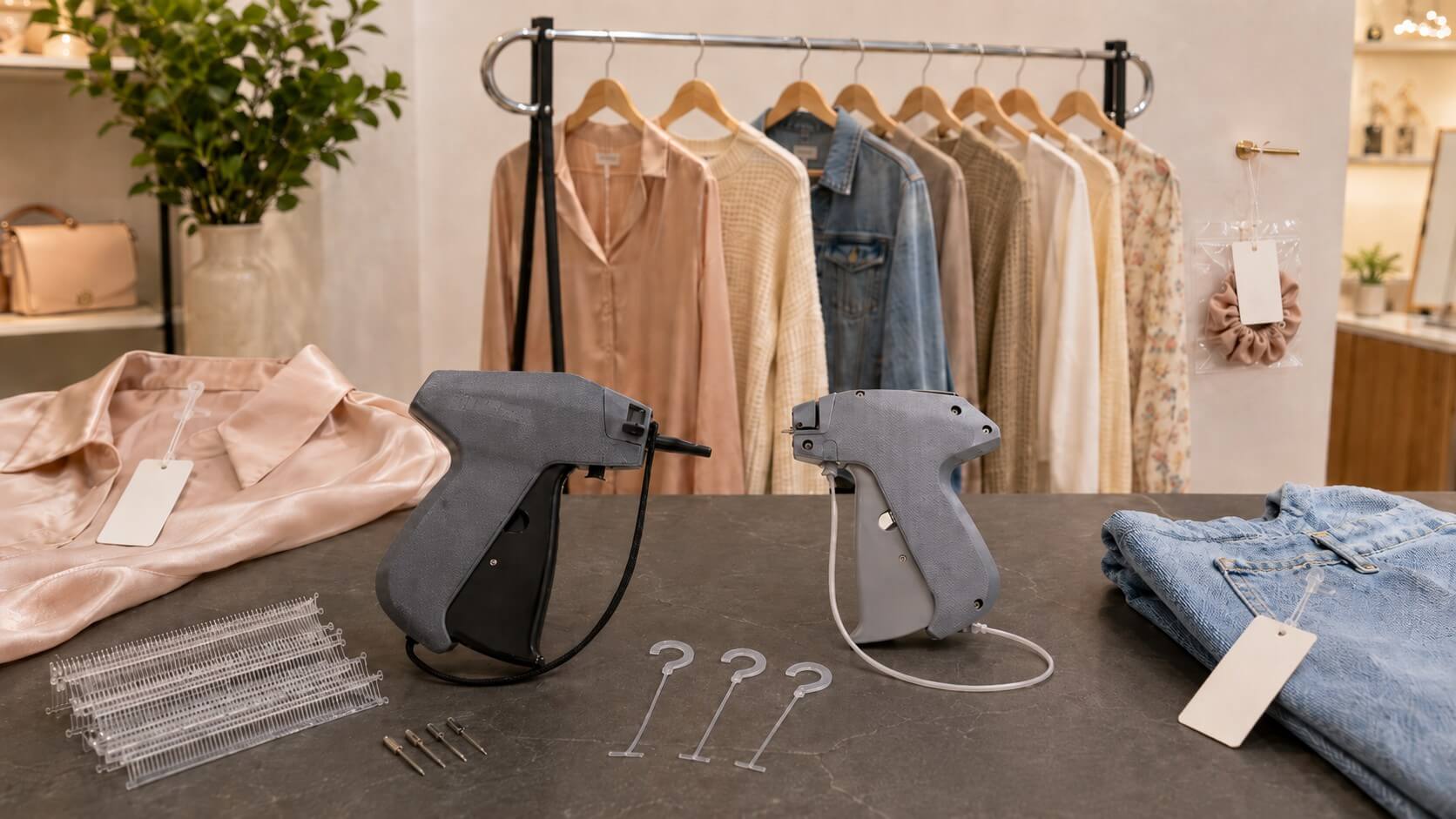
When you open a boutique, one of the most essential items you will need is a good quality tagging gun. It attaches price tags, hang tags, and care tickets to your merchandise fast, and it keeps your sales floor looking neat. The trick is choosing the right one for what you actually sell.
What a Tagging Gun Actually Does
A tagging gun uses a hollow needle to push a small plastic fastener through your garment and your tag. The fastener locks the tag in place. Pull the trigger, the fastener releases, and you can move on to the next item.
Two things determine whether the tool works well for you: the type of gun and the type of fastener it uses. Get those matched to your merchandise and tagging becomes quick. Get them mismatched and you leave holes in delicate fabric or struggle to push your fasteners through thicker materials.
Regular vs. Fine Tag Gun: The First Decision
This is the question I hear most often from new boutique owners. The difference comes down to needle thickness and the size of the hole the needle leaves behind.
Regular Tagging Guns
A Regular Tagging Gun uses a thicker needle and Regular Tagging Fasteners. It handles most everyday apparel, sporting goods, and general merchandise. If you sell denim, sweatshirts, knits, canvas bags, or sturdier woven items, a regular tagging gun is usually the right call. It is the workhorse of the apparel industry, and it is what most shops reach for.
Fine-Fabric Tagging Guns
A Fine Fabric Tagging Gun uses a thinner needle that leaves a smaller hole. It is made for delicate items where you do not want a visible mark: silk blouses, fine knits, lingerie, swimwear, and lightweight linings. The thinner needle is gentler, but it is not meant for thick or dense material where it can bend or struggle.
Which One Should a New Boutique Buy?
Here is the honest answer from years of fielding this question: buy the gun that matches most of your inventory, then add the second type only if a fair amount of your assortment needs it.
- Mostly sturdier apparel (denim, tees, jackets, bags): start with a regular gun.
- Mostly delicate goods (silk, fine knits, intimates): start with a fine-fabric gun.
- A real mix of both: many owners keep one of each so they never risk marking a delicate piece with a thick needle.
One mistake I see again and again is a new owner buying a regular gun, then punching a very noticeable hole in an expensive silk top on day two. If even only a quarter of your rack is considered delicate, the second gun pays for itself the first time it saves a garment from being damaged.
Needle Size: Match It to Your Fabric
Needle thickness follows the same logic as the gun type. Thicker needles push through dense material more easily but leave a larger hole. Thinner needles are kinder to delicate fabric but are not built for heavy goods.
A practical way to decide is to look at your fabric weave. If light shows through easily, treat it as delicate and lean toward a fine fabric tagging gun and Fine Fabric Tagging Gun Needles. If the weave is tight and heavy, a regular gun and Regular Tagging Gun Needles are a safer bet.
Where you place the fastener matters just as much as needle size. On any garment, and especially delicate ones, tag through a seam, a care label, or the inside of a waistband instead of the open body of the fabric. A hole in a seam disappears. A hole in the middle of a blouse does not. Check the exact needle specs on each product page, since replacement needles are matched to the gun model.
Fastener Types: Know Before You Stock
Fasteners are the plastic pieces the gun shoots through your tag. They are consumable, so you will need to reorder them regularly. There are two common styles to know.
Regular Fasteners
These are the standard barbed fasteners with a flat cross-bar on each end. They hold an Price Tag securely against the garment and are what most shops use for price and hang tags. Our 3 inch regular tagging fasteners fit most tagging guns designed for regular fasteners and work for attaching tags to apparel or sporting goods.
Hook Fasteners
Hook fasteners have a small hook on one end so the tagged item can hang directly on a peg hook. If you display accessories or packaged goods on pegs, these save you from adding a separate hanger. Our 2 inch clear hook fasteners fit most regular tagging guns and are the right choice when you want to hang tagged merchandise.
Fastener length matters too. Longer fasteners give you slack for bulky items; shorter ones keep tags snug on flat goods. Match the fastener length to how the tag needs to sit, and confirm the gun you buy is built for the fastener style you plan to use. Not every gun accepts every fastener.
How Many Fasteners Should You Start With?
Fasteners come in large counts, and it is tempting to over-buy or under-buy. A simple approach works well for a new store.
- Count your opening inventory. You need at least one fastener per item you plan to tag.
- Add a buffer for restocks and mistakes. New taggers waste a few while learning the trigger feel.
- Factor in reorders. Since fasteners are consumable and store easily, buying a working supply up front keeps you from stopping mid-shipment to reorder.
In my experience helping shops open, running out of fasteners on a big receiving day is a common headache. Keep a backup pack on the shelf so a busy afternoon of tagging never grinds to a halt.
Tags, Labels, and the Rest of Your Pricing Kit
A tagging gun is one piece of your pricing setup. Depending on how you price and organize merchandise, you may also want:
- A price labeler for stickers. If you prefer adhesive price stickers over hang tags, a separate label gun handles that. Browse options and refills in Tagging, Labeling & Price Tags.
- Size dividers and markers. These help customers find their size fast and keep racks tidy. See our choices in Retail Clothing Size Dividers.
- Hang tags and care tickets. Decide on your tag stock before you tag your first item so everything looks consistent.
Once your merchandise is tagged, the next step is getting it on the floor. If you are still building out fixtures, our clothing racks give you a place to hang everything you just tagged.
A Simple Buying Checklist
|
Question |
What to do |
|
What do I sell most? |
Regular gun for sturdier apparel; fine gun for delicate goods. |
|
Do I carry both? |
Consider one gun of each type. |
|
Which fastener style? |
Regular for tags on garments; hook for peg-hung items. |
|
How many fasteners? |
One per item, plus a buffer and a backup pack. |
|
Will I need refills? |
Confirm the gun's needle and fastener are easy to reorder. |
Take Care of the Gun and It Takes Care of You
Tagging guns are simple tools, but the needle will need to replaced with heavy use. Keep a set of Regular Tagging Gun Replacement Needles on hand, since a bent or dull one leaves ragged holes and jams. When a needle starts skipping or dragging through fabric, replace it before it damages merchandise.
If you remember one thing, buy the gun that matches the majority of your merchandise, keep the right fasteners stocked, and always tag through a seam when you can. Do that from day one and your merchandise stays clean, your pricing stays consistent, and you’ll spend more time selling your items instead of fixing them.
Written by Kris Boettigheimer
Purchasing Assistant
Kris brings over 32 years of retail industry experience and more than 20 years at Store Supply Warehouse to every article he writes for storesupply.com. Since joining SSW in 2005, Kris has worked across multiple departments , including six years in Sales/Customer Service, where he helped independent retailers and small business owners find the right store fixtures, retail displays, and merchandising supplies to improve their store layouts and drive sales. For the past 15+ years in SSW's Purchasing Department, he has collaborated with suppliers, tracked market trends, and sourced products across all three Store Supply divisions. Today, Kris channels that hands-on experience into content that helps retailers enhance store presentation, discover new display solutions, and make smarter product decisions.