What Is a Tag Gun Fastener? Retail Attachments Explained
If you’ve ever loaded a tagging gun and wondered exactly what those little plastic pieces are, you are not alone.. Fasteners look simple, but choosing the right one saves you time and keeps your tags where they belong.
This article explains what a tagging gun fastener is, what it is made of, the parts that make it work, and how length and type change what you can tag.
What Is a Tag Gun Fastener?
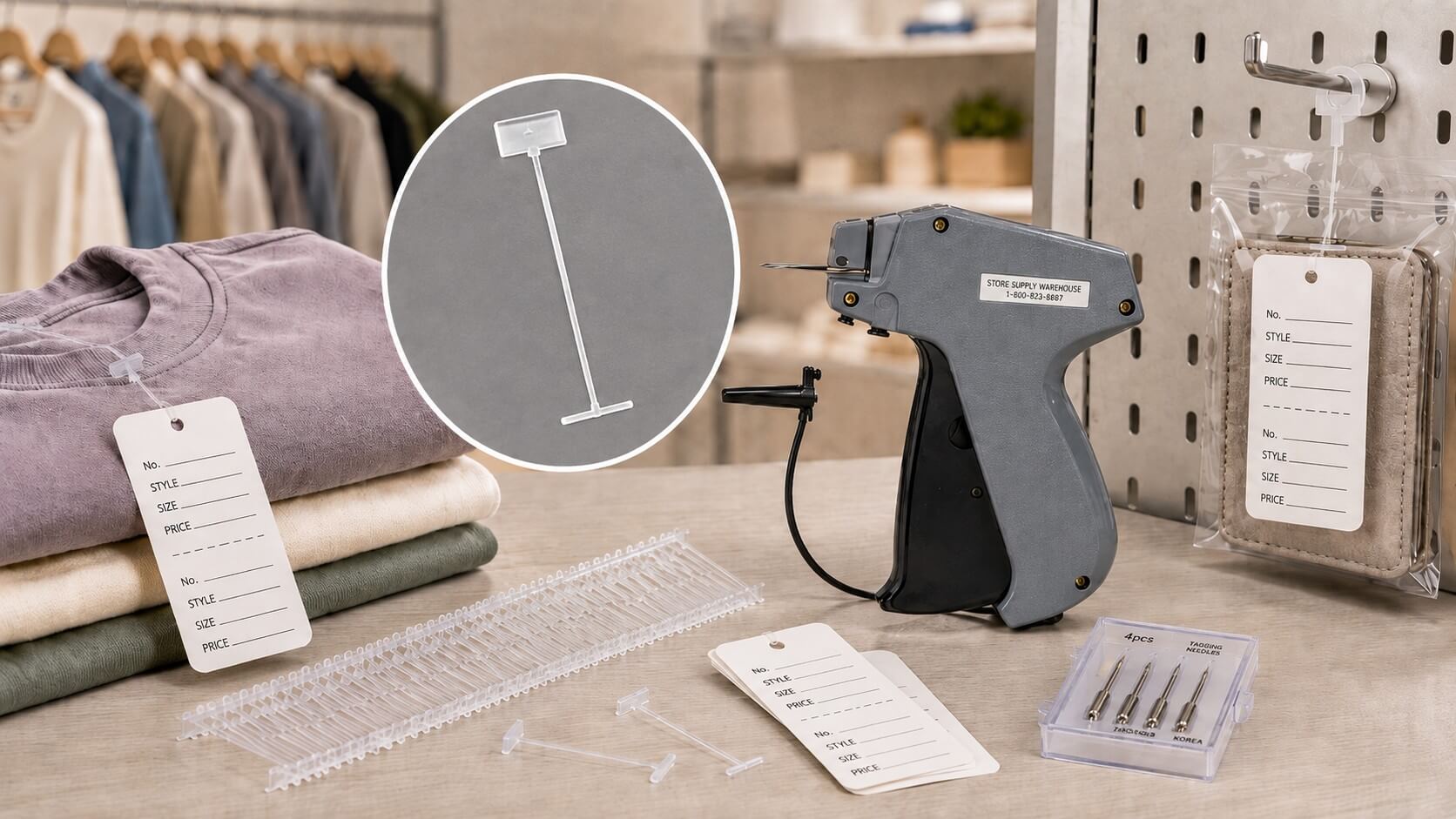
A tagging gun fastener is the small plastic attachment that a tagging gun shoots through a garment or product to hold Price Tags , hang tag, or size label in place. You may hear it called a barb fastener, a plastic tag fastener, or simply a tagging fastener. They all describe the same basic idea.
When you pull the trigger on a tagging gun, a hollow needle pushes the fastener through the fabric or through a small hole in a tag. The fastener then locks in place and holds your tag securely until someone cuts it or removes it.
These attachments come in strips or clips that load into the gun. One trigger pull releases a single fastener, so you can tag one item after another quickly.
What Is a Tag Gun Fastener Made Of?
Standard tagging fasteners are made of plastic. This keeps them lightweight, low cost, and flexible enough to feed through a tagging gun without breaking. The plastic also resists tearing once the fastener is set, which is what keeps tags from falling off during handling.
You can find fasteners in a variety of colors. The color you choose does not affect how the fastener works, but it can help you stay organized or color match a fastener to your tags. For example, our 3 inch regular tagging fasteners in yellow fit most guns designed for regular fasteners and work well for apparel or sporting goods.
What Are the Parts of a Barb Fastener?
Understanding the parts of a barb fastener makes it much easier to see how it holds a tag. Every fastener has three main parts working together.
- The T-bar (also called the crossbar or head): This is the flat bar at one end. It is the part that gets pushed through the fabric first. Once it clears the other side, it lays flat and acts as an anchor so the fastener cannot be puled back through.
- The filament (the paddle or connector): This is the thin plastic strand in the middle. It connects the T-bar to the other end and gives the tag room to hang or sit against the product.
- The head or paddle end: This is the wider piece on the opposite side. It stops the tag from sliding off and keeps everything in place.
When you tag an item, the T-bar goes through the fabric and the tag, then locks behind them. The filament holds the tag against the product, and the paddle end keeps the tag from slipping free.
Barb Fasteners Versus Hook Fasteners
Not every fastener is the standard barb style. Hook fasteners look similar but add a hook at one end so you can hang the tagged item directly onto a peg hook. This is handy when your merchandise needs to hang for display rather than sit folded on a shelf.
Our 2 inch clear hook fasteners are a good example. The hook at the end lets you hang tagged merchandise onto peg hooks, which is useful for accessories and small goods that you want visible and easy to grab.
|
Fastener Type |
Best Use |
|
Regular (barb) fastener |
Attaching tags to apparel, sporting goods, and general merchandise |
|
Hook fastener |
Attaching a tag and hanging the item on a peg hook at the same time |
How Does Fastener Length Affect What I Can Tag?
Length is the detail most retailers overlook. The length of the filament decides how thick an item you can tag and how the tag will sit.
A shorter fastener holds the tag close to the product. That works well for thin items, light fabrics, and tags you want kept tight against the merchandise. A longer fastener gives you more room, which you need for thicker items or when you want a tag to hang loosely and stay easy to read.
Here is how I explain it to store owners:
- Thin, light garments: A shorter fastener keeps tags neat and close so they do not flop around.
- Thick items, like heavy knits, jackets, or bundled goods: A longer fastener has enough filament to pass through the material and still let the tag sit properly.
- Items you want to hang or display: A longer or hook-style fastener gives the tag room to be seen and handled.
If a fastener is too short for a thick item, it can pull tight and either tear the fabric or refuse to lock. If it is too long for a thin item, the tag flops and looks messy. Matching length to your typical merchandise is worth a few minutes of thought before you order.
One Important Note on Compatibility
Regular Tagging Fasteners are made to fit most tagging guns designed for regular fasteners, and hook fasteners fit most guns as well. Still, check that your gun matches the fastener type before you buy in quantity. A mismatch is the most common reason a gun jams, and it is an easy problem to avoid.
Where Fasteners Fit in Your Tagging Routine
Fasteners are one piece of a larger pricing and tagging setup. Most stores pair them with a Tagging Gun , printed tags or hang tags, and often a Pricing Gun for shelf and item prices. You can see the full range of tools in our Tagging, Labeling & Price Tags category.
Fasteners also work alongside other merchandising basics. If you are organizing a sales floor, tools like Round Size Labels and Size Dividers help customers find their size, while the right Clothes Hangers and hooks keep tagged items displayed well. In my experience, the stores that tag consistently and keep their labels clean and readable spend far less time answering price questions at the counter.
Choosing the Right Fastener for Your Store
When you are ready to order, run through a short checklist:
- What are you tagging most often, and how thick is it?
- Do you need the item to hang on a peg hook, or just hold a tag?
- Does the fastener type match your tagging gun?
- Do you want a color to keep jobs organized?
For exact lengths, colors, and pack details, check the product page for each fastener, since those specifics vary by item. Answer the questions above first, and the right choice usually becomes clear. Once you settle on a fastener that fits your merchandise and your gun, tagging becomes one of the quickest, most predictable parts of getting product on the floor.
Written by Kris Boettigheimer
Purchasing Assistant
Kris brings over 32 years of retail industry experience and more than 20 years at Store Supply Warehouse to every article he writes for storesupply.com. Since joining SSW in 2005, Kris has worked across multiple departments , including six years in Sales/Customer Service, where he helped independent retailers and small business owners find the right store fixtures, retail displays, and merchandising supplies to improve their store layouts and drive sales. For the past 15+ years in SSW's Purchasing Department, he has collaborated with suppliers, tracked market trends, and sourced products across all three Store Supply divisions. Today, Kris channels that hands-on experience into content that helps retailers enhance store presentation, discover new display solutions, and make smarter product decisions.