
Designing a Wire Grid Setup That Adapts to a Full Market Season
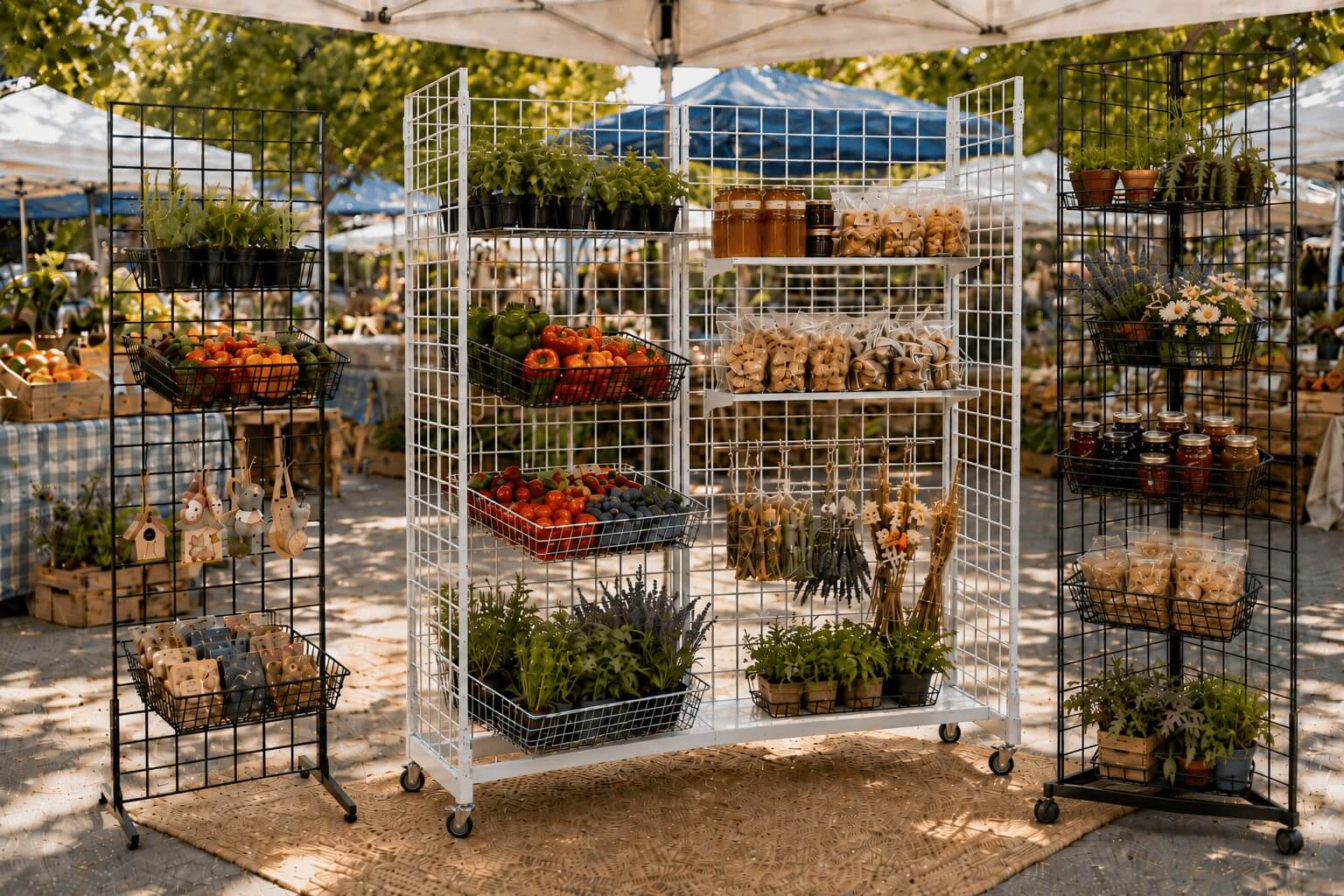
Running a successful farmers market or seasonal outdoor vending operation requires display systems that can adapt as quickly as your product mix changes. A well-designed wire grid panel outdoor setup provides the flexibility you need to showcase everything from spring seedlings to summer produce to fall crafts, all while maintaining professional presentation standards that draw customers to your booth.
Why Wire Grid Panels Work for Seasonal Vendors
Wire grid systems offer unique advantages for outdoor markets. Unlike fixed shelving or rigid displays, Grid Wall Panels accept dozens of different accessories that can be swapped in minutes. This modularity means your April herb display can transform into a June berry basket showcase without purchasing entirely new fixtures.
The open wire construction also promotes air circulation around fresh produce while maintaining visibility from multiple angles. Customers can see your products clearly, and you can monitor inventory levels at a glance.
Planning Your Modular Wire Grid Foundation
Start with a base configuration that accommodates your largest expected product volume. Most successful seasonal vendors use 2x6 foot or 2x8 foot panels as their foundation, then add smaller panels for specialty items.
Base Panel Selection
Choose displays that balance stability with portability. A 2 x 4 Foot Grid Gondola Unit with base provides excellent stability for outdoor use while remaining manageable for weekly transport. The 48" base prevents tipping in wind while the grid panels offer maximum accessory compatibility.
For vendors who prefer traditional panel setups, consider starting with a series of 2x6 foot panels arranged in a U or similar shape. This configuration creates an enclosed shopping area while providing ample display space.
Accessory Planning by Season
Different seasons demand different display approaches. Plan your accessory purchases around these typical seasonal needs:
- Spring: Small baskets for seedlings, hooks for hanging planters, angled shelves for potted plants
- Summer: Deep baskets for bulk produce, cooling displays for delicate items, shade attachments
- Fall: Larger baskets for gourds and pumpkins, height extensions for tall displays, weather protection
Essential Accessories for Market Flexibility
The right accessories transform basic wire panels into dynamic seasonal vendor displays. Focus on versatile pieces that serve multiple purposes across different product categories.
Basket Systems
Wire Grid Baskets & Bins remain the workhorses of farmers market displays. 12 x 12 x 4 inch wire grid baskets work well for medium-sized produce like tomatoes, peppers, or packaged goods. Their 4-inch depth prevents spillage while allowing easy customer access.
Stock baskets in multiple sizes to handle product variety. Small baskets showcase premium items like specialty herbs, while larger options accommodate bulk sales of seasonal favorites.
Shelf Brackets and Platforms
Shelves for Wire Grid Panels and Displays create space for jarred goods, baked items, or display signs. Two 12 inch Shelf Bracket for Wire Grid support standard depth shelves and handle significant weight loads. Use these for your heaviest items.
A Triangle Wire Grid Shelf adds visual interest while maximizing corner space utilization. The triangle grid shelf fits into corner configurations and works well for specialty or impulse purchase items.
Hanging Solutions
Vertical space often goes unused in market displays. Simple Wire Grid Peg Hook and Faceouts and Wire Grid Baskets & Bins draw eyes upward and increase your effective display area.
Use hooks for packaged goods, dried flowers, or tool displays. Waterfall attachments create cascading product presentations that work especially well for items sold in multiples.
Weekly Reconfiguration Strategies
Efficient booth reconfiguration starts with smart organization at home. Store accessories in labeled containers sorted by function rather than size. This system speeds up weekly packing and reduces forgotten items.
Product-First Layout Planning
Plan each week's layout around your actual product mix rather than forcing products into a static display. Sketch quick booth layouts before market day, noting which accessories you'll need for each product category.
Keep a rotation calendar noting which displays worked well for specific products. This reference eliminates guesswork and ensures your most effective configurations get repeated when appropriate.
Quick-Change Techniques
Develop assembly routines that minimize setup time. Start with your heaviest, most stable elements, then add accessories from bottom to top. This approach prevents accidentally knocking over completed sections while building adjacent areas.
Color-code your accessories by season or product type. This visual system helps family members or employees quickly identify the right components during busy setup periods.
Weather Protection and Outdoor Durability
Outdoor markets present unique challenges that indoor retailers never face. Your wire grid panel outdoor system must withstand wind, rain, and temperature fluctuations while maintaining professional appearance.
Stability Enhancements
Add weight to your display bases using sandbags, water containers, or purpose-built stabilizers. Focus weight low and toward the back of your display to counteract wind forces on vertical panels.
Tie-down systems work well for permanent market locations where ground anchoring is permitted. Use bungee cords or rope systems that can be quickly deployed and removed.
Product Protection
Create weather protection zones within your display for sensitive items. Position panels to block prevailing winds, and use targeted shade solutions for products that suffer in direct sunlight.
Efficient Teardown and Storage Systems
Quick teardown capabilities keep you competitive in markets with strict closing procedures. Develop standardized breakdown sequences that work consistently regardless of your weekly configuration.
Component Organization
Assign specific containers for different accessory types. Stack similar accessories together to prevent scratching and reduce space requirements.
Label storage containers with both contents and setup locations. This dual system speeds both packing and unpacking processes.
Transport Considerations
Choose storage solutions that fit your vehicle's dimensions and loading capabilities. Rolling containers work well for vendors with truck access, while lightweight stackable bins suit smaller vehicles.
Protect panel finishes during transport using moving blankets or custom-fitted covers. Scratched or damaged displays project unprofessional images that can hurt sales.
Seasonal Transition Planning
Successful seasonal vendors plan transitions well in advance. As one season winds down, begin preparing display configurations for the next phase of your selling calendar.
Accessory Rotation
Clean and inspect accessories during seasonal transitions. Replace worn components before they fail during busy market periods. This maintenance approach prevents display disasters during peak selling times.
Store off-season accessories in clearly marked containers with inventory lists. This organization system prevents repurchasing items you already own.
Configuration Documentation
Photograph your most successful display configurations throughout the season. These visual references help you recreate winning layouts the following year and serve as training materials for helpers.
Note which accessories proved most versatile across multiple seasons. These high-value components should be your first priority for replacement or expansion purchases.
Building Your Long-Term Display Strategy
A well-planned wire grid system grows with your business over multiple seasons. Start with essential components and add specialized accessories as your product mix expands or customer preferences become clear.
Focus on modular retail display components that serve multiple purposes rather than single-use specialty items. This approach maximizes your investment while maintaining the flexibility that makes wire grid systems so valuable for seasonal vendors.
Track which display configurations generate the strongest sales for different product categories. This data helps you optimize both your current setup and future accessory purchases, ensuring your farmers market display setup continues improving year after year.
Written by Kris Boettigheimer
Purchasing Assistant
Kris brings over 32 years of retail industry experience and more than 20 years at Store Supply Warehouse to every article he writes for storesupply.com. Since joining SSW in 2005, Kris has worked across multiple departments — including six years in Sales/Customer Service, where he helped independent retailers and small business owners find the right store fixtures, retail displays, and merchandising supplies to improve their store layouts and drive sales. For the past 15+ years in SSW's Purchasing Department, he has collaborated with suppliers, tracked market trends, and sourced products across all three Store Supply divisions. Today, Kris channels that hands-on experience into content that helps retailers enhance store presentation, discover new display solutions, and make smarter product decisions.