
Where to Hang Your Open Sign for Maximum Foot Traffic
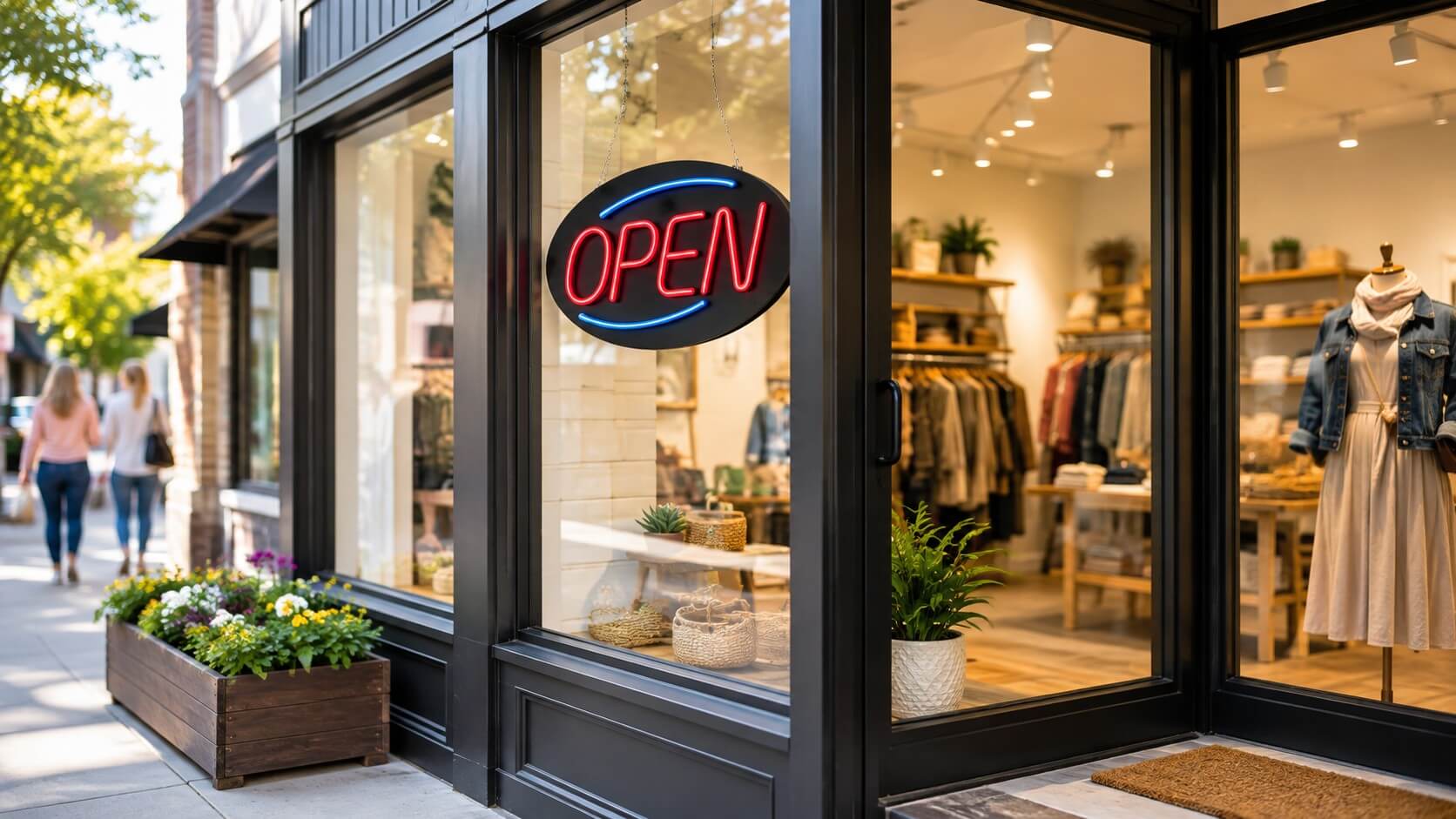
Your open sign is one of the smallest pieces of signage in your store, but it does a big job. It tells people walking or driving by that you are ready for business. When it hangs in the wrong spot, shoppers pass without a second thought. When it hangs in the right spot, it pulls people through your door.
An Open Sign is one of those details that owners often hang once and never think about again. A few small adjustments to height, angle, and position can make a real difference in how many people notice you.
Why open sign placement matters more than the sign itself
Store owners often focus on buying a brighter or bigger open sign. That helps, but placement usually matters more. A basic sign hung at the right height and angle will out-perform a fancy sign buried in a bad spot.
Think about how a shopper actually moves past your store. They are walking on the sidewalk, glancing at storefronts, or driving by and scanning for a place to stop. Your sign has a couple of seconds to catch their eye. Placement decides whether it lands in their line of sight during those seconds.
What height should an open sign hang at for street visibility?
The goal is simple: hang the sign near eye level for the people you most want to reach. For foot traffic, that means roughly the height of an average adult's eyes when they are standing on the sidewalk looking at your window.
Here is how I think about it based on who passes your store:
- Mostly walk-up traffic: Hang the sign at standing eye level in the door glass or window. You want it in the natural sight line of someone strolling by.
- Mostly drive-by traffic: Hang it a little higher so it clears parked cars, landscaping, and sidewalk clutter. Drivers scan higher and faster than walkers.
- A mix of both: Split the difference and aim for the upper third of the window, where it stays visible to walkers and is not blocked by cars for drivers.
A mistake I see often is owners hang the sign too high, near the top of a tall storefront window. It looks tidy from inside, but from the sidewalk it sits above where people naturally look. Step outside and check the view yourself before you commit.
Should the sign face the sidewalk or the parking lot?
Face your open sign toward the direction most of your customers approach from. That sounds obvious, but plenty of stores hang the sign facing the street when nearly everyone arrives from the side parking lot, or the other way around.
Watch your entrance for a day and note where people come from:
- If shoppers park in a lot and walk to your door, aim the sign toward the lot and the walking path.
- If foot traffic comes down a busy sidewalk, aim it toward the sidewalk flow.
- If you get customers from both directions, consider two signs or a double-sided sign so no one approaches a blank window.
Corner stores have an advantage here. If your entrance faces an intersection, angle the sign so it reads clearly from both streets rather than pointing straight out at nothing.
How do I avoid window glare washing out the sign?
Glare is the quiet killer of open sign visibility. A sign can be lit and working, but if sunlight hits the glass at the wrong angle, passersby see a mirror instead of your message.
A few practical fixes:
- Check the glass at different times of day. Walk outside in the morning, midday, and late afternoon. Glare shifts with the sun, so a spot that reads clearly at 9 a.m. may wash out at 4 p.m.
- Pull the sign slightly off the glass. Hanging it a few inches inside the window, rather than flush against the glass, can cut down on reflections that bounce right back at the viewer.
- Mind west and east-facing windows. These take direct low sun in the morning or evening and glare the worst. An awning or a small angle change on the sign can help.
- Keep the background behind the sign darker. A cluttered or brightly backlit interior competes with the sign. A cleaner backdrop makes it pop.
If glare is unavoidable on one window, post a sign to the door itself. Door glass is usually at a slightly different angle and closer to the shopper's approach path.
Position within the window or door
Once you have height and direction sorted, fine-tune the exact spot. The upper portion of the door glass is often the strongest position for a storefront sign. It sits near eye level, it is close to the handle people are already looking for, and it is the last thing someone sees before deciding to walk in.
Keep the area around the sign clear. When an open sign is crowded by flyers, hours-of-operation stickers, and sale notices, its message gets lost. Give it a little breathing room so it stands on its own.
Support your open sign with the rest of your entrance
An open sign works best as part of a welcoming, easy-to-read storefront. If the sign says you are open but the window looks dim or messy, shoppers still hesitate.
A few ways to reinforce the message:
- Add movement or color near the entrance for sales and promotions. A run of multi-colored pennant string draws the eye toward your door from a distance.
- Keep clear, current messaging in your windows. A set of sign holders and frames keeps hours and promotions looking sharp instead of taped up crooked.
- Use bright promo cards for quick, readable callouts. Fluorescent burst sign cards pull attention to a featured deal near the window.
- Feature merchandise right inside the entrance. A well-styled display fixture gives a passing shopper a reason to follow the open sign inside.
In my time helping small shop owners set up entrances, the ones who treat the whole storefront as a single view, sign included, get the most walk-ins. The open sign points the way, and everything around it should agree that you are ready for customers.
A quick placement check you can do today
Before you leave for the night, do this: turn your open sign on, step outside, and walk past your own store the way a shopper would. Come from the sidewalk. Come from the parking lot. Stop and look from across the street.
Ask yourself whether you can read the sign clearly and quickly from each spot. If you have to squint, hunt for it, or fight glare, adjust the height or angle and try again. That five-minute walk tells you more than any rule of thumb, because it shows you exactly what your customers see.
Written by Kris Boettigheimer
Purchasing Assistant
Kris brings over 32 years of retail industry experience and more than 20 years at Store Supply Warehouse to every article he writes for storesupply.com. Since joining SSW in 2005, Kris has worked across multiple departments , including six years in Sales/Customer Service, where he helped independent retailers and small business owners find the right store fixtures, retail displays, and merchandising supplies to improve their store layouts and drive sales. For the past 15+ years in SSW's Purchasing Department, he has collaborated with suppliers, tracked market trends, and sourced products across all three Store Supply divisions. Today, Kris channels that hands-on experience into content that helps retailers enhance store presentation, discover new display solutions, and make smarter product decisions.