The Three Functions of Retail Signage, Explained for Store Owners
Signage is one of the quietest employees in your store. It never takes a break, and it talks to every shopper who walks in. But most signs are trying to do one of three specific jobs, and when you know which job a sign is supposed to do, you place it better and you write it better.
Function 1: Identifying (Telling Shoppers Where They Are)
Identification signage answers a simple question in the shopper's head: "Where am I, and where is what I want?" This is the plumbing of your store. It is not flashy, but nothing works without it.
Identification signage includes your storefront name, your department or category markers, and the small labels that organize merchandise. Think of the sign that says "New Arrivals" over a table, or the size marker that groups a rack by size.
Where identification signage shows up on the floor
- Your exterior sign and window lettering that name the store.
- Section headers like "Denim," "Sale," or "Gifts Under 25."
- Size Dividers that let a shopper scan a rack fast.
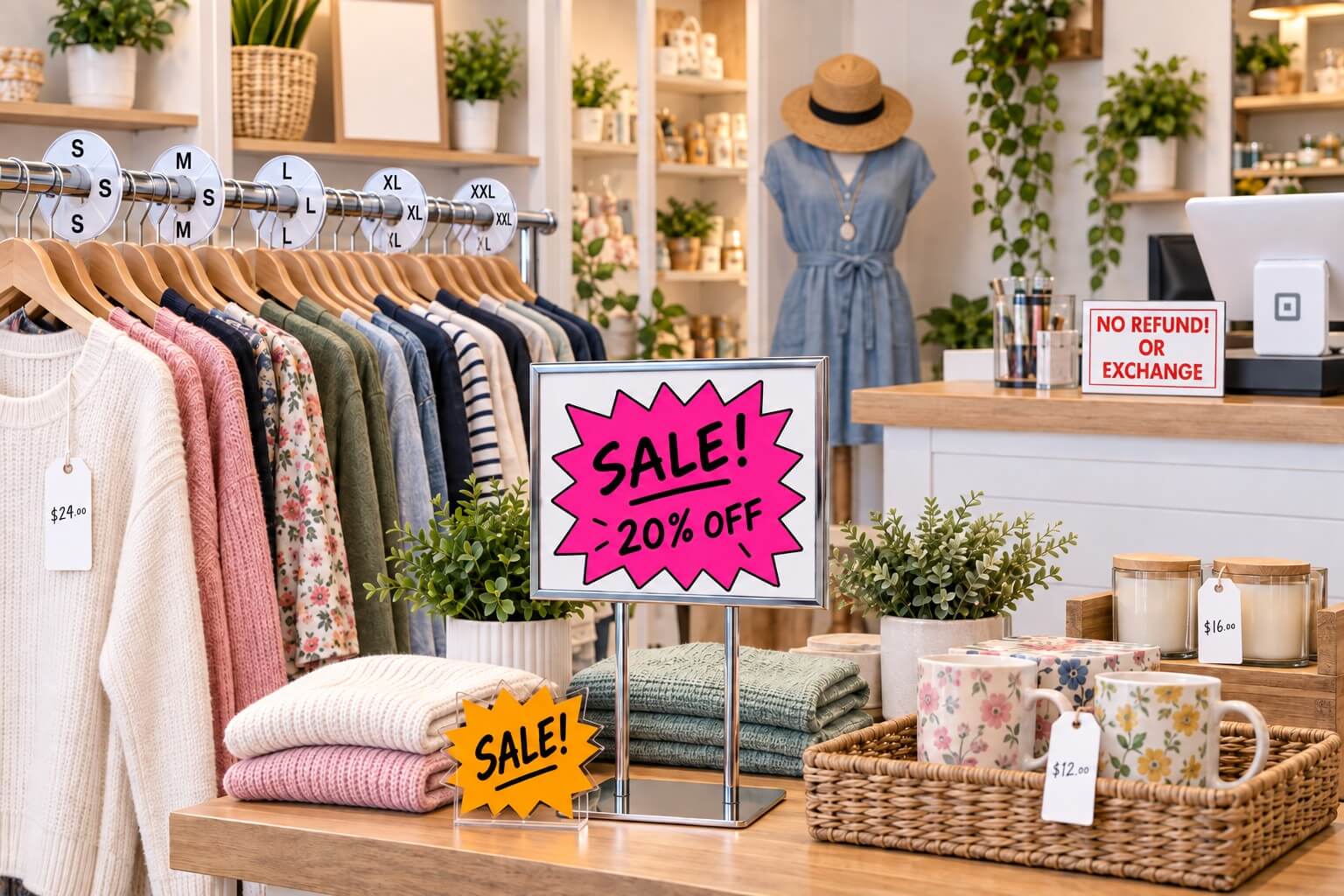
Size organization is a form of identification that many owners underrate. When a customer can find their size without unhooking a garment, they stay longer and buy more. Tools like Size Labels and dividers as well as hangers with Slip On Size Markers do this identifying work all day without a single word from your staff.
Stores with clear size dividers get fewer "Do you have this in a medium?" questions, which frees up staff to actually sell more merchandise. Identification signage saves labor, not just steps.
Function 2: Informing (Giving Shoppers the Facts They Need)
Informational signage answers the next question: "What is this, and what do I need to know before I decide?" This is where price, size, material, care, and policy live.
The clearest example is your Price Tag . A shopper who cannot find a price often puts the item down rather than ask, and that hesitation costs you sales. Clean, consistent pricing is informational signage doing its core job.
Common informational signage
- Price tags and shelf tickets on fixtures and shelving.
- Product detail cards that explain a material or a use.
- Store Policy Sign Cards (returns, hours, payment accepted).
On shelving, a small holder keeps prices visible right at the edge where the eye lands. A Wood Shelf Ticket Holder keeps that information tidy and readable instead of taped on crooked. For consistent price marking across your inventory, the tools we offer in Tagging, Labeling & Price Tags can keep every tag looking the same, which quietly signals that you run a careful shop.
Here is a distinction worth keeping in mind, because owners mix these two up all the time.
|
Question |
Identification signage |
Informational signage |
|
What does it answer? |
Where am I? Where is my item? |
What is this? What should I know? |
|
Example |
"Denim" section header |
Price tag and care card |
|
Job |
Guide and organize |
Explain and reassure |
Function 3: Persuading (Moving Shoppers to Act)
Persuasive signage answers the last question: "Why should I buy, and why now?" This is the sign that creates urgency or highlights value. Sale bursts, promotional callouts, and "limited time" messages all fall here.
Persuasive signs work with color and placement, not paragraphs. Bright Solar Burst Sign Cards near a featured display pull the eye and mark a deal at a glance. Store Supply's Retail Signs & Sign Holders category includes fluorescent burst sign cards and Multi-Colored Pennant Strings that add energy to a promotion or a seasonal event.
Where persuasive signage earns its keep
- Sale and clearance callouts, often in bright fluorescent colors.
- Feature signs on a riser or display cube spotlighting one product.
- Event and seasonal signs that create a reason to visit now.
Persuasive signage also lives on your bags and packaging, which travel out the door and keep selling. A branded shopping bag is a small persuasive billboard walking down the sidewalk, so your choices in bags and packaging are part of this function too.
Which Function Do Store Owners Overlook Most?
In my experience talking through displays with retailers, the thing most overlooked is usually informational signage, specifically clear pricing. Owners spend real energy on a beautiful window (identification) and on a splashy sale sign (persuasion), then leave items on the floor with no visible price at all.
That gap can be expensive. A shopper who is already interested and cannot find the price will often set the item down instead of tracking down an associate. You did the hard work of getting them to pick it up, then the missing tag undid it.
The fix is not complicated. Walk your floor as if you were a first-time customer. Pick up ten items at random and check that each one has a clear readable price. If any come up blank, your informational signage has a hole.
How the Three Functions Work Together
A good floor uses all three in sequence, almost like a conversation. Identification brings the shopper to the right section. Information tells them what the item is and what it costs. Persuasion gives them a reason to decide today.
You can even map a single display against all three. A feature table might have a header that names the collection (identify), price cards on each product (inform), and a burst card announcing a weekend deal (persuade). When one of those three is missing, the shopper has to fill the gap themselves, and some of them simply will not.
Start your next signage review by sorting every sign in your store into one of these three piles. The piles that come up thin are telling you exactly where to spend your attention next, and more often than not, the thin pile is pricing.
Written by Kris Boettigheimer
Purchasing Assistant
Kris brings over 32 years of retail industry experience and more than 20 years at Store Supply Warehouse to every article he writes for storesupply.com. Since joining SSW in 2005, Kris has worked across multiple departments , including six years in Sales/Customer Service, where he helped independent retailers and small business owners find the right store fixtures, retail displays, and merchandising supplies to improve their store layouts and drive sales. For the past 15+ years in SSW's Purchasing Department, he has collaborated with suppliers, tracked market trends, and sourced products across all three Store Supply divisions. Today, Kris channels that hands-on experience into content that helps retailers enhance store presentation, discover new display solutions, and make smarter product decisions.