
Running a Summer Sale Event Without Wrecking Your Store
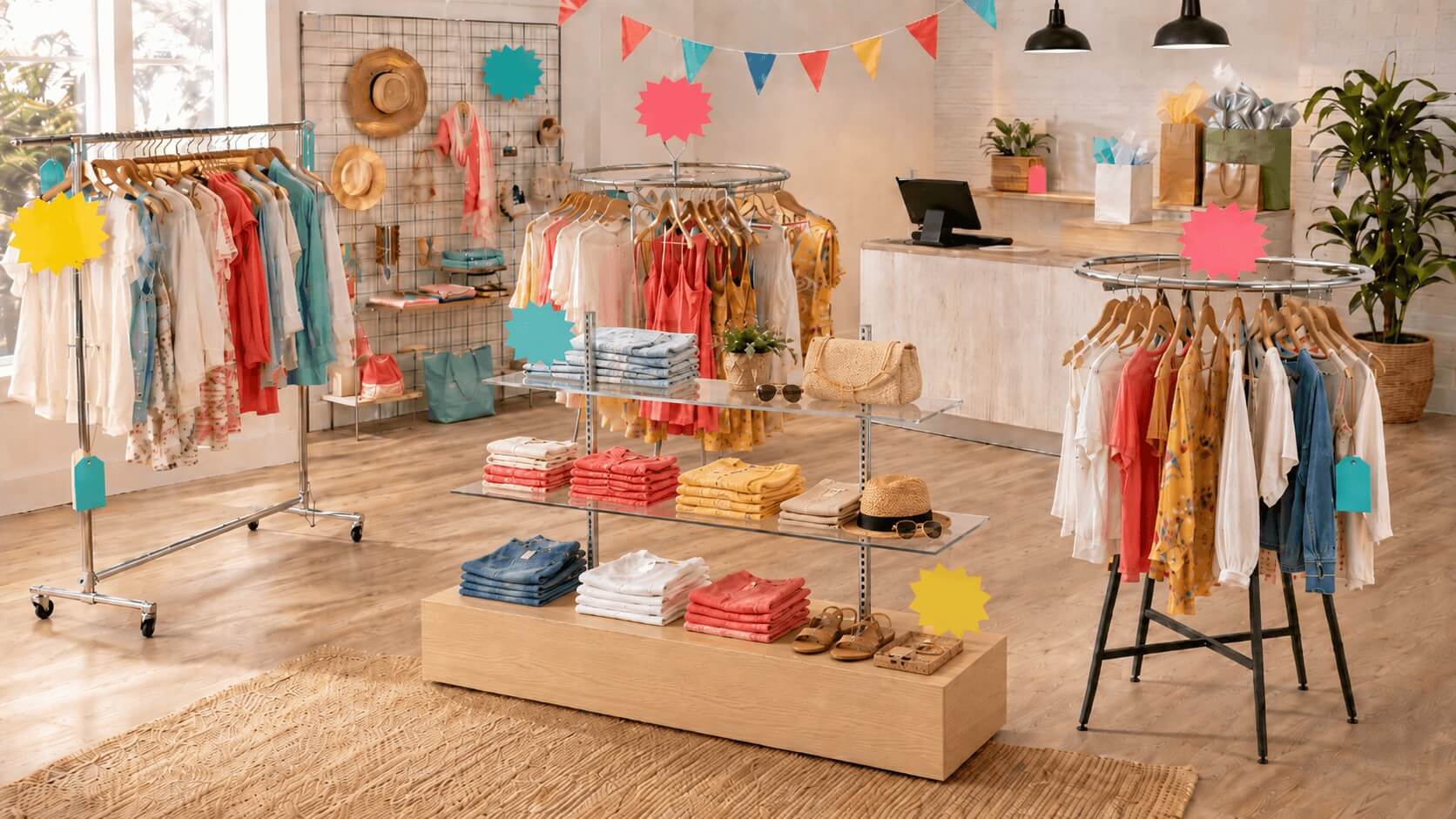
Summer sales can drive significant revenue for independent retailers, but poor planning often leaves stores looking like disaster zones. The key to successful retail sale event operations lies in strategic preparation, smart signage placement, and efficient post-event recovery.
This guide walks through the essential steps to execute a summer sale that boosts profits without disrupting your store's normal operations or requiring days of cleanup.
Pre-Event Floor Preparation Strategy
Start your summer sale setup by creating dedicated sale zones rather than scattering discounted items throughout your store. This approach maintains organization while maximizing impact.
Designate specific areas for different discount levels. Place 50% off items near your entrance to draw customers in, position 30% off merchandise in high-traffic areas, and locate 20% off items toward the back to encourage store exploration.
Clear floor space by temporarily relocating regular merchandise to storage or less visible areas. Use portable Retail Clothing & Garment Racks to create flexible display areas that can be easily moved during and after the sale.
Consider traffic patterns when planning your store sale floor plan. Wide aisles prevent bottlenecks, while strategic placement of three-tier display tables creates natural stopping points for shoppers to browse sale items.
Strategic Sale Signage Placement
Effective sale signage retail strategy requires hierarchy and clarity. Your signage should guide customers through the sale experience without overwhelming them.
Create a visual hierarchy with three signage levels:
- Primary signs: Large banners announcing the sale event
- Secondary signs: Department or category discount percentages
- Tertiary signs: Individual item prices and specific offers
Use fluorescent burst signs to highlight your best deals and create visual excitement. Position these eye-catching signs at eye level on endcaps and feature displays.
Place clear pricing information at every sale fixture. Customers should never have to guess whether an item is included in the sale or what the final price will be.
Temporary Fixture Solutions
Summer sales often require additional display space beyond your permanent fixtures. Temporary solutions should be sturdy enough to handle increased traffic while remaining easy to set up and remove.
Z Racks & Collapsible Salesmen Racks work well for clothing sales because they can be repositioned throughout the event based on customer flow. Collapsible Round Clothing Rack offer maximum display capacity while taking minimal floor space.
For accessories and smaller items, consider portable gridwall panels with hooks and shelves. These systems adapt to different merchandise types and pack away compactly when the sale ends.
Managing Customer Traffic Flow
Successful retail event operations depend on smooth customer movement throughout your space. Poor traffic flow leads to congestion, frustrated shoppers, and potential safety issues.
Create a logical shopping path by positioning your most attractive deals at the store entrance, then guiding customers deeper into the space with strategic signage and fixture placement.
Establish clear pathways between displays using floor tape or decorative pennant strings to define boundaries. This prevents customers from cutting through displays and disrupting merchandise.
Plan for checkout congestion by setting up additional payment stations if possible. Mobile checkout solutions or temporary register setups near sale areas can reduce wait times and improve customer satisfaction.
Staff Positioning and Communication
Position staff members strategically throughout the store during peak sale hours. Station one team member near the entrance to greet customers and explain sale terms, while others roam sale areas to answer questions and maintain displays.
Establish clear communication protocols for sale pricing questions. All staff should understand markdown procedures and have authority to resolve common pricing issues without manager approval.
Efficient Register Operations for Sales
Sale events typically increase transaction volume and complexity. Streamline register operations to maintain customer satisfaction while protecting your profit margins.
Pre-program sale prices into your point-of-sale system when possible. This reduces checkout time and minimizes pricing errors during busy periods.
For manual markdowns, establish clear procedures and train staff on proper discount application. Create quick reference sheets listing all sale categories and their corresponding discounts.
Use colored SSW 1-Line Pricing Gun Labels to identify sale items quickly at checkout. Assign specific colors to different discount levels to speed up the scanning process.
Implement a double-check system for high-value markdowns. Require manager approval for discounts over a certain threshold to prevent pricing errors.
Inventory Management During Sales
Track inventory movement closely during sale events to identify top performers and slow movers. This data helps optimize future sale strategies and prevents stockouts on popular items.
Designate a staff member to monitor sale areas throughout the day, restocking displays and removing empty fixtures promptly. Nothing kills sale momentum like picked-over displays.
Use distinctive Retail Shopping Bags for sale purchases to help track event performance and create a sense of exclusivity.
Quick Store Reset Strategies
The key to avoiding lengthy post-sale recovery lies in planning your reset process before the event begins. Document your normal store layout with photos and floor plans to guide the restoration process.
Pack temporary fixtures and signage in labeled containers for easy identification during cleanup. Store these containers in a designated area where they won't interfere with ongoing sales operations.
Schedule reset activities in phases rather than attempting everything at once. Start with high-visibility areas like the entrance and main aisles, then work toward less prominent sections.
Post-Sale Organization Tips
Begin the reset process during the final hours of your sale when traffic is lighter. Remove obviously empty displays and start consolidating remaining sale merchandise.
Sort remaining sale items into three categories: items to return to regular price, items for clearance pricing, and items to store for future sales. This sorting prevents confusion during the reset process.
Clean and inspect all temporary fixtures before storing them. This prevents issues when setting up future sales and extends the life of your equipment.
Measuring Sale Event Success
Track key metrics beyond total sales to evaluate your event's effectiveness. Monitor average transaction size, customer count, and profit margins to understand the sale's true impact.
Document what worked well and what caused problems. This information proves valuable for planning future retail sale event operations and improving your processes.
Survey staff for feedback on operational challenges they encountered. Front-line employees often identify issues that management misses and can suggest practical improvements.
Building Systems for Future Sales
Use insights from your summer sale to develop standardized procedures for future events. Create checklists for setup, operations, and breakdown to ensure consistency across different sales.
Invest in quality Retail Store Displays, Display Racks & Stands that can be reused for multiple events. Modular display systems offer flexibility while maintaining professional appearance.
Establish relationships with reliable suppliers for sale-specific needs like extra shopping bags, temporary signage, and additional fixtures. Having these resources ready streamlines future event planning.
Running successful summer sales requires careful planning, efficient execution, and smart recovery strategies. By focusing on customer flow, clear communication, and systematic processes, you can maximize sale benefits while minimizing operational disruption.
Written by Kris Boettigheimer
Purchasing Assistant
Kris brings over 32 years of retail industry experience and more than 20 years at Store Supply Warehouse to every article he writes for storesupply.com. Since joining SSW in 2005, Kris has worked across multiple departments — including six years in Sales/Customer Service, where he helped independent retailers and small business owners find the right store fixtures, retail displays, and merchandising supplies to improve their store layouts and drive sales. For the past 15+ years in SSW's Purchasing Department, he has collaborated with suppliers, tracked market trends, and sourced products across all three Store Supply divisions. Today, Kris channels that hands-on experience into content that helps retailers enhance store presentation, discover new display solutions, and make smarter product decisions.