
Aisle Width Planning: The Independent Retailer's Guide to Traffic Flow
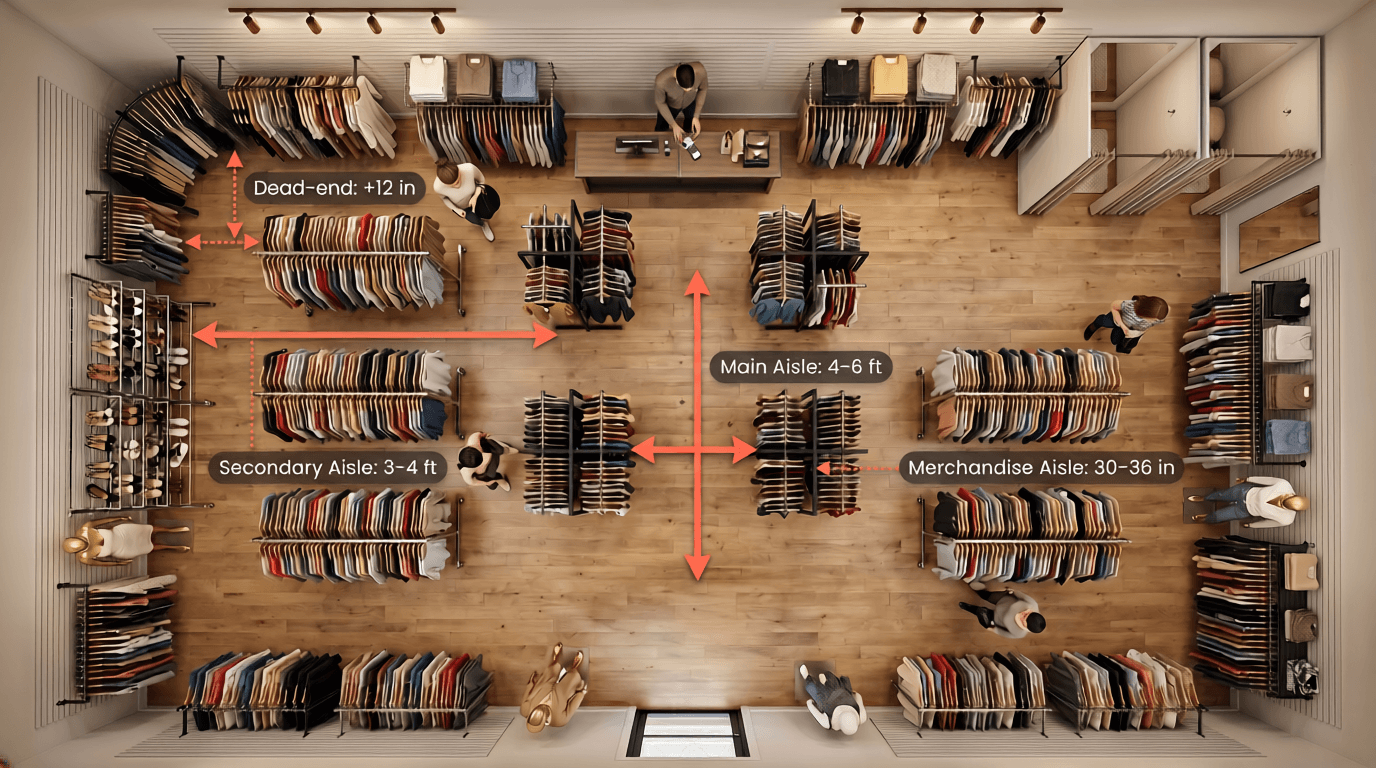
Smart store aisle planning can make the difference between customers who rush through your store and those who browse, discover, and buy more. For independent retailers working with limited square footage, every inch counts when creating aisles that encourage shopping while maximizing product display space.
Why Aisle Width Matters for Small Retailers
Narrow aisles might seem like a smart way to fit more merchandise, but they often backfire. Customers feel cramped and rush through without stopping to examine products. Wide aisles encourage browsing but reduce valuable floor space for inventory.
The key is finding the right balance for your store size, customer volume, and product types. Poor retail traffic flow leads to frustrated shoppers who leave without purchasing, while well-planned aisles guide customers naturally through your merchandise.
The Customer Comfort Factor
When customers feel comfortable moving through your store, they spend more time shopping. This translates directly to higher sales and better customer satisfaction. Cramped spaces create anxiety, especially for customers with mobility aids or those shopping with children.
Essential Aisle Width Guidelines
Start with these baseline measurements for effective retail store layout planning:
- Main aisles: 4-6 feet minimum for primary traffic paths
- Secondary aisles: 3-4 feet for browsing between fixture rows
- Merchandise aisles: 30-36 inches minimum between displays
- Dead-end aisles: Add 12 inches to allow customers to turn around
These measurements assume average customer traffic. Busy periods or stores with wide shopping carts may need additional space.
Special Considerations for Different Store Types
Clothing stores need wider aisles for customers holding garments. Gift shops can work with slightly narrower paths since customers typically browse individual items. Electronics and appliance stores require extra space for product demonstrations.
Gondola Aisle Spacing Strategies
Gondola fixtures offer flexibility but require careful spacing decisions. The standard approach places gondolas 6-8 feet apart, creating comfortable shopping aisles while maximizing product display.
Consider using quality gondola systems that accommodate various shelf configurations. This allows you to adjust display heights and create visual breaks that make aisles feel less confined.
Creating Natural Shopping Flows
Position your gondolas to create a logical flow pattern. Most customers naturally move to the right when entering a store, so design your main aisle to accommodate this behavior. Place high-demand items deeper in the store to encourage full exploration of your merchandise.
Use end caps and cross-merchandising displays at aisle intersections to slow customer movement and highlight featured products.
Maximizing Space in Stores Under 1,500 Square Feet
Small retailers face unique challenges when planning store fixture layout. Every decision involves trade-offs between customer comfort and inventory capacity.
The 60-40 Rule for Small Spaces
Dedicate 60% of your floor space to merchandise display and 40% to customer movement. This ratio ensures adequate browsing room while maintaining strong product density.
For a 1,200 square foot store, this means roughly 720 square feet for fixtures and 480 square feet for aisles, checkout, and customer circulation.
Smart Fixture Placement Techniques
Use your walls effectively with slatwall display systems that maximize vertical space without encroaching on floor area. Wall-mounted displays leave floor space open while providing substantial product capacity.
Consider gridwall fixtures for flexible merchandising that adapts to seasonal changes without permanent layout modifications.
Traffic Flow Psychology
Customer movement patterns are predictable, and smart retailers use this knowledge to optimize store layouts. Most shoppers enter and immediately scan for their target merchandise or begin a general browsing pattern.
The Power Path Strategy
Create a natural "power path" that guides customers past your highest-margin merchandise. This main traffic artery should be your widest aisle, typically running along the store's perimeter or in a loop configuration.
Position impulse items and new arrivals along this path, using strategic display fixtures to create visual interest without blocking customer flow.
Avoiding Traffic Jams
Identify potential congestion points, such as the entrance, checkout area, and fitting rooms. These zones need extra space to prevent customer bottlenecks that discourage shopping.
Place popular items away from these high-traffic zones to distribute customer density throughout the store.
Measuring and Testing Your Layout
Before committing to a layout, test your aisle widths with temporary markers. Have staff members walk through simulated shopping scenarios, paying attention to comfort levels and natural movement patterns.
Key Metrics to Track
- Average time customers spend in store
- Conversion rates in different store sections
- Customer feedback about shopping comfort
- Sales per square foot by area
These measurements help identify whether your current layout encourages the browsing behavior that drives sales.
Seasonal Layout Adjustments
Customer traffic patterns change throughout the year. Holiday seasons bring larger crowds, requiring wider aisles to prevent congestion. Summer sales might call for condensed layouts to create space for promotional displays.
Design your fixture placement with flexibility in mind. Mobile clothing racks and adjustable displays allow seasonal reconfiguration without major renovations.
Managing Peak Shopping Periods
During busy seasons, consider temporarily removing some fixtures to widen key aisles. This short-term inventory reduction often pays off through improved customer flow and reduced frustration.
Common Aisle Planning Mistakes
Many retailers make predictable errors when planning store layouts. Avoiding these mistakes can significantly improve your customer experience.
The Maze Effect
Creating too many short aisles or dead ends confuses customers and makes navigation difficult. Stick to simple, logical paths that connect naturally to your main traffic areas.
Fixture Overload
Cramming too many display racks and stands into limited space creates visual chaos and impedes movement. Less can be more when it comes to fixture density.
Technology and Modern Shopping Behaviors
Today's customers often shop while using smartphones, requiring slightly wider aisles to accommodate distracted browsing. Consider how mobile device usage affects customer movement patterns in your store.
Online shopping has also changed expectations. Customers want to find specific items quickly while still discovering new products during their visit.
Implementing Your Aisle Plan
Start with your main traffic artery and work outward. This primary aisle should connect your entrance to your most important merchandise areas, typically measuring 4-6 feet wide for comfortable two-way traffic.
Use quality display cases and counters to define aisle boundaries while showcasing key products. These fixtures serve dual purposes as both merchandise displayers and traffic directors.
Remember that effective store aisle planning is an ongoing process. Monitor customer behavior, gather feedback, and make adjustments as needed to optimize both comfort and sales performance.
Written by Kris Boettigheimer
Purchasing Assistant
Kris brings over 32 years of retail industry experience and more than 20 years at Store Supply Warehouse to every article he writes for storesupply.com. Since joining SSW in 2005, Kris has worked across multiple departments — including six years in Sales/Customer Service, where he helped independent retailers and small business owners find the right store fixtures, retail displays, and merchandising supplies to improve their store layouts and drive sales. For the past 15+ years in SSW's Purchasing Department, he has collaborated with suppliers, tracked market trends, and sourced products across all three Store Supply divisions. Today, Kris channels that hands-on experience into content that helps retailers enhance store presentation, discover new display solutions, and make smarter product decisions.