
Slatwall vs. Gridwall: Which System Fits Your Store's Needs?
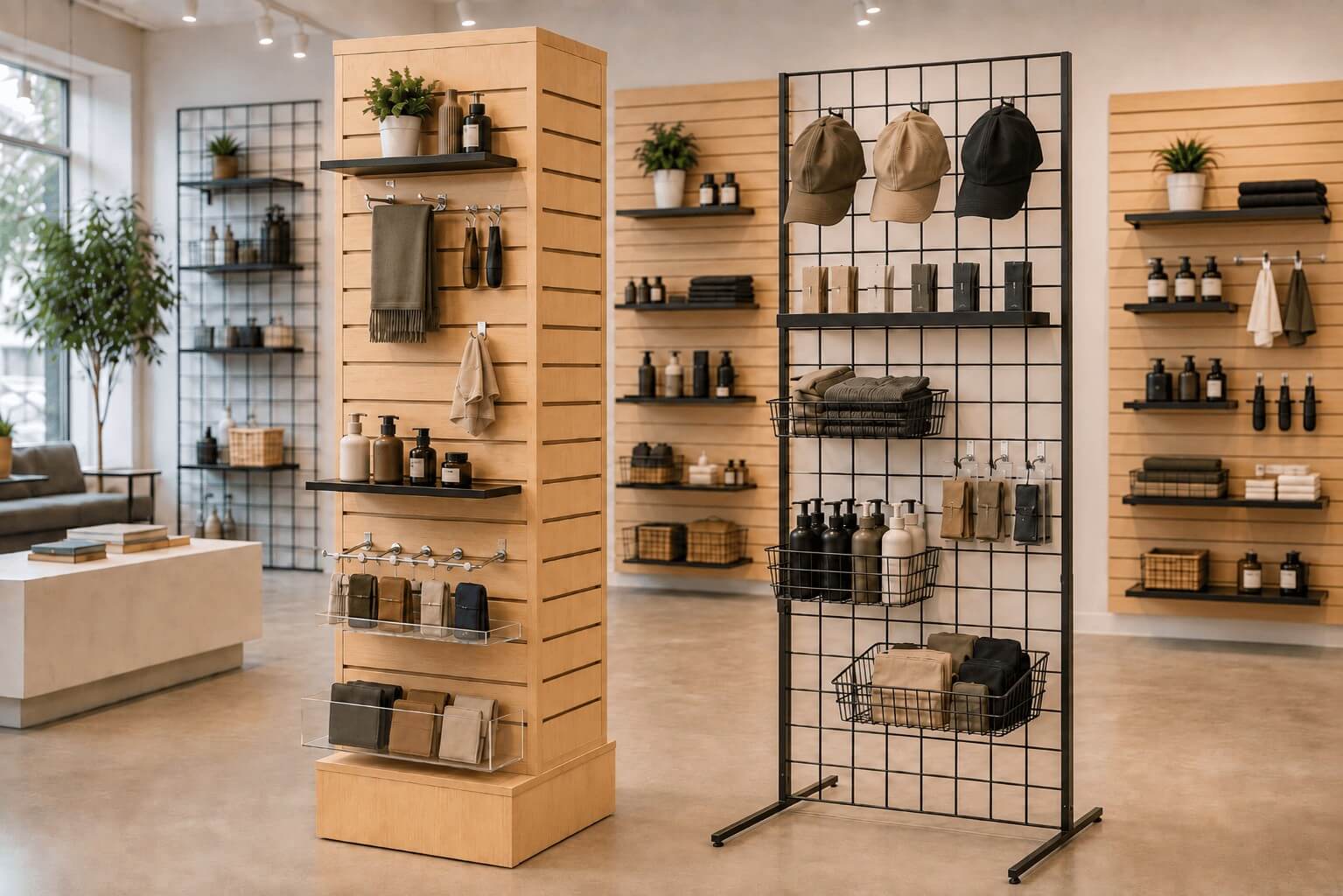
Choosing between slatwall and gridwall systems can make or break your retail display strategy. Both fixtures offer versatile merchandising solutions, but they serve different purposes and work better for specific store types and products.
Understanding the key differences between these two popular retail display systems helps you make an informed decision that maximizes your selling potential while staying within budget.
What Are Slatwall Systems?
Slatwall Panels consist of horizontal grooves cut into wood or composite panels. These grooves accept specially designed accessories that hook into the channels, creating a clean, streamlined appearance.
Slatwall panels mount directly to your wall structure, making them a permanent fixture solution. The horizontal lines and color options create a sophisticated look that works well in upscale retail environments.
Popular slatwall applications include:
- Clothing displays with hangrails and faceouts
- Small accessory merchandising
- Tool and hardware organization
- Specialty retail product presentation
Store Supply Warehouse offers quality Slatwall Towers & Slatwall Displays that provide portable slatwall functionality without permanent wall installation.
Understanding Gridwall Panels
Gridwall features a wire grid construction with consistent spacing, 3 inches on center both horizontally and vertically. This creates a grid pattern that accepts accessories designed to hook onto the wire framework.
Unlike Slatwall Panels, Grid Wall Panels can be made into freestanding units that don't require wall mounting. This portability makes gridwall ideal for temporary displays, trade shows, or stores that frequently change their layout.
Gridwall works well for:
- Lightweight merchandise display
- Temporary or seasonal setups
- Trade show presentations
- Flexible store layouts
A 2 x 4 Foot Grid Gondola Unit transforms standard gridwall panels into standalone merchandising displays that maximize your floor space.
Key Structural Differences
Installation Requirements
Slatwall requires mounting to existing walls or structures. Installation involves securing panels with screws and ensuring proper alignment across multiple panels. This creates a permanent fixture that becomes part of your store's architecture.
Gridwall panels attach to walls using Black Wall Mount Bracket for Grid and Wire Grid Panel Connectors. You can also set up, remove, or reconfigure gridwall displays quickly with or without tools or permanent installation.
Weight Capacity
Slatwall systems handle heavier merchandise loads because they're anchored to wall studs or solid backing. Quality slatwall can support substantial weight when properly installed.
Gridwall has more limited weight capacity due to its wire construction. It works well for clothing, small accessories, and lightweight items but may not support heavy products safely.
Durability Factors
Slatwall panels resist damage better than wire gridwall. The solid construction stands up to heavy use and accidental impacts. Wood or composite slatwall can last decades with proper care.
Gridwall wire can bend or break under stress. However, individual damaged sections are easy to replace without affecting the entire display system.
Aesthetic and Design Considerations
Slatwall creates clean, horizontal lines that give stores a polished, professional appearance. The solid surface works well in boutiques, specialty stores, and upscale retail environments where aesthetics matter.
Gridwall has an industrial, utilitarian appearance that works well in sporting goods stores, hardware shops, and casual retail environments. The wire construction provides visibility through the display, which can be advantageous in some layouts.
Color options differ between systems. Slatwall comes in various wood finishes and colors that can match your store's decor. Gridwall typically comes in white, black, or chrome finishes.
Accessory Compatibility
Both systems offer extensive accessory lines, but they're not always interchangeable. Slatwall accessories feature hooks designed to fit into horizontal grooves, while gridwall accessories are made to hook onto wire itself.
Slatwall Accessories
Slatwall supports a wide range of hooks, brackets, and display components. Popular options include:
- Slatwall Hooks and Faceouts in various lengths
- Slatwall Shelf Brackets and Slatwall Shelves
- Specialty displays for specific merchandise types
- Slatwall Displays, Trays & Sign Holders
The 6-Ball Waterfall for Slatwall creates attractive clothing displays that showcase multiple items in an organized, appealing way.
Gridwall Accessories
Gridwall accessories hook onto the wire grid structure and include:
- Wire Grid Peg Hook and Faceouts
- Wire Grid Baskets & Bins
- Wire Grid Shelf Brackets & Wall Mounts & Connectors and Shelves for Wire Grid Panels and Displays
- Specialty hangers and display components
Accessories like the Mini Wire Grid Basket help organize smaller items while maintaining visibility and easy customer access.
Cost Analysis
Initial investment costs vary significantly between systems. Slatwall panels typically cost more upfront, but installation expenses can add substantially to the total project cost, especially if professional installation is required.
Gridwall panels cost less initially and require less installation especially if they're freestanding. However, you may need to purchase bases, connectors and stabilizing components.
Long-term costs favor slatwall due to its durability. Gridwall may require more frequent replacement of damaged sections or bent wires over time.
Store-Type Specific Recommendations
Clothing Boutiques
Choose slatwall for upscale clothing boutiques where aesthetics matter. The clean lines complement fashion merchandise, and the strong construction supports heavy garments like coats and jackets.
Sporting Goods Stores
Gridwall works well for sporting goods because it handles lightweight gear effectively and allows customers to see through displays. The industrial appearance fits the casual environment.
Gift and Specialty Shops
Either system can work, but slatwall provides a more refined appearance that matches the boutique shopping experience most gift shops want to create.
Hardware and Tool Stores
Slatwall excels in hardware stores where heavy tools and equipment require stronger support. The horizontal grooves also work well with specialized holders and organization accessories.
Flexibility and Reconfiguration
Gridwall wins for stores that frequently change layouts or seasonal displays. The panels disconnect easily and can reconfigure without tools or permanent changes to your space.
Slatwall offers less layout flexibility once installed, but accessories can be moved and changed easily. This works well for stores with consistent layouts that want to refresh merchandise presentation.
Making Your Decision
Consider these factors when choosing between slatwall and gridwall:
- Store aesthetic requirements
- Merchandise weight and type
- Layout change frequency
- Installation capabilities and costs
- Long-term durability needs
Many successful retailers use both systems in different areas of their stores. Slatwall might work well for permanent wall displays, while gridwall handles seasonal or promotional areas.
For stores needing maximum flexibility, start with gridwall to test layouts and traffic patterns. You can always add slatwall later for permanent installations in high-traffic areas.
Both slatwall and gridwall systems offer valuable merchandising solutions when matched to the right application. Understanding your specific needs, store type, and merchandise requirements helps you choose the system that will serve your business best for years to come.
Written by Kris Boettigheimer
Purchasing Assistant
Kris brings over 32 years of retail industry experience and more than 20 years at Store Supply Warehouse to every article he writes for storesupply.com. Since joining SSW in 2005, Kris has worked across multiple departments — including six years in Sales/Customer Service, where he helped independent retailers and small business owners find the right store fixtures, retail displays, and merchandising supplies to improve their store layouts and drive sales. For the past 15+ years in SSW's Purchasing Department, he has collaborated with suppliers, tracked market trends, and sourced products across all three Store Supply divisions. Today, Kris channels that hands-on experience into content that helps retailers enhance store presentation, discover new display solutions, and make smarter product decisions.