
Slatwall Systems: Designing a Modular Store That Grows With You
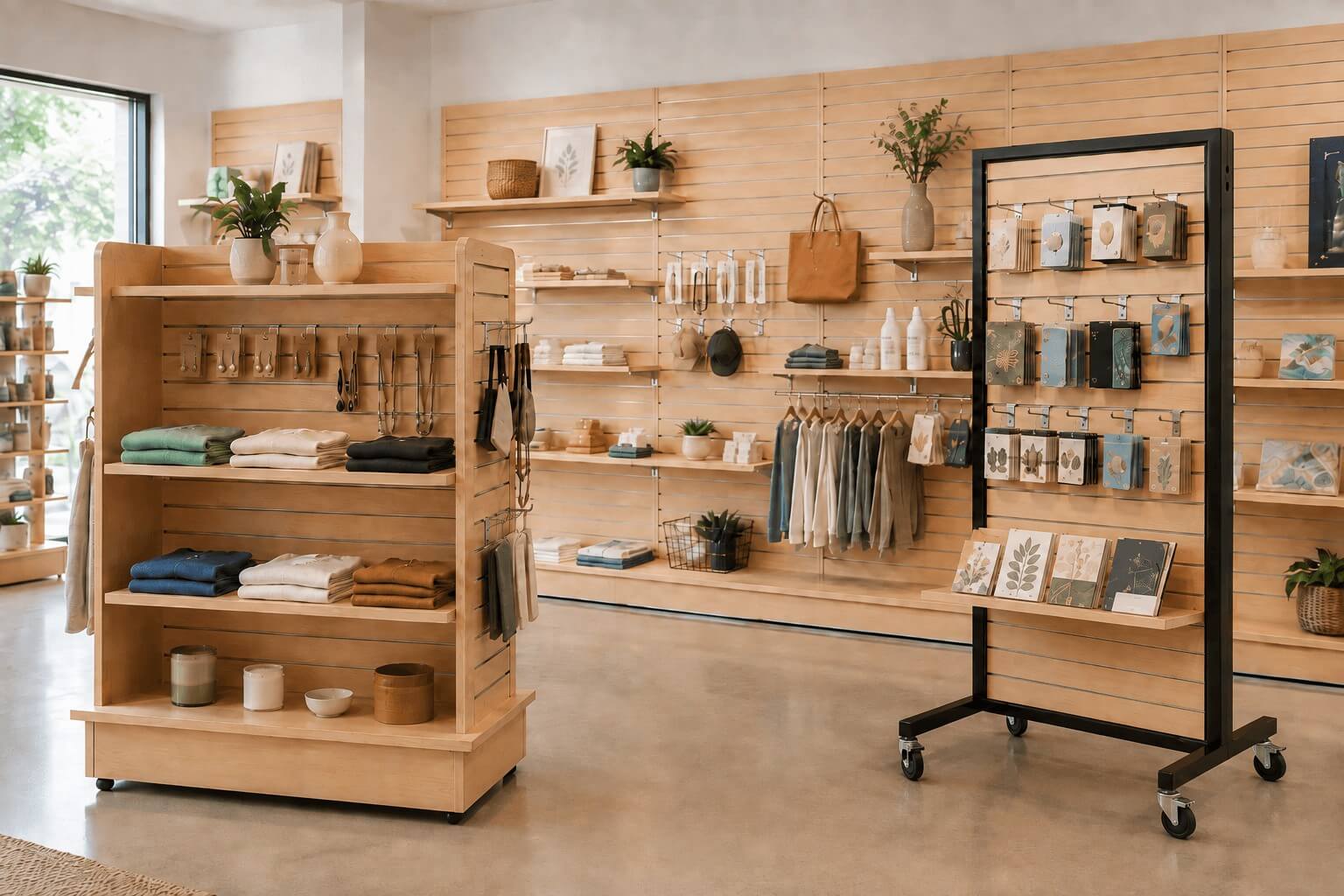
Independent retailers face a unique challenge: creating flexible store layouts that can adapt as their business grows. Smart slatwall systems offer the solution, providing modular retail displays that expand with your inventory and evolving needs.
Unlike fixed shelving or permanent fixtures, well-planned slatwall configuration gives you the freedom to reconfigure your space without major renovations. This guide shows you how to design a system that supports your growth from day one.
Understanding Slatwall System Basics
Slatwall panels feature horizontal grooves that accept various accessories, creating a modular foundation for your retail displays. The key to successful retail wall planning lies in understanding how these components work together.
Standard slatwall panels measure 4 feet wide by 8 feet tall, with grooves spaced 3 inches apart. This consistent spacing ensures compatibility across different manufacturers and accessories. When planning your layout, consider both current needs and future expansion possibilities.
The 24 Inch X 48 Inch Slatwall Tower provides an excellent starting point for smaller spaces or testing configurations before committing to full wall installations.
Planning Your Initial Configuration
Start by mapping your current inventory and estimating growth over the next two years. This planning phase determines your panel layout and prevents costly mistakes later.
Measuring Your Space
Document wall dimensions, ceiling heights, and any obstacles like electrical outlets or HVAC vents. These measurements guide your panel placement and help you order the correct quantities.
Consider traffic flow patterns when positioning your slatwall systems. High-traffic areas work well for impulse purchases, while quieter zones suit higher-value items that require customer consideration.
Creating Zones for Different Product Types
Divide your space into zones based on product categories. This approach simplifies accessory selection and creates logical shopping paths for customers.
- Apparel zones: Plan for multiple hanging options and folded merchandise displays
- Small goods areas: Focus on peg hooks, shelves, basket configurations
- Seasonal sections: Design for quick changeovers between product types
A 24 x 48 x 54 inch Slatwall Gondola with 6 Shelves can create flexibility for creating dedicated product zones without permanent installation commitments.
Accessory Compatibility and Expansion
The strength of slatwall systems lies in accessory variety. However, not all accessories work equally well together, and poor choices can limit future expansion options.
Essential Accessory Categories
Build your accessory collection around these core categories that support multiple product types:
- Hooks and pegs: 10 Inch Peg Hooks for Slatwall provide versatile hanging options for various merchandise
- Brackets and shelving: 48 x 12 inch Laminated Melamine Shelves support folded goods and boxed items
- Waterfall displays: 6-Ball Waterfall displays create eye-catching presentations for hanging merchandise
- Specialty displays: Display Hooks for Slatwall handle unique product presentations
Maintaining Flexibility
Choose accessories that serve multiple purposes rather than single-function items. This approach reduces inventory costs and increases configuration options as your product mix changes.
Consider the Boutique 6 Ball Waterfall for Slatwall in Raw Steel for stores seeking industrial aesthetics that complement various product types.
Avoiding Common Configuration Mistakes
Many retailers make planning errors that limit their system's growth potential. Understanding these pitfalls helps you make better initial decisions.
The Fixed Spacing Trap
Avoid placing accessories at fixed intervals across your entire wall. This approach looks uniform but prevents efficient use of space as your inventory changes.
Instead, create flexible zones with varying accessory spacing. This method allows you to adjust displays based on product size and customer behavior patterns.
Overcommitting to Single Product Types
Resist the temptation to design your entire system around your current top-selling category. Product preferences change, and seasonal variations require display flexibility.
Plan for 60% of your space to support your main product categories, with 40% remaining flexible for new items, seasonal goods, or changing customer preferences.
Scaling Your System Over Time
Successful modular retail displays grow incrementally rather than through major overhauls. This approach spreads costs over time and allows you to test configurations before committing.
Phase 1: Core Installation
Start with essential panels covering your highest-traffic areas. Focus on proven product categories that generate consistent sales.
Install basic accessories that support your current inventory, but avoid filling every groove immediately. Empty space provides flexibility for testing new accessories and seasonal displays.
Phase 2: Expansion Zones
Add panels to secondary areas as your inventory grows. These expansion zones often become testing grounds for new product categories or display techniques.
Use accessories like Vinyl Inserts for Slatwall to maintain clean appearances in partially developed areas.
Phase 3: Optimization
Refine your configuration based on sales data and customer behavior. Move high-performing displays to premium locations and retire accessories that don't generate results.
This phase often involves adding specialized accessories for specific product types while maintaining overall system flexibility.
Budgeting for Growth
Smart retailers budget for slatwall expansion from the beginning. This financial planning ensures you can take advantage of growth opportunities without cash flow constraints.
Initial Investment Priorities
Allocate 70% of your budget to panels and basic accessories, with 30% reserved for specialized displays and future expansion. This ratio provides immediate functionality while preserving growth options.
Quality panels form the foundation of your investment. Choose durable materials that will support years of reconfiguration without showing wear.
Ongoing Accessory Budget
Plan to spend 10-15% of your initial slatwall investment annually on new accessories and configuration changes. This ongoing budget supports seasonal displays, new product categories, and system optimization.
Making Slatwall Systems Work for Your Store
The most successful slatwall configurations reflect their store's unique character while maintaining flexibility for future changes. Consider your customer base, product mix, and growth plans when making design decisions.
Browse our complete selection of Slatwall Panels, Displays & Accessories to discover options that support your specific retail goals. Start with basic components and expand thoughtfully as your business grows.
Remember that modular retail displays succeed through incremental improvements rather than perfect initial configurations. Focus on creating a foundation that supports adaptation, and your slatwall system will grow alongside your business for years to come.
Written by Kris Boettigheimer
Purchasing Assistant
Kris brings over 32 years of retail industry experience and more than 20 years at Store Supply Warehouse to every article he writes for storesupply.com. Since joining SSW in 2005, Kris has worked across multiple departments — including six years in Sales/Customer Service, where he helped independent retailers and small business owners find the right store fixtures, retail displays, and merchandising supplies to improve their store layouts and drive sales. For the past 15+ years in SSW's Purchasing Department, he has collaborated with suppliers, tracked market trends, and sourced products across all three Store Supply divisions. Today, Kris channels that hands-on experience into content that helps retailers enhance store presentation, discover new display solutions, and make smarter product decisions.