Signage for a New Business: What Your First Storefront Needs
When you are opening a store, signage is easy to underestimate. You spend weeks picking fixtures and stocking product, then realize customers cannot tell you are open, cannot find prices, and cannot navigate the floor. Signs do that quiet work.
Start With the Signs That Do the Most Work
Not all signage carries the same weight. Some signs bring people through the door. Some help them shop once inside. Focus your first budget on those two jobs before anything decorative.
1. Your exterior identity sign
This is the sign with your business name on the building or in the window. It is the one investment I would not cut corners on. Customers cannot visit a store they cannot find or name.
Exterior signs often involve your landlord and local sign codes, so check both before you order or install anything. Rules on size, lighting, and placement vary by city and by lease. Confirm the details for your location before you commit.
2. Open and hours signage
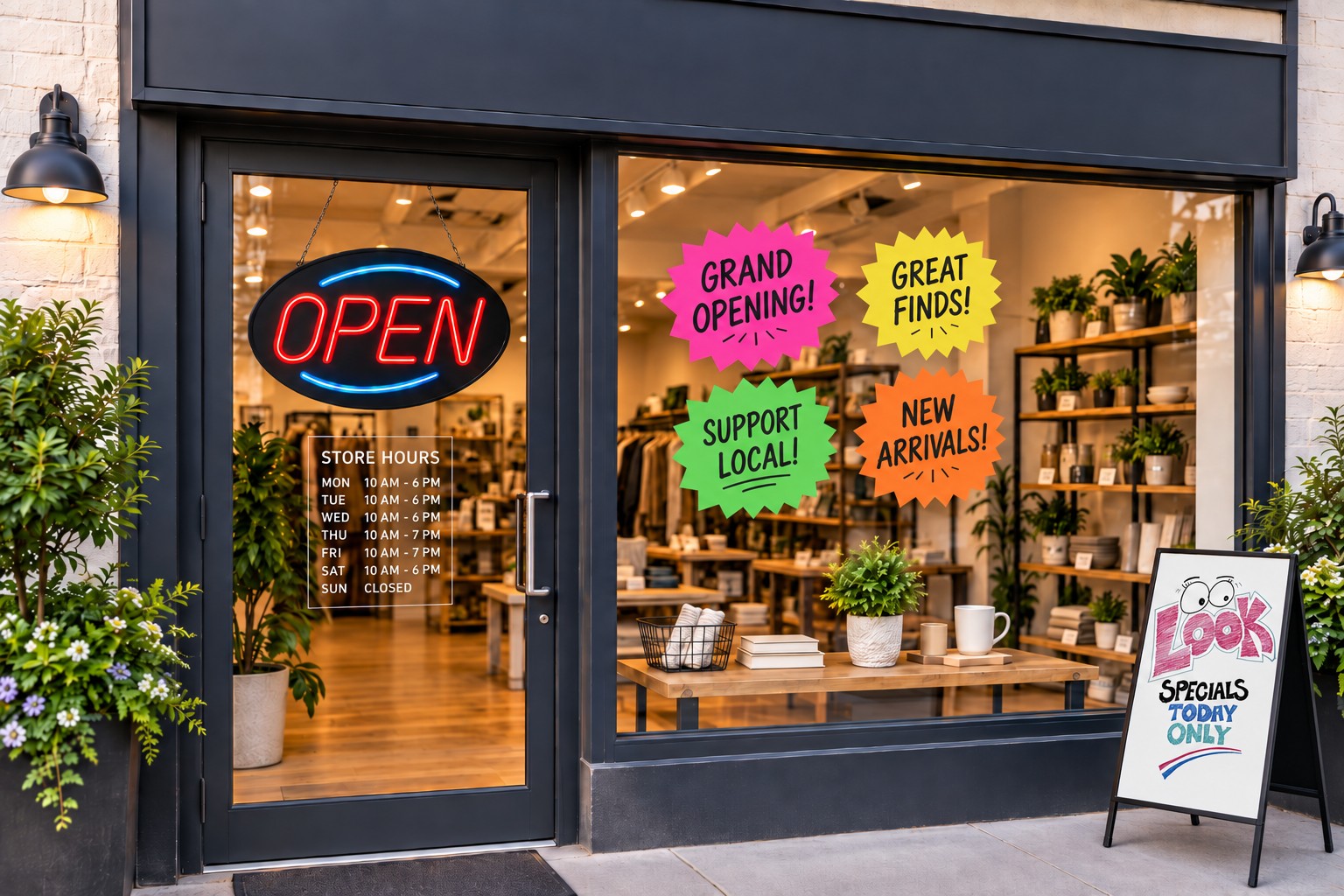
A clear "Open" indicator and posted hours remove friction. People hesitate at doors when they are not sure a business is running. Post your hours where they are readable from outside, and keep them accurate. Nothing frustrates a new customer faster than driving over during posted hours to find a locked door.
3. Window and promotional signs
Your windows are free advertising space. Use them to announce your grand opening, a first-week offer, or simply what you sell. A passerby should understand your store category in a few seconds.
For quick, changeable messages, bright sign cards are hard to beat. Our fluorescent burst sign cards are an inexpensive way to call out sale prices and new arrivals, and you can rewrite them as often as you need.
Interior Signage: Helping People Shop
Once a customer is inside, signage shifts from attracting to guiding. The goal is simple: help people find, understand, and price what they are looking at without needing to ask.
Pricing and shelf signage
Unpriced merchandise slows sales. When shoppers cannot find a price, many will put the item down rather than track down staff. Clear pricing at the shelf and on the product solves that.
A Tagging, Labeling & Price Tag setup is one of the first things I tell new owners to buy, because it touches every item you sell. For shelf-edge pricing, our wood shelf ticket holder slips onto the edge of a 5/8" to 7/8" thick wood shelf and holds a 7/8" x 2-1/8" label, keeping prices visible right where customers look.
Sign holders and frames
Loose signs taped to fixtures look temporary and get dog-eared fast. Frames and holders make printed signs look intentional and let you swap messages quickly. Browse our Retail Sign Holders category to match your counter, shelf, and floor needs. Countertop holders near the register are a smart first purchase, since that is where impulse messaging pays off.
Section and category signs
If your store has distinct areas, small overhead or shelf-top signs help people navigate on their own. Apparel stores get similar value from clear Size Dividers , which act as a kind of in-rack signage that keeps merchandise organized and shoppable.
A Simple Priority List for Opening Day
If you are working from a tight budget, buy in this order. Each tier builds on the one before it.
|
Priority |
Signage |
Why it comes first |
|
1 |
Exterior name sign |
Customers cannot find or remember an unnamed store |
|
2 |
Open sign and posted hours |
Removes doubt at the door |
|
3 |
Window and promo signs |
Communicates what you sell and drives the first visit |
|
4 |
Pricing at shelf and product |
Prevents lost sales from missing prices |
|
5 |
Sign holders and frames |
Keeps messaging looking professional and easy to change |
What You Can Skip When Starting Out
Overbuying signage is a real risk. Here are the pieces I usually tell new owners to hold off on until the store is running and you know your traffic patterns.
- Elaborate custom-printed interior systems. Your layout will change in the first few months. Lock in your floor plan before you invest in a matching set of permanent signs.
- Digital screens. They look sharp, but a small store rarely needs one on day one. Reusable printed signs do the same job for far less while you learn what customers respond to.
- Seasonal and event signage bought too early. Buy these close to the event so the designs and messages are current.
- Duplicate directional signs for a small footprint. If a customer can see most of your store from the door, heavy wayfinding signage is wasted spend.
One more thing worth flagging. In my years helping owners set up, I saw people spend on premium banners while leaving half their merchandise unpriced. Get the everyday, functional signage right first. The decorative pieces can follow once sales are coming in.
Adding Energy Without Overspending
Signage is not only about information. A little visual excitement helps a new store feel active and worth stopping into. This is where inexpensive, reusable pieces earn their keep.
For a grand opening or a weekend sale, multi-colored pennant string adds movement and attention outside or above a display area. Paired with a few bright sign cards, it signals "something is happening here" without a large investment. When the event ends, you store it and reuse it next time.
Keep It Readable and Keep It Current
Whatever you buy, two habits matter more than the signs themselves. First, keep messages short and readable from a normal viewing distance. If a shopper has to stop and squint, the sign is too busy. Second, retire signs the moment they go stale. An expired sale sign or an outdated hours notice does more harm than no sign at all, because it tells customers you are not paying attention.
Start with the exterior identity, the open and hours signage, clear window messaging, and solid pricing throughout the floor. Get those four right and your first storefront will do the two things that count: bring people in and help them buy. Everything else you can add as you learn what your store and your customers actually need.
Written by Kris Boettigheimer
Purchasing Assistant
Kris brings over 32 years of retail industry experience and more than 20 years at Store Supply Warehouse to every article he writes for storesupply.com. Since joining SSW in 2005, Kris has worked across multiple departments , including six years in Sales/Customer Service, where he helped independent retailers and small business owners find the right store fixtures, retail displays, and merchandising supplies to improve their store layouts and drive sales. For the past 15+ years in SSW's Purchasing Department, he has collaborated with suppliers, tracked market trends, and sourced products across all three Store Supply divisions. Today, Kris channels that hands-on experience into content that helps retailers enhance store presentation, discover new display solutions, and make smarter product decisions.