Pricing and Tagging as a Retail Operation: Building a System That Doesn't Break
Most retailers approach pricing and tagging as a reactive task, slapping labels on merchandise whenever prices change or new inventory arrives. This scattered approach creates inconsistent customer experiences, increases shrink, and hurts sales more than you realize.
Successful retail pricing operations require systematic workflows, consistent tools, and clear standards that every team member can follow. When you treat tagging as an ongoing operation rather than an afterthought, you create efficiency that directly impacts your bottom line.
Building Your Price Tagging System Foundation
Your price tagging system retail needs three core components: consistent tools, defined processes, and quality control checkpoints. Start by standardizing your equipment across all locations and shifts.
Choose pricing guns that your entire team can operate efficiently. The #33 rubber bands might seem minor, but having consistent supplies prevents workflow interruptions when staff can't find basic materials.
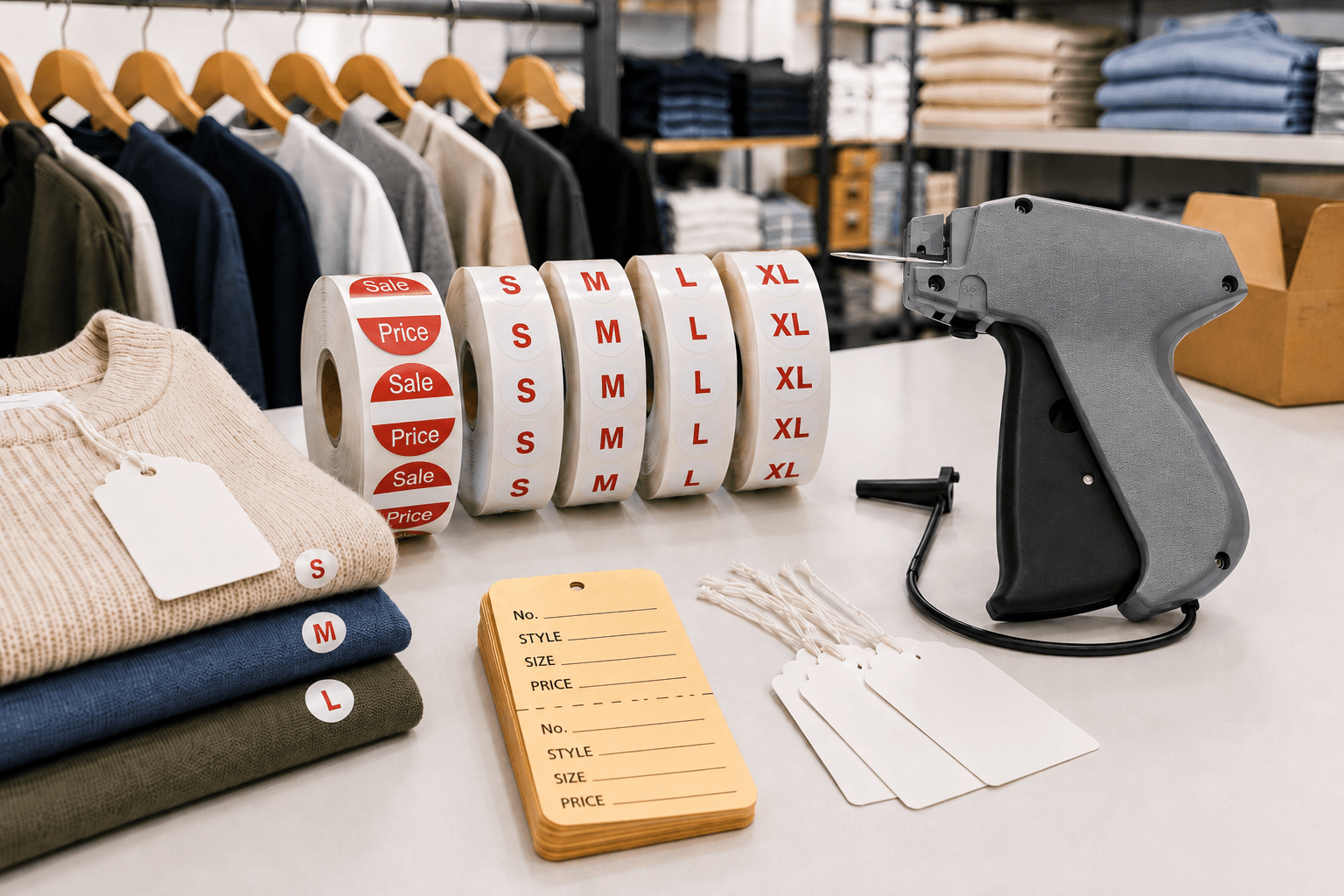
Create pricing stations in your stockroom and sales floor with dedicated supplies:
- Tagging Guns
- Fasteners & Accessories
- Price Tags
- Round Size Labels for different product categories
- Retail Clothing Size Dividers
- Discount & Blank Size Labels
- Cleaning supplies for label removal
Document your pricing schedule clearly. New merchandise gets tagged within 24 hours of arrival. Price changes happen during specific shifts to maintain consistency. Markdown schedules follow your promotional calendar, not random decisions.
Tag Types and Product Category Organization
Different product categories require specific tagging approaches. Apparel needs size information prominently displayed, while hard goods focus on price and product codes. Electronics require warranty and feature information alongside pricing.
For clothing retailers, implement Wrap Around Size Labels that customers can see from multiple angles. These labels prevent the frustrating experience of customers handling every item to find their size.
Color-code your labels by department or season. Use purple Self-Adhesive Labels for permanent pricing and different colors for seasonal or promotional items. This system helps staff identify pricing categories quickly during busy periods.
Small items like jewelry or accessories benefit from discrete pricing that doesn't overwhelm the product. Large furniture or appliances can handle more detailed price tags with feature callouts and financing information.
Specialized Tagging for Different Product Types
Shoes require heel or toe placement that doesn't interfere with try-on experiences. Books and media need spine labeling for shelf displays. Fragile items need removable adhesive options that won't damage packaging.
Gift items often need dual pricing: regular price and gift-wrap pricing if you offer that service. Seasonal merchandise requires clear end-date pricing for limited-time offers.
Size Labels and Dividers: The Silent Sales Drivers
Size Labels and dividers retail systems directly impact sales conversion. Customers who can't quickly find their size often leave without purchasing, even when the item is available.
Install Wholesale Oblong Size Dividers consistently across all hangrail displays. Replace damaged or faded dividers immediately to maintain professional appearance.
Create size organization standards that staff can execute consistently:
- Sizes flow left to right, smallest to largest
- Missing sizes get placeholder dividers to maintain organization
- Size breaks between different styles get clearly marked
- Children's sizing follows age ranges with clear transitions
Train staff to check size organization during hourly floor walks. Customers constantly move items, and maintaining size order requires ongoing attention.
Markdown and Sale Labeling Systems
Markdown pricing retail stores operations need clear protocols that prevent confusion and maintain profit margins. Develop markdown schedules based on inventory turn rates, not calendar dates alone.
Use distinct labeling for different markdown reasons: seasonal clearance, damaged goods, discontinued items, or promotional sales. This helps staff apply appropriate discounts and helps customers understand value propositions.
Implement markdown tracking that connects to your inventory system. When items reach predetermined markdown triggers (age, quantity, turn rate), staff receive alerts to begin the markdown process.
Create markdown zones in your store where customers expect to find discounted merchandise. This concentrates price-sensitive shoppers and prevents markdown items from devaluing full-price merchandise displays.
Sale Pricing Communication
Sale labels need consistent formatting that customers can read quickly. Include original price, sale price, and discount percentage when space allows. Use colored Regular 3 inch Tagging Fasteners for sale tags to create visual distinction from regular pricing.
Train staff to explain sale pricing consistently. Temporary promotions need clear end dates. Permanent markdowns should remove original price references to avoid customer confusion.
How Inconsistent Tagging Hurts Sales and Increases Shrink
Inconsistent tagging creates multiple problems that compound over time. Customers lose confidence in your pricing accuracy. Staff waste time answering price questions instead of selling. Inventory tracking becomes unreliable.
Price switching becomes easier when tags vary in style, placement, or security. Consistent tagging with Fasteners & Accessories makes unauthorized price changes more obvious to staff and security systems.
Missing size information drives customers to competitors who provide better shopping experiences. The cost of lost sales far exceeds the expense of proper size labeling systems.
Inconsistent markdown timing creates customer distrust. Shoppers who find identical items with different markdown levels question your pricing integrity and may avoid future purchases.
Quality Control Measures
Implement daily tagging audits during opening procedures. Check for missing Price Tags, incorrect prices, and damaged labels. Address problems before customers encounter them.
Create tagging checklists for new product arrivals. Verify pricing accuracy against purchase orders. Confirm size labeling matches product specifications. Test tag placement for customer visibility and security.
Building Your Retail Tagging Workflow
Your retail tagging workflow should integrate with receiving, pricing, and merchandising operations. Create standard operating procedures that new staff can follow independently after basic training.
Document timing requirements for each tagging task. New arrivals need pricing within one business day. Sale pricing changes happen during off-peak hours. Markdown processing follows weekly schedules that align with inventory reviews.
Assign tagging responsibilities clearly. Determine which staff members handle Tagging Guns, who manages size organization, and who processes markdowns. Cross-train multiple people for coverage during absences.
Use your pricing and tagging supplies strategically to support workflow efficiency. Position supplies where staff need them most. Maintain adequate inventory levels to prevent delays.
Technology Integration
Connect your tagging workflow to your point-of-sale and inventory management systems. When possible, print tags directly from your system to reduce manual entry errors.
Use barcode scanning to verify price accuracy during tagging processes. This catches pricing errors before customers discover them at checkout.
Training and Quality Assurance
Effective retail pricing operations require ongoing training that goes beyond basic tag application. Teach staff to recognize pricing inconsistencies and quality problems during regular duties.
Create tagging standards that focus on customer experience. Tags should be readable from normal shopping distances. Placement shouldn't interfere with product evaluation. Removal shouldn't damage merchandise.
Establish quality metrics that you can track consistently: percentage of items properly tagged, time from arrival to tagging completion, customer complaints about pricing confusion, and inventory accuracy rates.
Review your pricing operations quarterly to identify improvement opportunities. Gather feedback from sales staff about workflow bottlenecks. Monitor customer behavior around pricing displays to identify confusion points.
Building reliable retail pricing operations takes initial investment in systems and training, but the long-term benefits include increased sales conversion, reduced shrink, improved customer satisfaction, and more efficient staff operations. Start with one element of your tagging system, perfect it, then expand to other areas systematically.
Written by Kris Boettigheimer
Purchasing Assistant
Kris brings over 32 years of retail industry experience and more than 20 years at Store Supply Warehouse to every article he writes for storesupply.com. Since joining SSW in 2005, Kris has worked across multiple departments — including six years in Sales/Customer Service, where he helped independent retailers and small business owners find the right store fixtures, retail displays, and merchandising supplies to improve their store layouts and drive sales. For the past 15+ years in SSW's Purchasing Department, he has collaborated with suppliers, tracked market trends, and sourced products across all three Store Supply divisions. Today, Kris channels that hands-on experience into content that helps retailers enhance store presentation, discover new display solutions, and make smarter product decisions.