
How to Protect Fragile Items When You Ship From Home
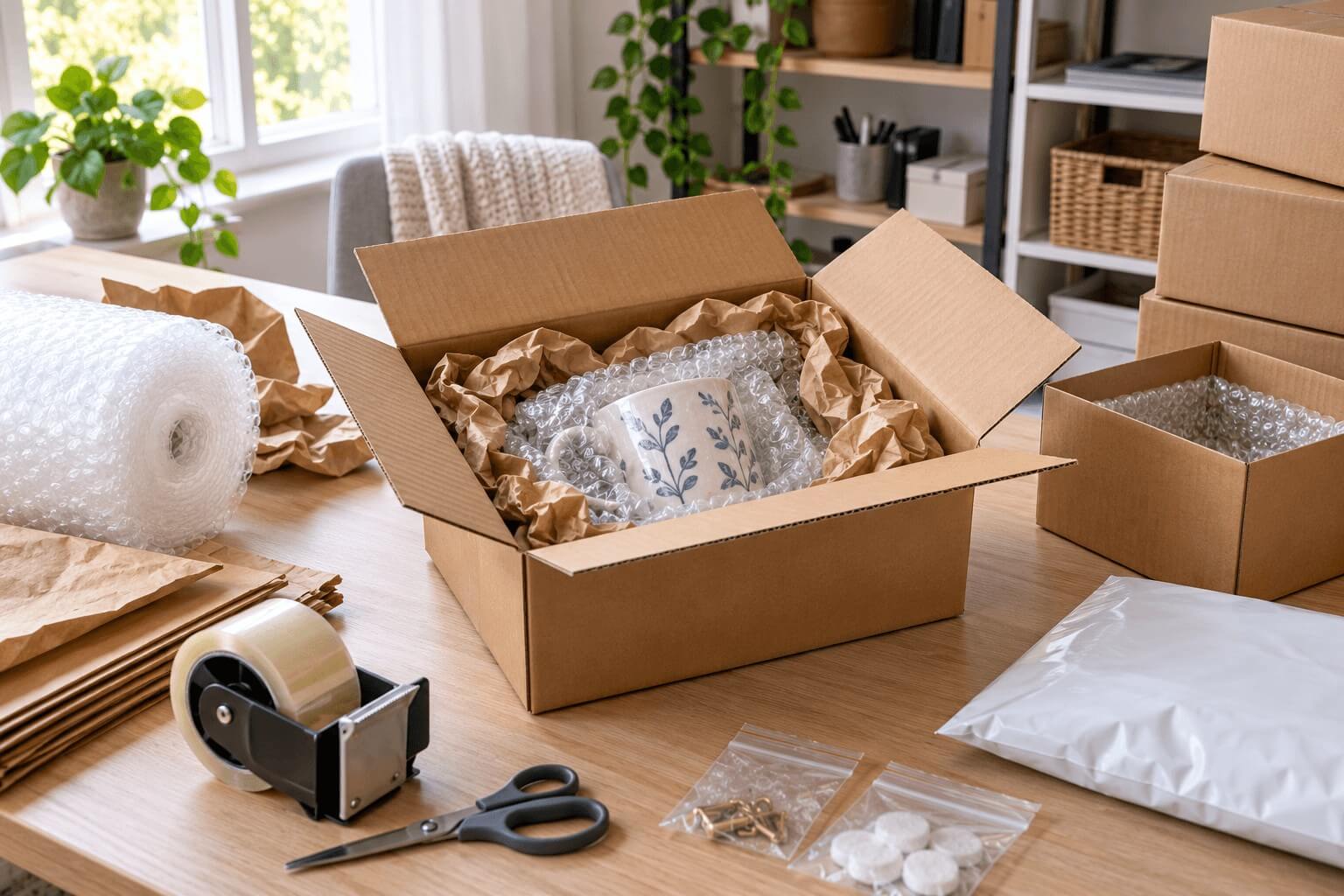
Shipping breakables from a home business comes with a simple truth: the package will get dropped, stacked, and tossed at some point in transit. Your job is to pack as if that is guaranteed to happen, because it usually does.
In my years helping independent retailers and small sellers, the single most common packing mistake I see is treating the box as protection on its own. A box is just the outer shell. What happens inside the box is what keeps your item whole.
Below is a practical approach to wrapping, cushioning, and double boxing so your fragile goods survive the mail.
Start with the right box and a clear plan
Before you wrap anything, pick a Shipping Box that gives you room to add cushioning on every side of the item. If the item barely fits, there is nowhere for cushioning to go, and nothing to absorb a drop.
A good rule I always share with sellers: leave enough space between your item and the box wall so you can press on the outside of a packed box and feel resistance, not the item itself. If your fingers push straight through to the product, you need more cushioning.
How to wrap a fragile item
Wrapping protects the surface and holds loose parts in place. Cushioning, which comes later, absorbs the shock. You need both.
- Wrap each item separately. If you ship two breakables together, wrap them individually so they never touch inside the box.
- Cover the whole surface. Use Bubble Wrap or Wrapping Paper so no part of the item is exposed, paying extra attention to corners, handles, spouts, and rims, which break first.
- Secure the wrap with tape. A wrap that unrolls in transit leaves the item exposed. Tape it closed so it stays put.
- Fill hollow spaces. If you are shipping a mug, vase, or anything with an open cavity, pack the inside with paper so it cannot flex or crack.
For small loose pieces that travel with the main item, a sealed bag keeps everything together. I like keeping a supply of resealable clear plastic bags on hand for parts, lids, and anything that could rattle loose.
How do you cushion a fragile item inside a shipping box?
Cushioning is the layer that absorbs impact so your item does not. Think of it as building a protected pocket in the center of the box, surrounded by material on all six sides.
Here is the order I use:
- Build a bottom layer. Add a cushion of Bogus Paper 30" Roll For Void Fill , bubble wrap, or foam to the bottom of the box before the item goes in. The item should never rest on the box floor.
- Center the wrapped item. Place it in the middle so it is not touching any wall.
- Pack the sides. Fill every gap around the item firmly. Loose fill that shifts will let the item slide to a corner, which is the worst place for it to be during a drop.
- Add a top layer. Cover the top with cushioning so the item cannot move up when the box is flipped.
- Do the shake test. Close the box and gently shake it. If you hear or feel the item move, open it up and add more fill. A properly packed fragile box is quiet and solid.
The goal is a snug fit where the item is suspended in cushioning and cannot touch any inside wall.
How much space should surround a fragile item in the box?
You want enough cushioning on every side that the item cannot reach the box wall when the package is squeezed or dropped. For most breakables, a generous buffer of cushioning around all sides, top, and bottom gives you that protection.
Heavier and more delicate items need more space, not less. A dense item builds more momentum in a fall, so it needs a thicker cushion to slow it down. When in doubt, add more fill rather than less.
The practical test again: press the outside of the packed box. You should feel firm resistance before you ever feel the item.
When should you double-box a fragile order?
Double boxing means placing your cushioned inner box inside a second, larger box with another layer of cushioning between the two. It is the strongest protection you can give a fragile shipment from home.
In my experience helping sellers who ship things like glassware, ceramics, framed art, and electronics, double boxing is worth the extra effort in these situations:
- The item is highly fragile or expensive to replace.
- The item has already broken in shipping before.
- You are shipping a long distance or through multiple handoffs.
- The item is heavy enough that a single box could fail at the seams.
- The buyer paid for insurance and you want the claim to hold up.
To double box correctly:
- Pack the item in the inner box exactly as described above, cushioned on all sides.
- Choose an outer box large enough to leave a cushioning gap around the entire inner box.
- Add a bottom layer of cushioning to the outer box.
- Center the inner box and fill the space around it on all sides.
- Seal the outer box and run the shake test one more time.
Done right, the outer box takes the first hit and the cushioning between boxes absorbs the shock before it ever reaches the inner box.
Seal and label so your work is not wasted
Careful packing can still fail if the box pops open. Seal the top and bottom seams with Packing Tape , and reinforce the edges on heavier boxes.
Use a Fragile Sticker on more than one side. It is not a guarantee of gentle handling, but it does prompt some carriers to be more careful, and it signals which way is up.
If you also ship soft goods or apparel alongside breakables, keep those in their own protective packaging. For clothing and similar items, Poly Mailers keep garments clean and flat, though for true breakables you will still want cushioned, double boxed protection.
Keep your packing supplies stocked and organized
Running out of cushioning mid order is how corners get cut. Set up a dedicated packing station and keep your materials restocked so you never finish a box by just closing it and hoping.
It also helps to keep your bags and packaging supplies in one place, along with tape, labels, and the general retail supplies you reach for on every order. When everything is within arm's reach, you pack more consistently, and consistency is what keeps your breakage rate low.
One last thing I tell every seller: pack the first few of any new fragile product as if you were shipping it to your harshest customer, then ship one to yourself first. The feedback you get from opening your own box tells you more than any guide can, and it costs far less than a broken item and a refund.
Written by Kris Boettigheimer
Purchasing Assistant
Kris brings over 32 years of retail industry experience and more than 20 years at Store Supply Warehouse to every article he writes for storesupply.com. Since joining SSW in 2005, Kris has worked across multiple departments , including six years in Sales/Customer Service, where he helped independent retailers and small business owners find the right store fixtures, retail displays, and merchandising supplies to improve their store layouts and drive sales. For the past 15+ years in SSW's Purchasing Department, he has collaborated with suppliers, tracked market trends, and sourced products across all three Store Supply divisions. Today, Kris channels that hands-on experience into content that helps retailers enhance store presentation, discover new display solutions, and make smarter product decisions.