Is Your Slotted Standard Overloaded? Warning Signs to Catch
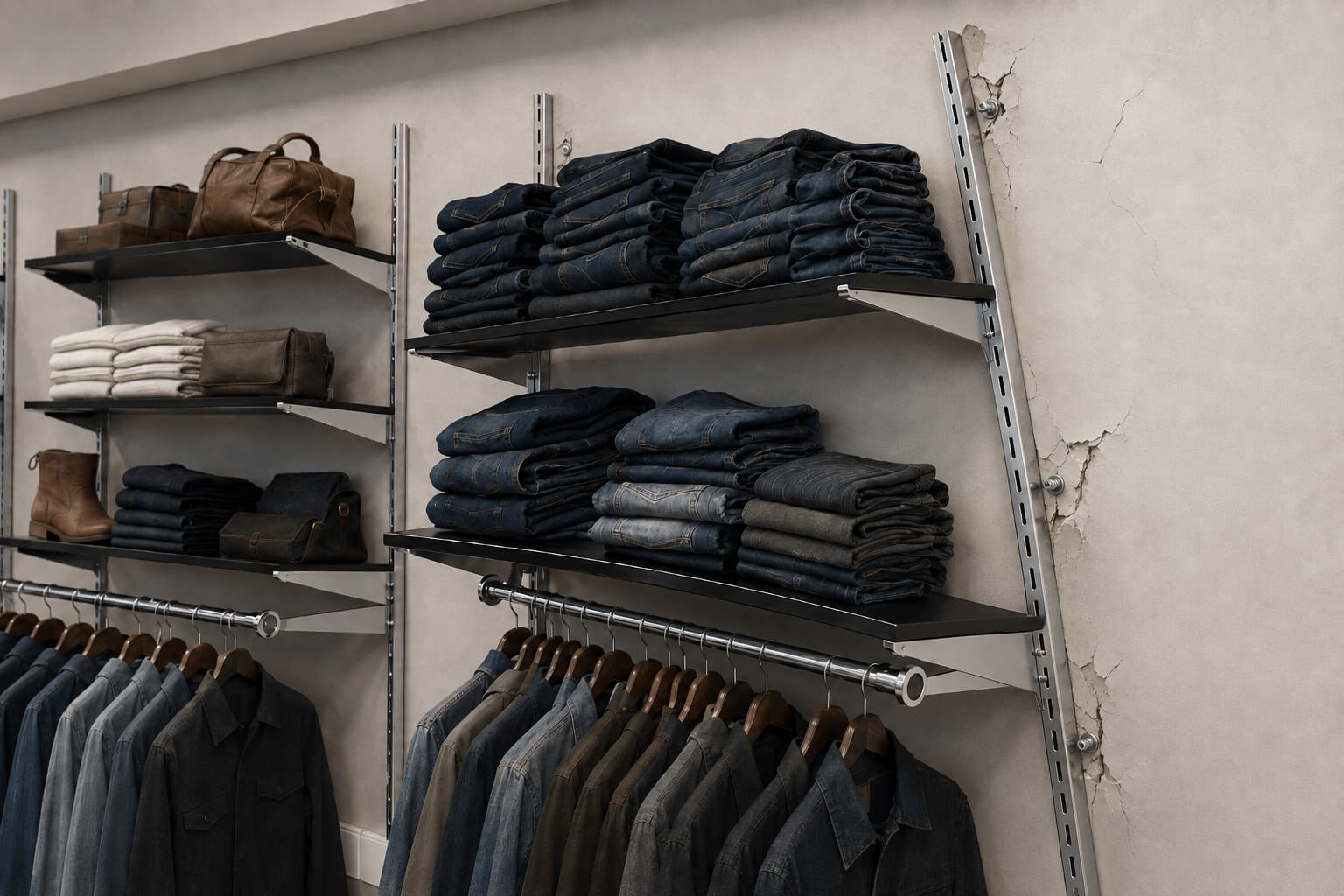
A wall of Slotted Standards and brackets does a lot of quiet work in a store. They hold shelves, displays, and a steady flow of merchandise without drawing much attention. That is exactly why an overloaded slotted standard is easy to miss until something gives.
I have spent more over 30 years around retail fixtures, and the stories I remember most are the ones that start with "the whole shelf section came down overnight." Almost every time, the warning signs were there. This guide walks you through what to look for, why it happens, and what to do before a heavy summer display becomes a pile on the floor.
What a Slotted Standard Actually Holds
A slotted standard is a vertical wall anchored track with slots designed to hold brackets and shelves to hold merchandise.
When people say a shelf "failed," the problem usually started somewhere on the standard, not the shelf itself. Understanding this helps you read the warning signs correctly.
Where the Weight Travels
- Merchandise sits on the shelf.
- The shelf transfers weight to the brackets.
- The brackets transfer weight into the slots on the standard.
- The standard transfers weight into the anchors and the wall.
A weak point anywhere in that line shows up as a warning sign somewhere else. That is why a bowing standard and a loose anchor often appear together.
How Do I Tell If My Slotted Standard Is Overloaded?
You do not need special tools to do a good inspection. You need a flashlight, a level or a straight edge, and a few minutes when the store is quiet. Walk the wall and look for these signs.
1. The Standard Is Bowing or Leaning
A healthy standard runs straight up and down. Slotted standard bowing means the track is curving away from the wall, usually in the middle where the load is heaviest. Hold a level or a yardstick against the face of the standard. If you can see daylight between the standard and the straight edge, the metal is flexing under load.
Bowing is one of the clearest signs of an overloaded slotted standard. Metal that bows under steady weight is being asked to do more than it should.
2. The Slots Are Spreading Open
Look closely at the slots where the brackets hook in, especially on the loaded sections. The slots should be clean rectangles. When they start to look stretched, oval, or torn at the corners, the bracket tabs are cutting into the metal under pressure.
In my years helping retailers set up wall systems, splayed slots are the warning sign owners overlook most. They are small and easy to walk past, but they tell you the load is concentrated on too few points.
3. Anchors Are Pulling Away From the Wall
Check the top and bottom of each standard where it fastens to the wall. Cracked paint or drywall around a screw, a gap behind the standard, dust on the wall, or a screw head that sits outward are all signs the anchor is coming loose.
A standard that is pulling off the wall is the most serious sign on this list. Stop loading it and address it right away.
4. Brackets Are Tilting or Sagging
A level bracket should sit square. If the tip of the bracket droops or the back end lifts out of the slot, the bracket is overloaded or it is not seated correctly. A tilting bracket also pries on the slot, which speeds up the splaying problem above.
5. New Noises or Movement
Creaks when you touch the shelf, a section that shifts when bumped by a cart, or shelves that no longer sit level are all signs the system is under strain. Trust these. Quiet fixtures that suddenly make noise are telling you something changed.
Why Are the Slots on My Standard Spreading Open?
Splayed slots almost always come down to load and leverage, not bad metal. A few common causes:
- Too much weight per bracket. Fewer brackets carrying a heavy shelf means each slot takes more force.
- Deep shelves with weight at the front. The farther merchandise sits from the wall, the more leverage it puts on the slot. A deep shelf loaded at the lip works against you.
- Brackets not fully seated. A tab that only catches part of the slot puts all the load on a small edge of metal.
- Light-duty parts in a heavy-duty job. Slotted systems come in different weights. Using lighter components for a heavy product, then loading them up for a sale, is a frequent cause.
Shelf brackets are a good example of why matching parts to load matters. Our 12" Chrome Shelf Bracket feature an upturned notch at the tip to help the shelf sit securely, and they are rated for a specific load. Check the product page for the rating and stay under it. Knowing the rated capacity of every part in the chain is the heart of respecting a retail shelf weight limit.
What Should I Do If a Loaded Standard Starts Pulling Off the Wall?
Treat this as urgent. A standard that is separating from the wall can fail without much more warning.
- Clear the area. Move customers and staff away from the section. If it is near a checkout or a walkway, rope it off.
- Unload from the top down. Remove the highest and heaviest items first to reduce leverage at the anchors. Work calmly and do not stand directly under loaded shelves.
- Inspect the anchors and the wall. Once the load is off, look at whether the screws hit solid backing such as a stud or proper drywall anchors. Anchors that only grab drywall are a common failure point.
- Remount into solid backing. Re-anchor into studs or use anchors rated for the load. If the wall material itself is damaged, repair it before remounting.
- Reload lighter and spread the weight. Add brackets or move heavy product to a lower position before you put merchandise back.
If you are not sure the wall can hold the load you need, that is a good moment to consider a freestanding option instead.
Preventing the Problem Before Summer Hits
Heavy seasonal merchandise is when most wall systems get pushed past their limit. A few habits keep you ahead of it.
Match the System to the Load
If you regularly hang heavy product, start with Heavy Duty 4 foot Chrome Slotted Standards and brackets rated for that weight, and confirm the numbers on the product page rather than making assumptions. The cost difference is small next to a wall failure.
Add Brackets, Do Not Just Add Product
More brackets spread the same load across more slots and more anchors. If a shelf is sagging, the fix is often another bracket, not a sturdier shelf.
Keep Heavy Items Low and Close
Put your heaviest merchandise on lower shelves and toward the back of the shelf, near the wall. This lowers the leverage on every slot and anchor in the section.
Consider Taking Load Off the Wall
Floor fixtures do not depend on wall anchors at all. A piece like our 24 by 48 inch slatwall tower carries its own weight and lets you build a heavy display without stressing a wall. A floor table such as the 3-tier rectangle table is another way to feature seasonal product without loading the wall further. Early in a season, I often tell retailers to move their heaviest category off the wall entirely and let a freestanding unit do that work.
Do a Five Minute Walk Every Month
Run your eyes and a straight edge down every standard, check the slots on loaded sections, and press gently on the top of each standard to feel for movement. A short routine catches bowing and loose anchors while they are still easy and cheap to fix.
The pattern I have seen over and over is simple: wall systems rarely fail out of nowhere. They lean, slots absorb wear, and the anchors loosen for weeks before anything falls. If you learn to read those signs and act immediately, you protect your merchandise, your customers, and your staff long before a heavy display ever has the chance to come down.
Written by Kris Boettigheimer
Purchasing Assistant
Kris brings over 32 years of retail industry experience and more than 20 years at Store Supply Warehouse to every article he writes for storesupply.com. Since joining SSW in 2005, Kris has worked across multiple departments , including six years in Sales/Customer Service, where he helped independent retailers and small business owners find the right store fixtures, retail displays, and merchandising supplies to improve their store layouts and drive sales. For the past 15+ years in SSW's Purchasing Department, he has collaborated with suppliers, tracked market trends, and sourced products across all three Store Supply divisions. Today, Kris channels that hands-on experience into content that helps retailers enhance store presentation, discover new display solutions, and make smarter product decisions.