
Outfitting a Small Boutique Floor With One Outrigger System
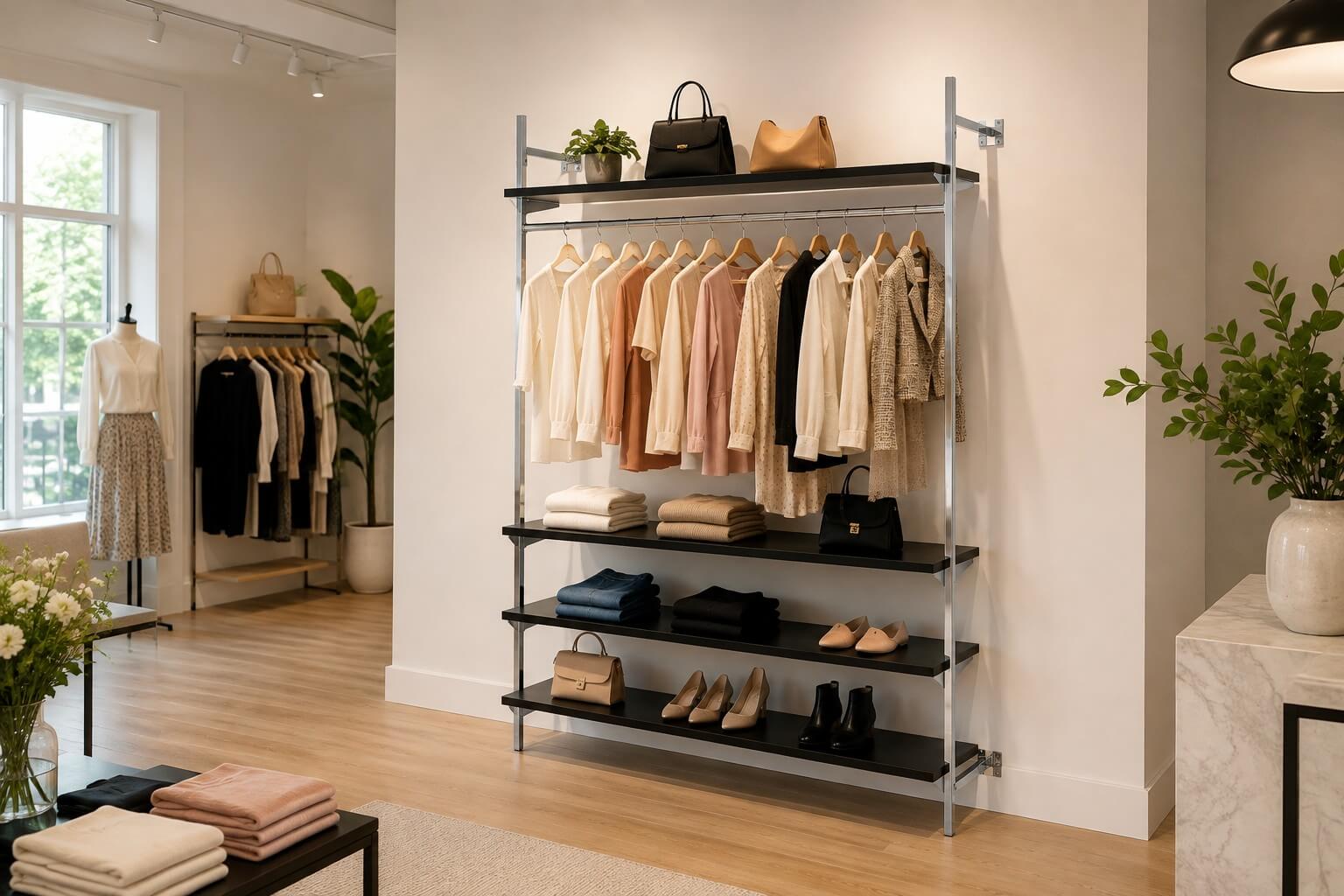
If you run a small boutique, you already know that every square foot has to earn its keep. A single outrigger system can hold a surprising amount of apparel while still letting shoppers move and see. The trick is putting it in the right spot and giving it room to breathe.
In this guide I will walk you through where an outrigger belongs, how much space to leave around it, and how to load it so customers engage with your merchandise..
What an Outrigger Does Well on a Tight Floor
An Outrigger Wall System is a wall-mounted or post-style system with arms and brackets that extend outward. You can mix hangrails, baskets, and shelving on the same vertical line. That flexibility is everything a compact apparel display needs because you are stacking space upward instead of spreading it across the floor.
On a small floor, one outrigger can serve as a focused statement piece. You can hang a coordinated outfit at eye level, add folded backstock or accessories on a shelf, and organize size runs neatly below. A vintage caramel oak shelf made for outrigger systems is one way to break up a wall of hanging garments and add a flat surface for folded items or a featured product.
In my years helping boutique owners, the most common win I see is when a retailer stops cramming floor racks into their space and instead leans on one well-built vertical unit. The floor opens up, and sales usually follow because people can better see the merchandise.
Where Should an Outrigger Sit on a Small Floor?
Start with sightlines, not with a wall that happens to be empty. Walk in your own front door and think about what your customers see first. A natural focal wall is where an outrigger pays off most because it is the first thing a shopper sees when they enter.
Here are the placements that tend to work for outrigger floor placement in a small space:
- Along a side wall in the sightline from the entrance. This pulls customers deeper into the store without forcing them past a wall of fixtures.
- On the wall opposite the register. While you ring up one sale, the next customer is looking at a full, organized display.
- Anchoring the back wall. A strong back wall display draws traffic through the whole floor, which is the goal in any small store.
Avoid placing an outrigger right inside the entry zone. Shoppers need a few steps of open space to settle in before they start browsing. If you crowd the door, people feel boxed in and back out.
Keep It Off the Path, Not the Wall
Because an outrigger mounts to or against a wall, it gives you selling height without crowding floor space the way a freestanding floor rack does. That is the single biggest reason it suits small store floor fixtures
How Much Clearance Do Shoppers Need Around an Outrigger?
Clearance is where most small floors go wrong.
Use these working rules:
- Leave room for two-way traffic where you can. If two shoppers cannot pass without turning sideways, the aisle is too tight and people will skip the display.
- Account for the fitting and pause zone. Customers stop, pull a garment off the arm, and hold it up. They need standing room to do that without bumping the next person.
- Protect the path to the fitting room and the register. These lanes should never narrow because of an outrigger loaded with coats.
I always tell owners to load the outrigger the way it will actually look on a busy Saturday, then walk the aisle with an armful of clothes. If you have to twist your shoulders to get by, your customers will too. For exact arm and bracket projections, check the product page for the outrigger and accessories you choose.
Building the One-Unit Display, Top to Bottom
Think of your single outrigger in three bands, and assign each band a job.
|
Zone |
What to put there |
Why |
|
Top |
Add signage, or a featured look |
Catches the eye from across the floor |
|
Middle (eye to waist) |
Priority product and best sellers |
Easiest to see and reach, sells hardest |
|
Lower |
Folded items on a shelf, size runs, backstock |
Adds capacity without blocking sightlines |
A small sign card up top tells the story fast. Slot a price or promo card into a holder so the message stays cris. Browse our Retail Signs & Sign Holders to match the look of your space.
Round Out the Unit Without Crowding
One outrigger does not have to do everything. If you have a corner of open wall, a slim addition can extend your hanging and folding space, and our clothing racks category has compact options that pair well with a wall system. Just remember the clearance rule applies to every fixture you add, so resist the urge to fill the center of the room.
Common Mistakes I See on Small Boutique Floors
After years of fielding layout questions, the same handful of slip-ups come up again and again:
- Overloading the arms. A jammed faceout hides the garment and defeats the whole point of facing.
- Ignoring the projection of hanging clothes. The fixture fit the wall, but the loaded coats turned the aisle into a squeeze.
- Mixing too many hanger styles. Inconsistent hangers make even good inventory look picked over.
- Facing the display away from the door. If shoppers approach from the entrance but the merchandise faces the back, you lose the first impression.
Get the placement, the clearance, and the facing right, and one outrigger can carry a small boutique floor on its own. Walk your space the way a customer would, load the unit the effectively, and let the open floor do the selling alongside it.
Written by Kris Boettigheimer
Purchasing Assistant
Kris brings over 32 years of retail industry experience and more than 20 years at Store Supply Warehouse to every article he writes for storesupply.com. Since joining SSW in 2005, Kris has worked across multiple departments , including six years in Sales/Customer Service, where he helped independent retailers and small business owners find the right store fixtures, retail displays, and merchandising supplies to improve their store layouts and drive sales. For the past 15+ years in SSW's Purchasing Department, he has collaborated with suppliers, tracked market trends, and sourced products across all three Store Supply divisions. Today, Kris channels that hands-on experience into content that helps retailers enhance store presentation, discover new display solutions, and make smarter product decisions.