Maximize a 10x10 Booth Space at Craft Fairs and Markets
You've paid your booth fee, loaded your merchandise, and arrived at the craft fair before dawn. Now you're staring at a 10-foot by 10-foot square of concrete or grass, wondering how to fit everything you brought while still leaving room for customers to browse. The vendor next to you somehow displays twice as much inventory in the same space. What are they doing differently?
The answer isn't magic. It's vertical space, strategic fixture placement, and understanding how customers move through tight quarters. This guide shows you how to transform 100 square feet into an efficient, professional booth that maximizes sales without overwhelming shoppers.
Start With the Corners: Your High-Value Real Estate
Most vendors treat booth corners as dead space or storage areas. This wastes your most valuable square footage. Corners anchor your display and create natural browsing patterns. Place tall, narrow fixtures in your back corners to draw eyes from the aisle into your space. A 4-way clothing rack works well here because it displays merchandise on all sides without blocking sightlines.
Your front corners need careful consideration. If you put tall displays here, you block visibility into your booth from the aisle. Shoppers walking past can't see your merchandise or gauge if your booth interests them. Use low displays (36 inches or shorter) in front corners. Tiered display risers, small dump bins, or a single 2-way rack keeps these corners active without creating walls.
Calculate Your Customer Capacity
A 10x10 booth can comfortably hold three customers at once if you plan your layout correctly. You need at least 3 feet of clear space for shoppers to stand and browse. This means your actual display area shrinks to roughly 6 feet deep by 8 feet wide, with 2 feet reserved on each side for movement.
Draw your booth layout on graph paper where each square equals 1 foot. Mark your 3-foot customer zones first, then place fixtures in the remaining space. If your fixtures encroach on customer zones, shoppers feel crowded and leave quickly. The goal is to create the illusion of spaciousness in a compact area.
Build Upward With Vertical Displays
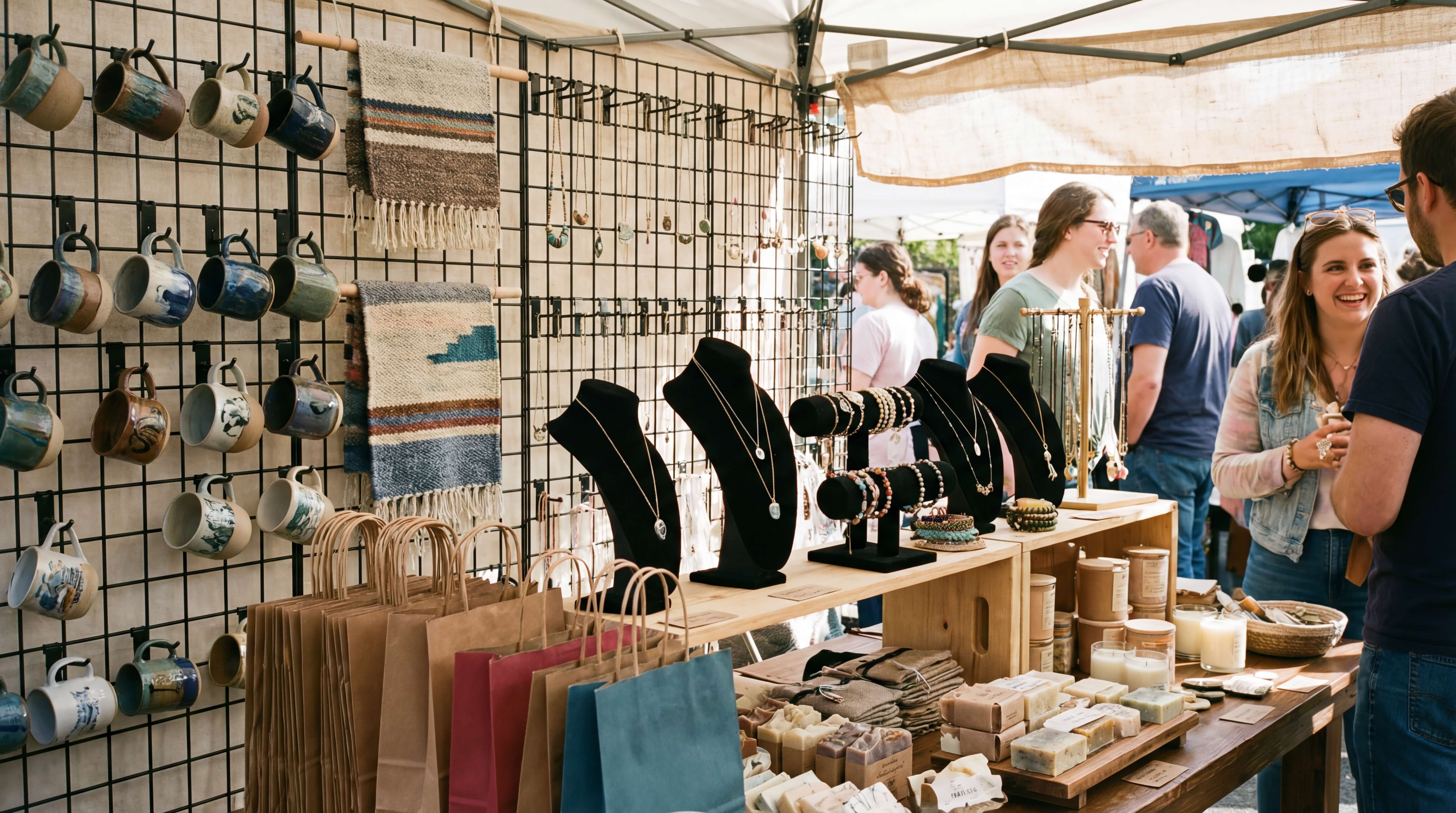
You have 100 square feet of floor space, but you have 800 cubic feet of display volume if your booth has an 8-foot height limit (standard at most craft fairs). Use every inch of that vertical space. Gridwall panels with T-leg bases create freestanding walls that can reach 6 to 8 feet tall. Hang hooks, shelves, and baskets at multiple heights to display products from floor to eye level.
Slatwall panels work similarly but require wall mounting, which isn't practical for temporary setups. Gridwall offers the same versatility with the portability you need for markets. A pair of 4-foot by 6-foot gridwall panels creates 48 square feet of display surface while occupying less than 8 square feet of floor space.
The Three-Zone Layout Strategy
Divide your booth into three functional zones: front, middle, and back. Your front zone (nearest the aisle) should feature your most eye-catching items and lowest displays. This area entices passersby to enter. Use colorful merchandise, best-sellers, or seasonal items here. Keep displays at 36 inches or lower so people can see into your booth.
Your middle zone handles the bulk of your inventory. This is where customers actually shop once they've entered your space. Use a mix of heights here: clothing racks, gridwall panels, or shelving units that display products between waist and eye level. Customers should be able to reach everything without stretching or bending excessively.
Your back zone serves two purposes: high-value vertical display space and discrete storage. Use your tallest fixtures here (6 to 8 feet). The upper portions display merchandise while lower sections can hide extra inventory, bags, or personal items behind a fabric curtain or solid panel.
Choose Fixtures That Collapse and Transport
Every fixture in your booth needs to fit in your vehicle and assemble quickly. A clothing rack that takes 30 minutes to assemble eats into your setup time and increases stress. Look for fixtures that fold, collapse, or break down into components no longer than 5 feet (the length of most SUV cargo areas with seats folded).
Collapsible salesman racks fold completely flat and roll on wheels, making them ideal for vendors who set up weekly. Gridwall panels stack efficiently. Be sure to prioritize those fixtures designed for portability over permanent retail installations.
Weight matters too. You'll carry these fixtures from your vehicle to your booth space, sometimes across parking lots or fairgrounds. A 10-pound gridwall panel is manageable. A 75-pound gondola unit is not. Steel fixtures are durable but heavy. Lighter-weight options exist that still provide years of service.
Create Clear Traffic Flow
Customers need an obvious path through your booth. The worst layout is a center aisle that leads to a dead end at your back wall. Shoppers walk in, hit the wall, turn around, and leave. Instead, create a U-shaped or L-shaped browsing path that naturally guides people through your entire display.
Place your checkout table or cashier station in a back corner, not centered at the rear. This positioning forces customers to browse along one side, turn at the back, and browse the other side before reaching checkout. You've just doubled the merchandise they see compared to a straight center aisle.
Keep your main aisle width at 3 feet minimum, 4 feet if possible. Narrower aisles feel claustrophobic and prevent two customers from browsing simultaneously. Wider than 4 feet wastes space you need for displays.
Lighting Makes Everything Sell Better
Indoor craft fairs often have terrible overhead lighting. Outdoor markets depend on weather and sun angle. Bring your own lighting. Battery-powered LED strip lights which clip onto gridwall or clothing racks can be used to illuminate your products without requiring electrical hookups. A well-lit booth attracts more customers than a dim one, especially in indoor venues.
Position lights to eliminate shadows on your merchandise. If you sell clothing, light from above and slightly in front prevents garments from casting shadows on themselves. For small items like jewelry or crafts, consider small spotlights that highlight featured pieces.
Storage Solutions That Don't Waste Space
You need backup inventory, bags, cash box, water, and personal items at your booth. Dedicated storage fixtures waste precious display space. Instead, use your back wall fixtures as dual-purpose display and storage. A gridwall panel can hold merchandise on hooks in the upper sections while concealing storage bins below at ground level.
Under-table storage works well if you have a checkout table. Fabric skirts hide plastic bins while maintaining a professional appearance. Some vendors use collapsible bins that stack flat for transport and expand at the booth for storage.
The Setup Checklist
1. Test your full booth setup at home before your first market. Time yourself from unloading the vehicle to complete setup. Most craft fairs give you 1 to 2 hours for setup. If your booth takes longer, simplify your design or prepare more components in advance.
2. Load your vehicle in reverse setup order. Items you need first (gridwall bases, corner fixtures) should be last in and first out. Use plastic bins that double as display risers to transport small items. Label everything clearly so setup assistants know where components go.
3. Bring basic tools: rubber mallet for adjusting rack height, zip ties for securing gridwall accessories, extension cord even if you don't think you'll need power, and extra clips or hooks. These small items save you from mid-market emergencies.
The Numbers That Matter
A well-designed 10x10 booth with vertical displays holds as much inventory as 200 to 300 square feet of traditional retail space. Your investment in portable fixtures pays for itself quickly. A basic setup costs $300 to $600 depending on your merchandise type. Compare this to monthly booth rent at a brick-and-mortar location ($1,500 to $3,000 in most areas), and craft fairs become an affordable way to test products and build customer base.
Track your sales per square foot at each market. Calculate gross sales divided by 100 (your booth square footage). This number tells you which markets perform well and helps you decide where to invest booth fees. Successful craft vendors see $50 to $150 per square foot per day at good markets.
Common Mistakes to Avoid
Don't bring every product you own. Curate your selection based on the market demographics and season. Overstuffed booths look messy and overwhelm customers. Leave empty space strategically.
Don't use your vehicle or canopy poles as fixture anchors. Wind can knock down improperly secured displays. Freestanding fixtures with proper bases stay upright and look professional.
Don't ignore your booth from the customer perspective. Walk past your setup as if you're a shopper. Can you see merchandise from 10 feet away? Does the booth look inviting or cluttered? Is pricing clearly visible? Make adjustments before the market opens.
Weather and Outdoor Considerations
Outdoor markets add complications. Bring weights for canopy legs (at least 25 pounds per leg). Secure gridwall panels to canopy frames using zip ties to prevent tipping in wind. Use plastic bins instead of cardboard boxes for storage because they shed rain.
Have a rain plan for merchandise that can't get wet. Quick-deploy tarps, plastic garment bags, or clear plastic bins protect inventory during sudden weather changes. Some vendors keep their vehicle nearby as emergency dry storage.
Sun creates different challenges. Avoid displaying items that fade in direct sunlight in front-facing positions. Customers won't browse a booth where they have to squint. Position your canopy to shade your merchandise and create comfortable browsing conditions.
Making the Investment
Quality portable fixtures serve you for years across dozens of markets. Cheap alternatives break after a few uses, leaving you scrambling before important events. Budget for fixtures that withstand weekly loading, transport, setup, and breakdown.
Chrome-plated steel resists corrosion and maintains appearance through seasons of use. Powder-coated finishes chip less than paint. Welded connections outlast bolted ones on fixtures that move frequently. When comparing options, consider cost per market over the fixture's lifetime, not just initial price.
Your First Market Strategy
Start with minimal fixtures and expand as you learn what works. Many successful vendors began with two gridwall panels, one clothing rack, and a folding table. They added fixtures gradually as they identified gaps in their display capacity. This approach keeps initial investment manageable and prevents buying fixtures you won't use.
Watch successful vendors at your markets. Notice how they arrange fixtures, what heights they use, and how customers move through their booths. The best education comes from observing what works in real market conditions.
Your booth is your temporary storefront, and it competes with dozens or hundreds of other vendors for customer attention. Make those 100 square feet work as hard as you do. Vertical displays, strategic fixture placement, and clear traffic flow transform a cramped booth into a professional retail environment that customers want to explore.
Setting up for your first craft fair or market? Contact us at 1-800-823-8887 for fixture recommendations based on your specific merchandise and vehicle capacity. We help vendors create efficient booth layouts that fit their budget and maximize their selling space.