
Jewelry Display Terms, Decoded: Bust, T-Bar & Ring Insert
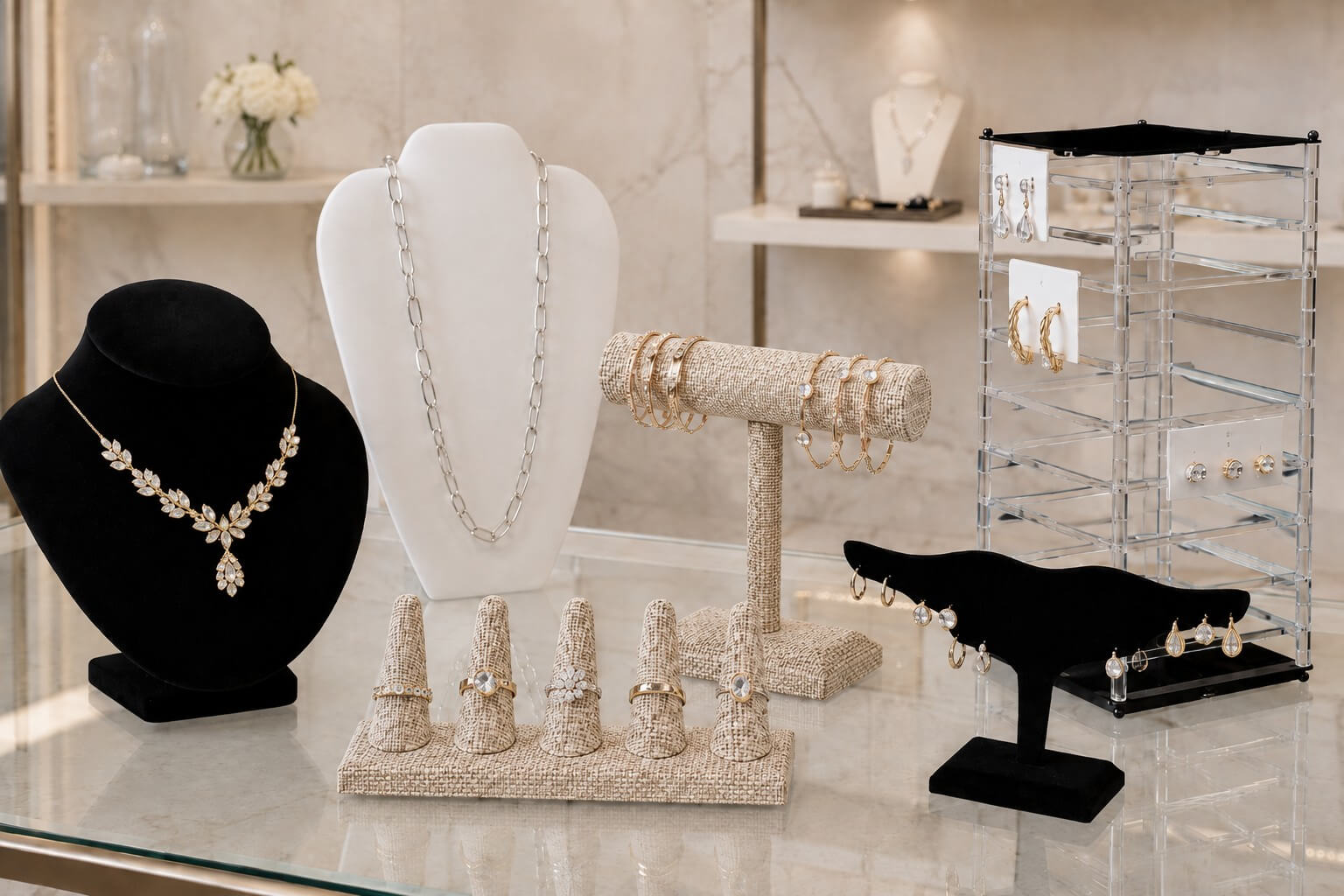
When you start selling jewelry, the product names alone can slow you down. Bust, T-bar, insert, easel, pad, riser. They sound like industry shorthand because they are. If you don’t know the right terms, ordering can become a guessing game.
The Big Picture: Two Jobs Every Jewelry Display Does
Before we get to the various terms, there are two things to keep in mind. A jewelry display either shapes a piece (gives a necklace or bracelet form so it looks worn) or holds a group of items neatly (rings, earrings, and small pieces in rows). Almost every fixture type falls into one of these two things.
Once you start seeing it this way, the names start to make sense. A bust shapes a necklace. A ring holds insert holds a row of rings.
Jewelry Display Bust: What It Is
A Necklace Bust is a form shaped like the neck, shoulders, and upper chest area, with no head. You drape a necklace over it so customers see how the piece hangs and where it sits when worn. Busts come in different heights and neck lengths to suit chokers, mid-length chains, and longer pieces.
Busts are one of the strongest ways to show a single statement necklace. The shape does the selling for you because it answers the question shoppers always have: how will this look on me?
When to reach for a bust
- You want to feature one necklace as the star of a case or counter.
- The piece has a defined shape or drape that flat display would flatten.
- You want height and presence in a showcase.
Necklace Easel vs. T-Bar Stand: The Difference
This is the question I hear most. Both display necklaces, but each in a slightly different way.
A Necklace Display Easel is a flat or slightly contoured panel that leans back like a small picture frame on a stand. You hang or drape the necklace against the face of it. The easel gives a clean background so the piece reads clearly, and it takes up less depth than a bust.
A T-Bar Display is named for its shape: a vertical post with a horizontal bar across the top, forming a T. You hang necklaces, bracelets, or chains from horizontal arms. T-bars are good when you want to show several pieces in a row at the same height, often on a counter.
|
Feature |
Necklace Easel |
T-Bar Stand |
|
Shape |
Leaning panel |
Post with a crossbar |
|
Best for |
One piece, shown against a backdrop |
Several pieces hung in a row |
|
Footprint |
Compact depth |
Compact, often counter height |
|
Look |
Framed, focused |
Open, grouped |
A simple way to decide: an easel says "look at this one." A T-bar says "browse this group."
If you want a contemporary, dimensional option for a single chain, a faux suede form like our tall slate faux suede necklace display is a lightweight way to give a necklace shape without a full bust. You can browse the full range of Jewelry Displays & Jewelry Stands to compare styles side by side.
Ring Finger, Ring Pad, and Ring Insert
Rings get their own small fixtures because they need to stand up and stay in order. Here are the terms you will see.
Ring finger
A 5-Finger Ring Display is a single or series of small fingers on a base that angle upward. Rings slide onto the display so they face the customer in neat, organized rows. The angle lets shoppers see the band and any stone at a glance.
Ring pad
A ring pad is a padded strip with slots cut into it. You press the rings into the slots so they line up evenly. Our large continuous slot faux leather ring insert is a good example: it has 8 continuous sections of foam wrapped in faux leather to hold a row of rings.
Ring insert or tray insert
A 32 Section Tray Insert drops into a Plastic Stackable Tray and divides it into compartments. A flocked insert, for instance, organizes loose pieces inside a Black Faux Leather 5-Drawer Jewelry Storage Organizer .
In my experience helping new sellers, ring storage is where organization pays off fastest. When rings live in slots instead of a pile, restocking the case after a busy day takes minutes instead of an hour.
Earring Cards and Earring Stands
Earrings hang from cards or stands. An Earring Card is a small printed card with punched holes and a lip for hanging; you push the posts or hooks through and it displays each pair while also giving you a spot for your brand and price. A Rotating Jewelry Card Display holds horizontal rows of cards so customers can easily flip through them.
If you sell earrings without cards, a Small Black Faux Leather Earring Display does the same job and lets pieces hang freely. The right choice depends on whether your earrings come pre-carded or loose.
Pads, Liners, Risers, and Boxes
A few more terms round out the vocabulary, and they apply to almost any jewelry category.
Pad and tray liner
A pad or tray liner is an insert you set under a single piece, or drop into a tray, to give jewelry a clean backdrop. Our small slate faux suede pad and tray liner can show one piece to a customer at the counter or sit inside a tray for several pieces.
Riser
A Nesting Clear Acrylic Display Risers-Set of 3 are blocks that can lift parts of your display higher than the rest. Acrylic risers are popular because they nearly disappear and let the jewelry take the attention.
Boxes
Jewelry Boxes & Jewelry Gift Boxes are what the customer takes home, like a bracelet or watch box. It is part of the presentation too, so do not treat it as an afterthought. The box is the last thing a buyer touches, and it shapes how the whole purchase feels.
A Quick Glossary You Can Skim
- Bust: neck and shoulder form for shaping a necklace.
- Necklace easel: leaning panel that shows one necklace against a backdrop.
- T-bar stand: post with a crossbar for hanging several pieces in a row.
- Ring Finger: A single finger or series of fingers that angle upward.
- Ring pad: padded slotted strip for a row of rings.
- Tray insert: compartment divider that drops into a case tray.
- Earring card: small punched card that holds and prices a pair.
- Pad / liner: creates a soft backdrop under a piece or inside a tray.
- Riser: block that lifts part of a display to create different levels.
How to Choose Without Overbuying
Start with what you actually sell most. If necklaces are your top seller, invest in a couple of busts and easels first. If rings move fastest, prioritize finger displays and pads. New sellers often buy one of everything and end up with fixtures that never leave the box.
Match your display color and material across the case so the eye lands on the jewelry, not a patchwork of finishes. A consistent Linen or black velvet tone reads as more put together than a mix.
Finally, think about where the pieces live when the store closes. The same trays and inserts that organize your case during the day make secure, tidy storage at night. When your display vocabulary and your storage plan line up, restocking becomes routine instead of a chore, and that is what keeps a small jewelry counter running smoothly week after week.