
How to Buy Earring Card Stands for a Retail Counter
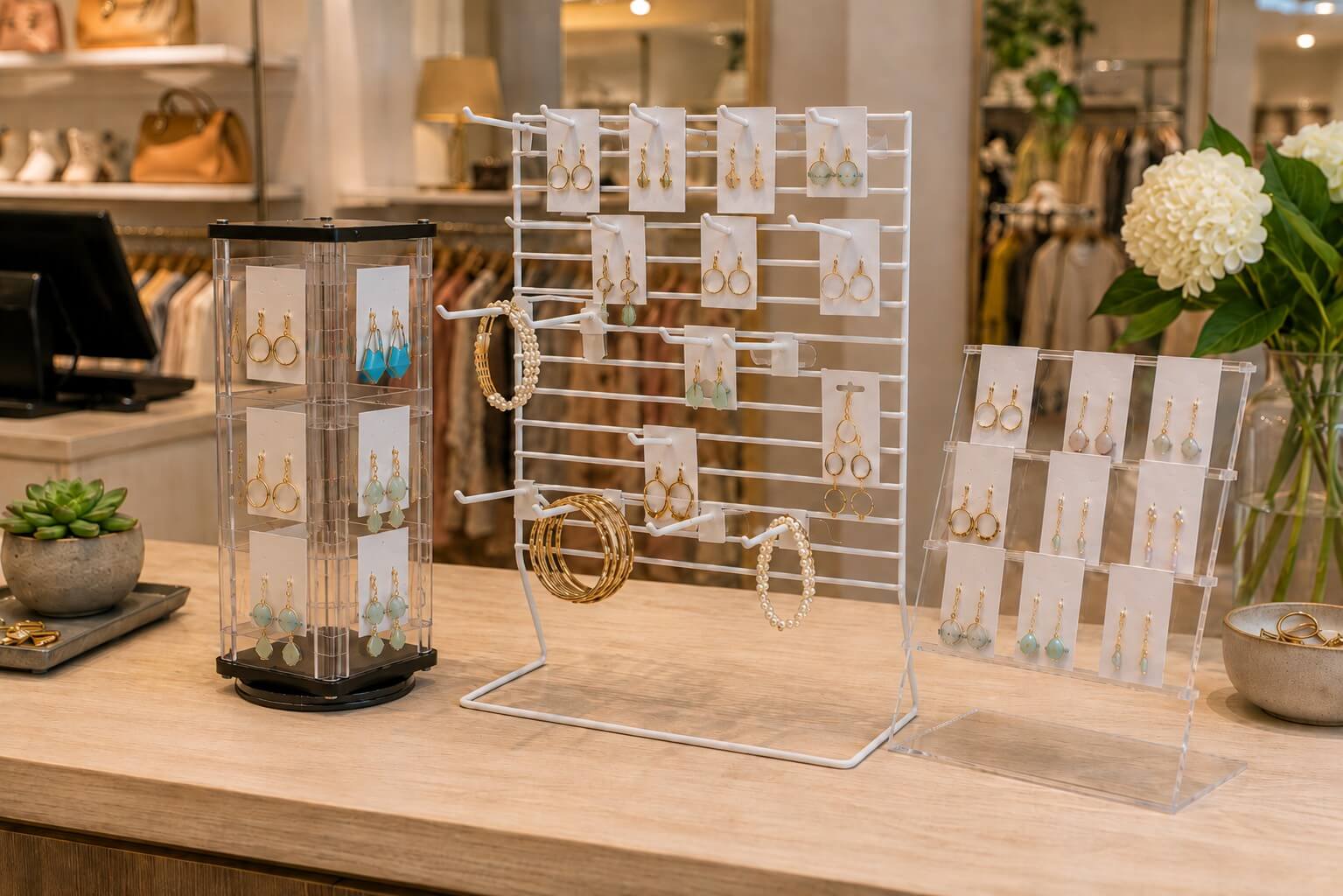
Carded earrings are one of the easiest add-on sales in a store. They are small, priced right for a quick yes, and they sit well in the space near your register. The trick is putting them where customers can see them and reach them without tipping everything over.
In my years helping small retailers, one pattern came up again and again: jewelry sold better when it moved off the back wall and onto the counter. This guide walks you through the main types of earring card displays, how to choose between them, and how to size a stand for your space.
Why the counter is the right spot for carded earrings
The checkout zone is your impulse zone. A customer is already committed to buying something, their wallet is out, and they have a minute to browse while you ring them up. A small Wire Countertop Display in that spot catches the eye at exactly the right moment.
Carded earrings work here because they are self-explanatory. The card shows the style, the price, and often the metal or material, so a shopper does not need to ask questions or open a case. That makes them a natural fit for a spot where you want fast, low-friction sales.
The main types of earring card displays
Most counter stands for carded jewelry fall into two groups. Each one solves a slightly different problem.
Rotating spinners
A spinner holds cards on tiers that turn on a base. The big advantage is capacity in a small footprint. A customer can browse a large selection by giving the rack a turn, and you only give up one patch of counter space.
Spinners shine when you carry a wide range of styles and want shoppers to self-serve. We use the same rotating design for other counter goods, and the appeal is consistent. Our Medium Rotating Jewelry Card Display is a good example of how a spinning display packs a lot of product into a compact space and still reads as tidy.
Jewelry Card Easels
A Countertop Jewelry Card Easel is a fixed panel with slots that hold each card. Cards slide in and stand upright in a clean row. Nothing rotates, so the display stays put and shows everything at once.
Jewelry Card Easels are a strong pick when you carry a focused set of styles and want a neat, curated look. They tend to have a smaller footprint than a spinner, which helps on a crowded counter. The tradeoff is capacity: what you see is what you get, with no back side to load.
Spinner or Easel: how to choose
This is the question I heard most from owners setting up a jewelry section. The honest answer depends on how many styles you carry and how much counter room you have.
|
If you... |
Choose |
|
Carry many styles and want customers to self-browse |
Rotating spinner |
|
Have limited counter space and a focused selection |
Jewelry Card Easel |
|
Reset your assortment often |
Spinner or Easel (both reload fast) |
A quick way to decide: count your styles. If you have a deep assortment and want volume in one footprint, go with a spinner. If you have a tight, edited lineup and value a clean sightline, an easel serves you better.
One thing I learned working with store owners: the mistake to avoid is buying a stand bigger than your inventory. An empty spinner with three cards on it looks sad and signals "picked over." It is better to fill a smaller display completely than to under-stock a large one.
How many earring cards should a counter display hold?
There is no single right number, because it depends on your assortment and your counter. Instead of chasing a target, match the capacity to what you can keep stocked and what your space allows.
Use this simple approach:
- Count your active styles. Pick a display that holds roughly that many cards, plus a little room to grow.
- Measure your counter space. Leave clear room for the transaction so nothing gets knocked over during checkout.
- Plan for restocking. Choose a capacity you can actually keep full during a busy week, not just on setup day.
Capacity varies by model, so check the individual product page for the exact number of cards a stand holds and its overall dimensions. When a facing sells down, refill it promptly. A full display always outsells a half-empty one.
Features worth checking before you buy
- Footprint. Confirm the base fits your counter without crowding the register or bag station.
- Card fit. Make sure your earring cards match the slot or peg size on the stand. Mismatched cards sag or fall.
- Stability. A weighted or wide base matters near a busy checkout where people set down bags and lean in.
- Finish. Pick a color and material that suits your store look. A clean finish keeps the focus on the product.
- Restock access. Spinners let you load both sides; slotted holders load from one face. Think about how you will reset it.
Round out the display with the right support pieces
An earring stand rarely works alone. A few supporting items make the section look finished and help move product.
A small sign card priced or themed for the display gives shoppers a reason to look. Bright burst sign cards are an easy way to call out a price point or a "new arrivals" message right at the counter.
If you carry matching necklaces or other pieces alongside your earrings, a coordinated jewelry presentation ties it together. Browse our full range of Jewelry Displays & Jewelry Stands to pair your earring stand with necklace stands, trays, and gift boxes in a consistent style.
And when the sale closes, a small bag finishes the experience. A tidy small paper merchandise bag is a good fit for jewelry and other small items, and it keeps the handoff quick at a busy register.
A simple plan to get started
If you are outfitting a counter for the first time, keep it simple. Start with one display type that matches your assortment, fill it completely, and place it where a customer's eye lands while you ring up the sale. Watch what sells over a few weeks, then adjust the mix and add a second stand if the section earns its space.
The earrings that sell are the ones people see and can reach. Get the stand sized to your inventory, keep it full, and put it in the impulse zone. That combination does more for add-on sales than any single fixture feature.