Buying Shopping Bags for a Consignment Shop: A Guide
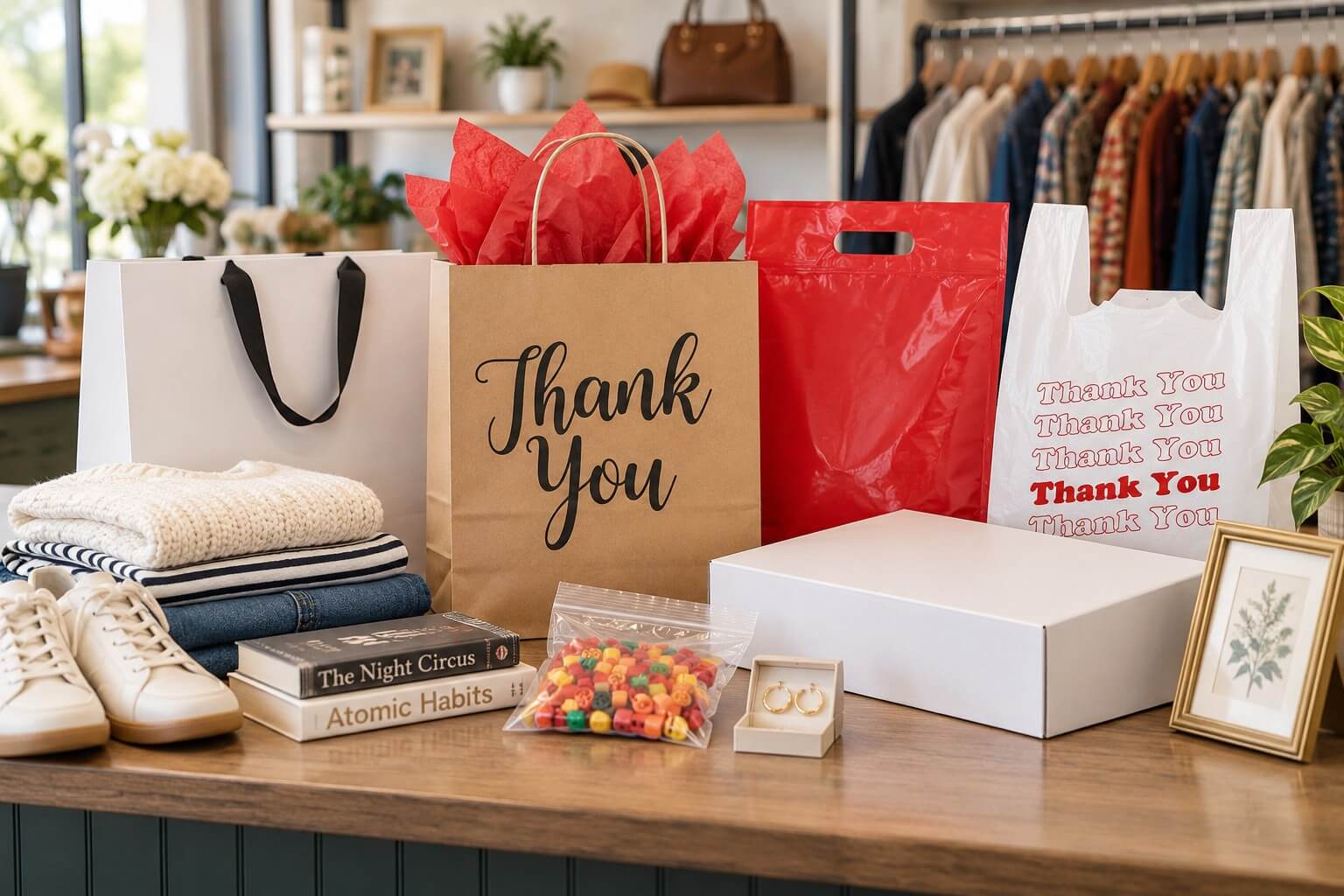
Consignment shops carry a little of everything. One customer buys a folded sweater and a paperback. The next one grabs a heavy coffee-table book, a pair of shoes, and a picture frame. Your bags have to handle a range of products without falling apart at the door and without eating your margins.
This guide walks through the decisions that actually matter so you can stock the right bags the first time..
Why Consignment Shops Have a Harder Bag Problem
A boutique that sells only apparel can settle on one or two bag sizes and be done. Consignment is different because your inventory is mixed and unpredictable. You are packing soft goods, hard goods, small items, and awkward items, sometimes in the same sale.
That mix creates two risks. A bag that is too flimsy tears when someone drops a ceramic vase in it, and a bag that feels cheap sends the wrong message about your store.
What Bag Material Holds Up Best for Mixed Resale Items?
There is no single answer, because the right material depends on what is going in the bag. Here is how I think about the main options.
Paper shopping bags
Paper bags with handles look tidy and feel more like a gift than a grocery run. They stand up on the counter while you pack, which helps at a busy register. They work well for clothing, books, home goods, and gift-style purchases.
Paper thickness matters when items get heavy. Our Medium Thank You Kraft paper shopping bags are made from 120 gsm kraft paper, which is thicker than the 100 gsm paper most common in the market, and they use twisted loop handles. That extra weight is exactly what you want when a customer piles in a couple of hardcover books.
Plastic merchandise and T-shirt bags
Plastic handles moisture and irregular shapes better than paper. If someone buys a raincoat, a set of dishes wrapped in tissue, or anything that might sweat or leak, plastic is the safer option.
Low density plastic bags have a glossy finish and run slightly thicker than high density bags, so they feel more substantial in the hand. High density bags are lighter and lower in cost, which makes them a smart everyday choice for lighter goods. You can compare both in our Plastic Merchandise Bags category.
Resealable and specialty bags
Small loose items are their own category. Jewelry, buttons, game pieces, and small collectibles disappear at the bottom of a big bag or fall out entirely. A small Resealable Plastic Bag keeps them contained and visible, and it doubles as protective packaging for a delicate piece.
|
Material |
Best for |
Watch out for |
|
Paper with handles |
Clothing, books, home goods, gift-style sales |
Moisture and very sharp or heavy loads |
|
Low density plastic |
Heavier apparel, mixed goods, a sturdier feel |
Costs a bit more than high density |
|
High density plastic |
Lighter everyday purchases, high volume |
Thinner feel, not ideal for heavy items |
|
Resealable plastic |
Jewelry and small loose items |
Too small for anything but small pieces |
What Bag Sizes Should a Consignment Shop Stock?
Stocking one size forces you to jam small items into big bags and cram big items into bags that do not close. Both can look sloppy. A better approach is to keep a short range so you always have a reasonable fit.
For most consignment shops, three tiers cover the day:
- Small: jewelry, accessories, paperbacks, single small items. A small paper merchandise bag works well here, and resealable bags handle the tiniest pieces.
- Medium: folded clothing, a couple of books, most everyday sales. This is your workhorse size and the one you will reorder most.
- Large: coats, blankets, multiple items, framed art. A large plastic thank you bag is built for bulkier loads like blankets and large toys.
One tip from years of working registers: keep the medium size within easy reach and store your larger bags nearby. Cashiers naturally grab whatever is closest, so if the medium is front and center, you avoid wasting a large bag on a single scarf.
How Do You Keep Bag Costs Low in a Consignment Shop?
Bags are a recurring expense, so small choices add up over a year. You can hold costs down without handing customers something that tears.
Buy by the case, not the handful
Bags are sold by the case, and the per-bag cost drops as case size goes up. If a size moves quickly in your store, buying the larger case usually lowers your cost per sale. Match the case size to how fast you actually use it so you are not sitting on a year of inventory you have to store.
Match the bag to the item, not the other way around
Overpacking is a quiet money leak. Using a large bag for a small purchase costs more and looks like you did not think about it. Right-sizing every sale is the simplest way to control spend, which is exactly why a small range of sizes pays off.
Reserve your nicest bag for the sale that earns it
You do not need your dressiest bag on every transaction. Many owners keep an everyday bag for routine sales and a step-up bag for larger or gift purchases. A sturdier option like our large folded top paper bags with ribbon handles makes a bigger purchase feel special without you paying for that finish on every small ticket.
Add packaging only where it helps
Simple add-ons protect delicate resale items and cut down on returns and complaints. Tissue Paper for glassware, a resealable bag for small parts, or an Apparel Box for a nicer clothing item all cost little and prevent damages on the way home.
Keeping the Customer Experience in Mind
Consignment and resale stores work hard to prove that pre-owned does not mean lower quality. The bag is the last thing a customer touches on the way out, so it carries some of that message.
You do not need anything fancy to do this well. A clean bag that fits the purchase, closes properly, and holds its shape says you take the store seriously. A "thank you" printed on the bag is a small, friendly touch that costs nothing extra and reminds the customer you value their business.
When you are ready to compare options side by side, both the paper bags and the plastic lines carry the sizes and styles most consignment shops rely on. Start with a medium everyday bag, add a small and a large to cover the edges, and check each product page for exact dimensions and case counts before you order so the fit matches what you actually sell.
Written by Kris Boettigheimer
Purchasing Assistant
Kris brings over 32 years of retail industry experience and more than 20 years at Store Supply Warehouse to every article he writes for storesupply.com. Since joining SSW in 2005, Kris has worked across multiple departments , including six years in Sales/Customer Service, where he helped independent retailers and small business owners find the right store fixtures, retail displays, and merchandising supplies to improve their store layouts and drive sales. For the past 15+ years in SSW's Purchasing Department, he has collaborated with suppliers, tracked market trends, and sourced products across all three Store Supply divisions. Today, Kris channels that hands-on experience into content that helps retailers enhance store presentation, discover new display solutions, and make smarter product decisions.