
Children's Mannequin Strategy: What Boutiques Get Wrong at Setup
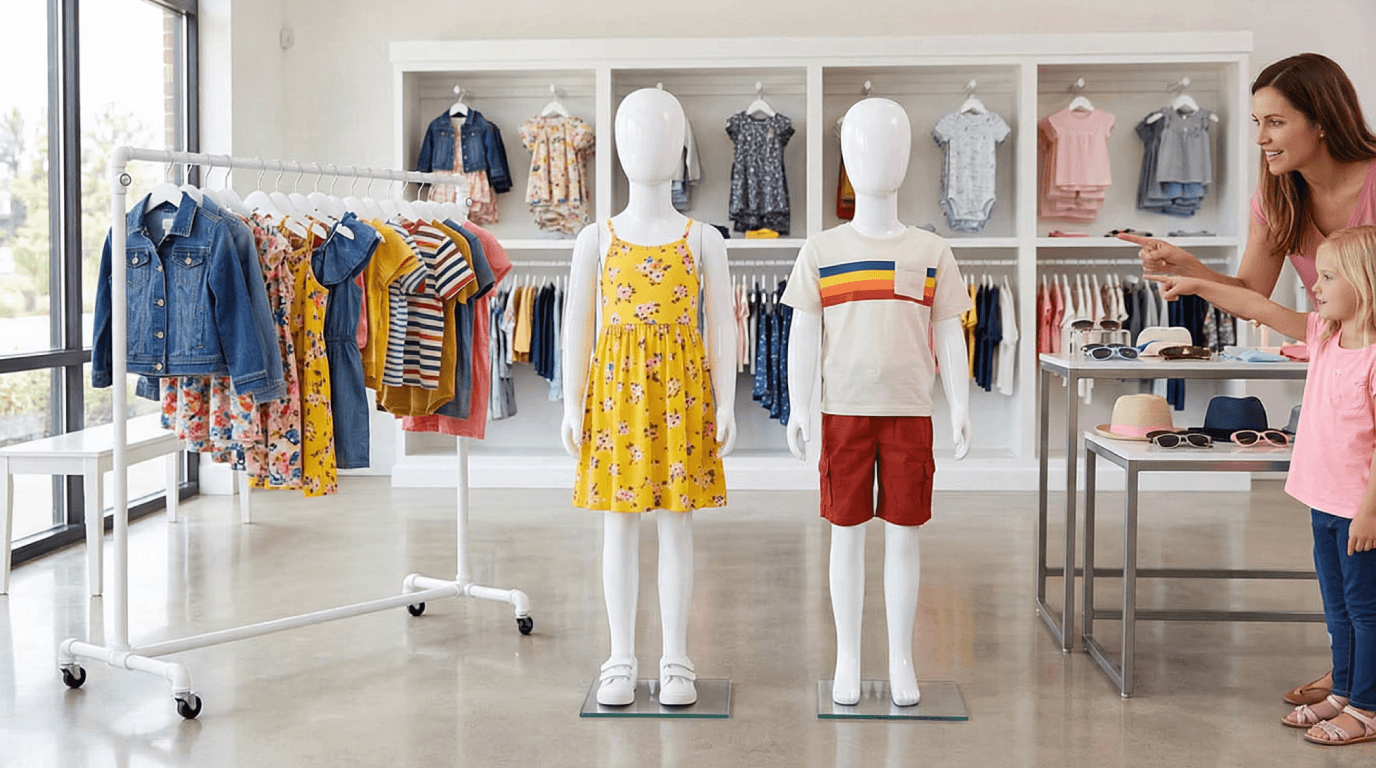
Children's mannequin displays make or break sales in youth retail, yet most boutiques struggle with basic setup fundamentals. The difference between a display that sells complete outfits versus one that barely moves often comes down to understanding how shoppers think and what safety concerns drive their decisions.
The Critical Sizing Mistake Most Retailers Make
The biggest error in children's mannequin strategy involves size representation. Many boutiques use mannequins that don't match their actual inventory sizing, creating confusion for shoppers who need quick visual confirmation that clothes will fit their child.
Children's mannequin sizing requires precise matching to your inventory breakdown. If 60% of your sales come from sizes 4-8, your primary displays should feature mannequins in this range. Using oversized or undersized forms creates disconnect between what parents see and what they can actually purchase.
Age-Appropriate Proportions Matter
Parents quickly notice when proportions look wrong. A child's torso has different proportions than a scaled-down adult form. Quality Children's Mannequins and Economy Mannequin Forms reflect accurate child proportions, helping clothes hang naturally and appeal to discerning parents.
Document your size breakdown quarterly and adjust mannequin selection accordingly. Track which sizes move fastest during different seasons and rotate your display forms to match demand patterns.
Safety Considerations That Impact Sales
Parents automatically scan retail environments for safety hazards when shopping with children. Your mannequin placement and selection directly affects their comfort level and willingness to browse longer.
Sharp edges, unstable bases, and breakable components create anxiety for parents managing active children. This anxiety translates into shorter visits and reduced purchases.
Strategic Placement for Safety and Sales
Position children's mannequins away from high-traffic pathways where strollers and children might knock them over. Create viewing distances of at least 18 inches between mannequins and walkways.
Secure all mannequins with stable bases that won't tip during normal customer interaction. Parents need to feel confident their children won't accidentally damage displays or injure themselves.
Avoid glass or sharp metal components at child eye level. Even older children instinctively reach toward displays, and parents constantly monitor for potential hazards.
Complete Outfit Strategy for Parent Shoppers
Parents shop differently than individual consumers. They think in terms of complete outfits, seasonal needs, and practical combinations. Your mannequin displays should mirror this shopping mentality.
Style each children's mannequin as a complete look parents can visualize on their own child. Include accessories, shoes, and layering pieces that demonstrate versatility and value.
Cross-Merchandising Techniques
Position complementary items within arm's reach of mannequin displays. Parents who like a complete look want immediate access to all components without searching throughout the store.
Use coordinating clothing racks nearby to display size variations of the same outfits shown on mannequins. This allows parents to quickly locate their child's size while maintaining the visual inspiration of the complete look.
Group seasonal accessories like hats and light jackets near spring displays to encourage add-on purchases.
Spring-Specific Styling That Drives Sales
Spring children's displays require careful balance between showing weather-appropriate layering and highlighting bright, fresh colors that parents associate with the season.
Layer lightweight pieces to demonstrate versatility. Show how a spring dress works with a light cardigan for cooler mornings but stands alone for warmer afternoons. Parents appreciate displays that solve different scenarios.
Color Psychology for Spring Youth Displays
Spring colors trigger optimism and feelings of renewal in adult shoppers. Use pastels and bright colors strategically, but avoid overwhelming displays that look chaotic to parent shoppers who value organization.
Create color stories across multiple mannequins rather than featuring every spring color on one form. This approach helps parents visualize how pieces coordinate within their child's existing wardrobe.
Position displays near natural light when possible. Colors appear more vibrant and appealing, and parents can better judge how garments will look in outdoor settings.
Size Accuracy Systems That Work
Implement clear size identification systems that parents can quickly reference. Confusion about sizing kills sales faster than any other factor in children's retail.
Use visible Retail Clothing Size Dividers that clearly indicate the mannequin's size and directs parents to the corresponding inventory. This reduces frustration and speeds up the shopping process.
Visual Size References
Include subtle age references alongside size numbers when space allows. Parents often think in terms of "my 5-year-old" rather than specific measurements, and visual cues help bridge this gap.
Position size reference charts at eye level rather than child height. While children influence style preferences, parents make final purchasing decisions and need information presented for their convenience.
Common Setup Mistakes to Avoid
Many boutiques position children's mannequins too high, forcing parents to crane their necks to see styling details. Lower display heights improve visibility and create a more intimate viewing experience.
Avoid overcrowding mannequin displays with too many accessories. Parents need to quickly identify key pieces and understand pricing for complete looks. Cluttered displays create confusion rather than inspiration.
Don't ignore maintenance schedules for children's displays. Parents notice dust, wrinkled clothing, and damaged accessories more readily when shopping for their children. Maintain displays weekly rather than monthly.
Lighting Considerations
Ensure adequate lighting reaches all mannequin displays. Parents often shop with children during daytime hours but may return for purchases during evening hours when lighting becomes critical for color accuracy.
Avoid harsh lighting that creates unflattering shadows on children's clothing. Soft, even lighting helps garments appear more appealing and allows parents to accurately assess fabric quality and construction.
Measuring Success and Making Adjustments
Track which mannequin displays generate the most complete outfit sales versus individual item purchases. This data reveals whether your styling approach resonates with parent shopping patterns.
Monitor customer behavior around displays. Parents who spend more time examining mannequins typically make larger purchases, indicating effective styling and appropriate positioning.
Rotate mannequins monthly to test different traffic flow patterns. Small changes in placement can significantly impact visibility and sales performance without requiring additional investment in new fixtures.
Survey customers periodically about display preferences and safety concerns. Customer feedback provides valuable insights into how your target demographic perceives your children's mannequin strategy and what improvements might drive additional sales.
Written by Kris Boettigheimer
Purchasing Assistant
Kris brings over 32 years of retail industry experience and more than 20 years at Store Supply Warehouse to every article he writes for storesupply.com. Since joining SSW in 2005, Kris has worked across multiple departments — including six years in Sales/Customer Service, where he helped independent retailers and small business owners find the right store fixtures, retail displays, and merchandising supplies to improve their store layouts and drive sales. For the past 15+ years in SSW's Purchasing Department, he has collaborated with suppliers, tracked market trends, and sourced products across all three Store Supply divisions. Today, Kris channels that hands-on experience into content that helps retailers enhance store presentation, discover new display solutions, and make smarter product decisions.