Engineering Your Checkout Zone with Slatwall: The Add-On Sale Formula
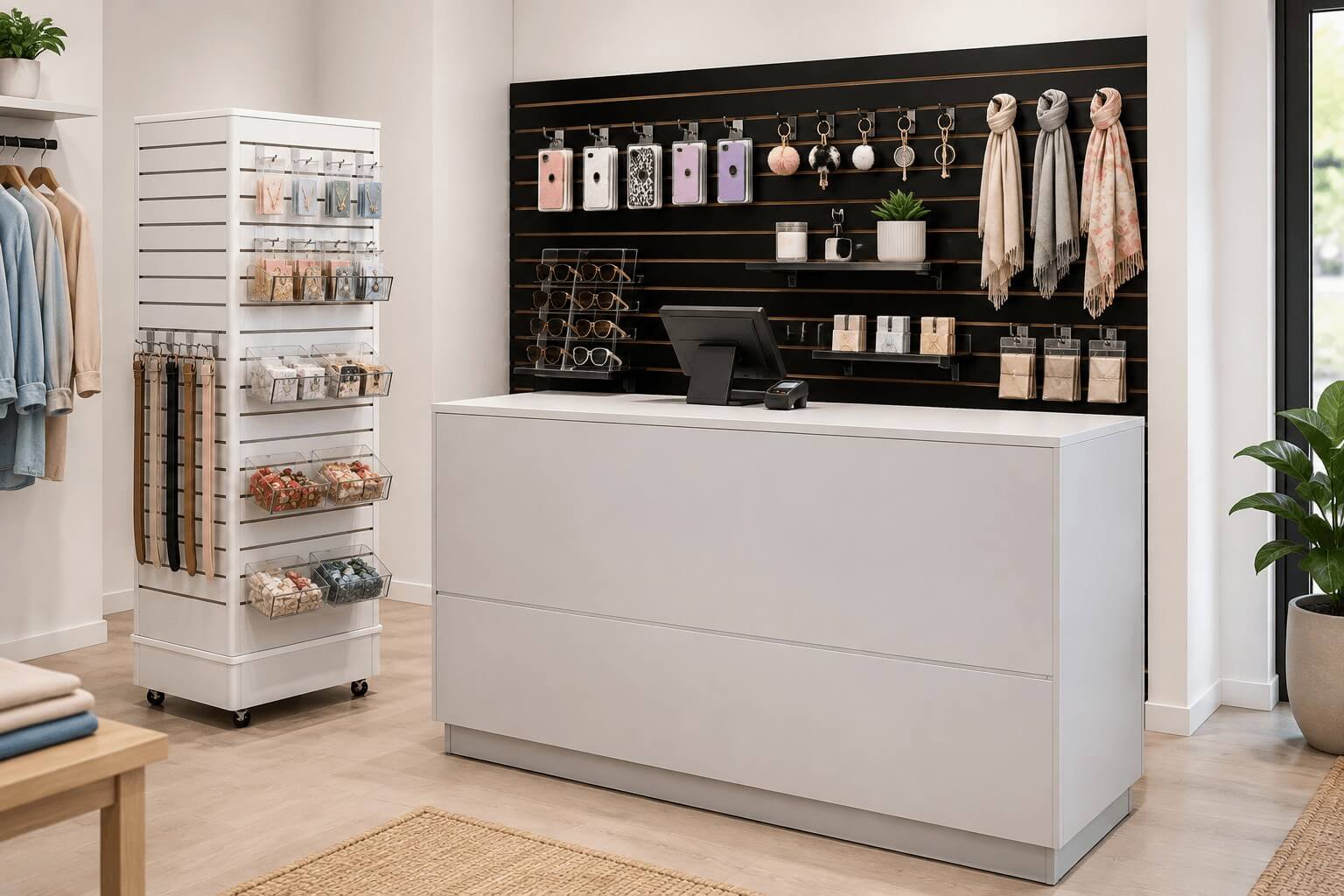
The wall space around your checkout counter represents one of retail's most valuable real estate opportunities. Yet many independent retailers leave this area blank or cluttered with random items. A well-designed checkout display can increase your average transaction value by 15-30% through strategic impulse purchases.
Why Slatwall Works for Checkout Displays
Slatwall Panels provide the flexibility your checkout zone needs. Unlike fixed shelving, slatwall accessories can be moved, adjusted, and reconfigured as your product mix changes. This adaptability lets you test different arrangements and respond quickly to seasonal trends.
The horizontal grooves in slatwall panels create natural sight lines that guide customer attention. When positioned at eye level, these lines help organize visual information and make products easier to scan during the brief checkout window.
For maximum impact, consider installing a matching 24 inch x 48 inch slatwall tower beside your checkout counter. This provides ample display space without overwhelming the area.
Strategic Product Placement Rules
Successful impulse buy displays follow specific height and positioning guidelines. Place your highest-margin items between 48-60 inches from the floor, directly in the customer's primary sight line while they wait.
Reserve the 36-48 inch zone for complementary products that pair with main purchases. If you sell clothing, position accessories like belts, scarves or jewelry in this area.
Use the lower section (24-36 inches) for children's items or products parents frequently purchase for kids. This puts child-focused merchandise at a comfortable viewing height for adults while remaining visible to young customers.
The 5-Second Rule
Your checkout display must communicate value within five seconds. Use clear price tags and position products so customers can quickly understand what each item is and why they need it. Avoid overcrowding hooks or shelves, which creates visual confusion during the brief checkout interaction.
Essential Slatwall Accessories for Checkout Success
The right accessories transform basic slatwall panels into conversion machines. Start with a variety of 10 inch peg hooks for slatwall to display packaged goods, small accessories, and impulse items.
Add 24 x 12 inch Laminated Melamine Shelves to create horizontal display surfaces. These work well for stacking items like gift cards, batteries, or small electronics that customers often forget to buy.
Consider these specific accessories for different product types:
- Slatwall Hooks and Faceouts - Display hanging items like sunglasses, phone chargers, or packaged accessories
- Slatwall Baskets and Bins - Hold loose items like candy, small toys, or sample products
- Literature holders - Showcase gift cards, promotional materials, or loyalty program information
Hook Spacing and Layout Optimization
Proper spacing between Slatwall Shelves and hooks determines how much product you can display and how easy it is for customers to grab items. Space hooks 4-6 inches apart for small packaged goods, and 8-12 inches apart for larger items.
Create visual breathing room by alternating between hooks and shelves. This prevents the wall from looking cluttered while maximizing the number of products on display. Use every third or fourth slot for a shelf, breaking up long rows of hanging merchandise.
The Triangle Method
Arrange your highest-priority impulse items in triangular groupings of three products. This creates natural focal points that draw attention without overwhelming customers. Place the most expensive item at the top of the triangle, with two complementary lower-priced options below.
Measuring Checkout Display Performance
Track specific metrics to optimize your POS wall display performance. Monitor which products sell most frequently from the checkout area versus other store locations. This data reveals which items work best as impulse purchases.
Calculate your attachment rate by dividing impulse purchases by total transactions. A well-designed checkout display should achieve a 20-35% attachment rate, meaning one in three customers adds something extra to their purchase.
Test different product combinations weekly. Move slow-selling items to other store areas and replace them with potential impulse candidates. Document which arrangements generate the highest additional revenue per square foot.
Common Checkout Slatwall Mistakes to Avoid
Many retailers overcrowd their checkout displays, thinking more products mean more sales. In reality, too many options create decision paralysis. Limit your display to 15-20 distinct items to maintain clarity and focus.
Avoid placing expensive items (over $25) in impulse positions unless they solve an immediate customer need. Most impulse purchases fall in the $3-15 range, making them easy add-ons that don't require significant consideration.
Never block sight lines to your cash register or create obstacles in the checkout flow. Your display should enhance the customer experience, not complicate it. Ensure staff can easily reach products while serving customers.
Seasonal Rotation Strategies
Plan your checkout display changes around retail seasons and local events. Stock travel-size items before summer vacation periods, gift-wrapping supplies during holidays, and weather-related accessories during season transitions.
Use slatwall accessories that swap out quickly when you need to refresh your display. This flexibility lets you respond to trends and customer feedback without major renovation costs.
Keep a rotation schedule that changes 30-40% of your impulse display monthly. This keeps regular customers interested while maintaining your core high-performing items in consistent positions.
Building Your Checkout Slatwall System
Start with a basic slatwall panel positioned where customers naturally look while waiting to pay.
Begin with essential accessories: basic hooks, and one waterfall attachment. Test this setup for two weeks, tracking which items sell and which positions get the most customer attention.
Gradually expand your system based on what works. Add specialized accessories for your best-selling impulse categories, but resist the urge to fill every slot immediately. Successful retail checkout fixtures evolve through testing and customer response, not through guesswork.
Your checkout slatwall represents a direct path to increased profitability. With proper planning, strategic product selection, and ongoing optimization, this small investment in display fixtures can generate significant returns through improved add-on sales and customer satisfaction.
Written by Kris Boettigheimer
Purchasing Assistant
Kris brings over 32 years of retail industry experience and more than 20 years at Store Supply Warehouse to every article he writes for storesupply.com. Since joining SSW in 2005, Kris has worked across multiple departments — including six years in Sales/Customer Service, where he helped independent retailers and small business owners find the right store fixtures, retail displays, and merchandising supplies to improve their store layouts and drive sales. For the past 15+ years in SSW's Purchasing Department, he has collaborated with suppliers, tracked market trends, and sourced products across all three Store Supply divisions. Today, Kris channels that hands-on experience into content that helps retailers enhance store presentation, discover new display solutions, and make smarter product decisions